

Figuring out whether a loved one qualifies for non-emergency medical patient transportation can feel confusing—especially when you’re juggling discharge plans, family schedules, and a patient who can’t safely ride in a regular car. This guide is for families, caregivers, and care teams who need a clear, beginner-friendly way to think about non-emergency transport eligibility without medical jargon. Eligibility matters because the wrong transport setup can create avoidable stress, missed medications, or comfort issues on a long trip—and the right setup supports continuity of care during the move. If you’re coordinating a transfer over a long distance, it helps to understand what information providers typically need, what situations are usually a fit, and what circumstances are not. For a broader overview of how this category of service works, see Understanding Non-Emergency Medical Transportation.
The Essentials for Determining Eligibility Fast
- It must be non-emergency: The patient is stable enough to travel without emergency response or on-the-spot medical decision-making.
- Mobility needs drive the vehicle type: Eligibility often depends on whether the patient can sit safely in a standard seat, needs a wheelchair position, or requires a stretcher.
- Existing care can be maintained during the trip: Many transports are appropriate when the plan is to continue prescribed routines (medications, hydration, oxygen, feeding schedules) rather than start new treatment.
- Trip distance and logistics matter: For long-distance medical patient transports (commonly 300+ miles), planning for comfort, breaks, repositioning, and coordination with facilities is a key part of “being a fit.”
- You’ll usually need basic documentation: Expect to share discharge notes or a summary of needs (mobility, oxygen, feeding tube, cognitive impairment) so the transport plan matches the patient.
How Non-Emergency Transport Eligibility Is Typically Evaluated
Eligibility is less about a single checkbox and more about whether the patient’s needs can be supported safely without emergency-level care. In plain terms, providers generally look at four buckets: stability, mobility, care continuity, and trip logistics.
Stability: The patient should be medically stable for travel. That means the plan is to follow existing instructions from the care team—not to troubleshoot new symptoms on the road.
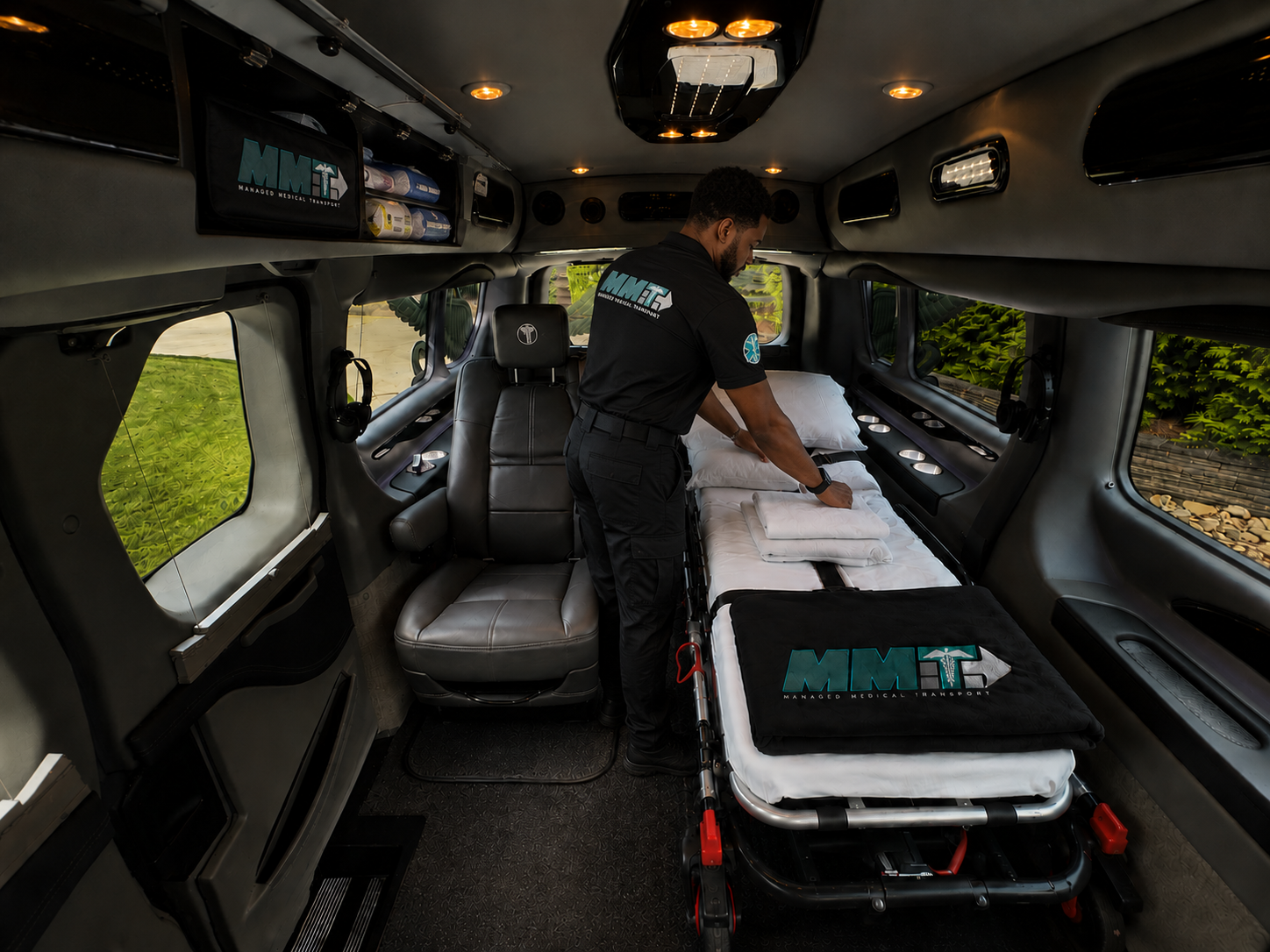
Mobility: This is often the biggest driver of what type of transport is appropriate. Some patients can sit upright with assistance; others are non-ambulatory and may require a stretcher for safe positioning and transfers.
Care continuity: Many long-distance non-emergency transports are appropriate when the patient needs help staying on schedule—medications, hydration, feeding routines, oxygen use, incontinence care, or periodic repositioning—based on what’s already prescribed.
Logistics: Long trips require a realistic plan for comfort, rest stops, facility coordination, and family communication. Eligibility can hinge on whether those practical needs can be met in a controlled, predictable way.
A Simple Prep Plan to Confirm You’re a Fit
- Ask the care team if travel is appropriate: Request a clear statement that the patient is stable for non-emergency travel and confirm any special precautions.
- Write down mobility needs: Can the patient transfer with help? Sit upright? Need a stretcher? Include fall risk and transfer requirements.
- List ongoing routines to maintain: Medication times, oxygen flow requirements (as prescribed), feeding schedules, hydration, toileting, and turning/repositioning needs.
- Document diet and swallow precautions: Note any pureed diet needs or swallow precautions provided by the care team.
- Plan the handoff details: Confirm pickup address, unit/room, receiving contact, and any facility paperwork needed for release/admission.
- Decide who’s riding along: If a family member will accompany the patient, confirm what they should bring and how updates will be handled.

From the Field: The One Detail Families Often Miss
In practice, we often see families focus on the pickup date and distance first, but the smoother transports usually happen when the patient’s daily routine is mapped out ahead of time—medications, hydration, comfort measures, and repositioning needs—so the trip plan supports what the patient is already used to.
When You Should Involve a Professional Transport Team
Consider getting professional help with planning and transport when any of the following are true:
- The trip is long-distance (300+ miles): Longer travel increases the importance of comfort planning, routine continuity, and safe transfers.
- The patient is non-ambulatory or bed-bound: Stretcher positioning and safe transfer support may be needed.
- Ongoing support is required during travel: Examples include oxygen requirements, feeding tubes, incontinence care, or scheduled turning/repositioning per the existing care plan.
- Cognitive impairment is part of the picture: Dementia or confusion can raise supervision and communication needs during a long trip.
- You’re coordinating between facilities: Hospital-to-home, rehab-to-home, or facility-to-facility moves benefit from structured handoffs and clear timing.
Frequently Asked Questions
What information will a transport provider typically ask for?
Most providers ask about mobility (walking, wheelchair, stretcher), current diagnoses that affect travel, oxygen or feeding needs, cognitive status, and the routines that must be maintained (medication schedule, hydration, repositioning). They may also request discharge paperwork or a care summary from the facility.
Can someone ride with the patient during a long trip?
Some long-distance non-emergency medical patient transportation services allow a family member to ride along. Confirm this in advance so seating, luggage, and communication expectations are clear.
Is this the same as a rideshare or “medical Uber” option?
No. Rideshare-style options are generally designed for point-to-point trips for people who can sit in a standard seat and manage most needs independently. Long-distance medical patient transportation is typically scheduled and planned around mobility support and maintaining an existing care routine during travel.
What if the patient needs oxygen during transport?
Many non-emergency transports can accommodate oxygen requirements as part of maintaining the patient’s existing prescribed care plan. Share the prescribed details from the care team so the trip can be planned appropriately.
Does non-emergency travel mean no medical care is involved?
It means the trip is not intended for emergency response or new treatment. Depending on the provider and the patient’s needs, the focus may be on comfort, safety, and maintaining the existing plan (like medication timing, hydration, and other routine support) during the journey.
Your Next Steps for a Confident Transport Plan
Non-emergency transport eligibility comes down to a practical question: can the patient travel safely and comfortably while staying on their current care routine, without emergency-level services? Start by clarifying stability with the care team, then document mobility needs and daily schedules that must be maintained. The more clearly you can describe what the patient needs hour-to-hour, the easier it is to match the right transport setup. If you’re coordinating a long-distance move, planning early usually reduces stress for both the patient and the family. At MMT, we specialize in non-emergency long distance medical transportation.