

Planning a long-distance, non-emergency medical patient move is already a lot—then June shows up with packed facility calendars, family travel, and tighter availability windows. Medical transport contingency planning is the difference between “we hope this works” and “we’re ready if something changes.” This case-study style breakdown is for family decision-makers, caregivers, and discharge planners who need a practical way to reduce last-minute surprises without drifting into clinical territory. We’ll walk through a realistic scenario, the risks that commonly derail timelines, and the simple safeguards that keep a prescribed care plan consistent during a multi-state (or cross-border) trip. The goal is not perfection—it’s having clear next steps when plans shift, paperwork lags, or schedules move.
For a plain-language overview of how non-emergency, long-distance moves typically work, see Understanding Long-Distance Medical Patient Transport.
Bottom Line Upfront: June-ready contingency planning
- Build a “Plan B” schedule: hold a primary pickup window and an alternate window so a delayed discharge doesn’t collapse the entire move.
- Confirm the care plan inputs early: medication timing, oxygen needs, feeding routines, and repositioning schedules should be documented and shared before travel day.
- Verify mobility logistics: know whether the patient is non-ambulatory and whether stretcher transport is required.
- Prepare a travel-day packet: IDs, facility contacts, prescriptions list/timing, diet/swallow precautions, and comfort items in one place.
- Keep communications simple: designate one family point-of-contact to reduce missed calls and mixed instructions.
Case study: A June facility-to-home relocation with moving parts
Background/context: An adult daughter is coordinating her father’s long-distance, non-emergency move from a rehabilitation facility to live with family several states away. He is non-ambulatory, requires scheduled repositioning, has incontinence care needs, and follows a prescribed medication schedule. The receiving home has arranged follow-up appointments and home support, but the discharge date is “likely next week,” not guaranteed.
The challenge: The facility’s discharge timing depends on final paperwork and equipment readiness. Meanwhile, the family’s availability is limited because June calendars are crowded—work travel, kids out of school, and pre-planned commitments. The biggest risk is a domino effect: discharge slips, transport must be rebooked, the receiving plan shifts, and everyone scrambles.
The approach taken: The family uses a contingency-first plan that separates what must be true (care plan continuity and safe logistics) from what can flex (exact pickup hour). They coordinate with the sending facility, confirm the receiving address readiness, and establish a single communication chain so updates don’t get lost.
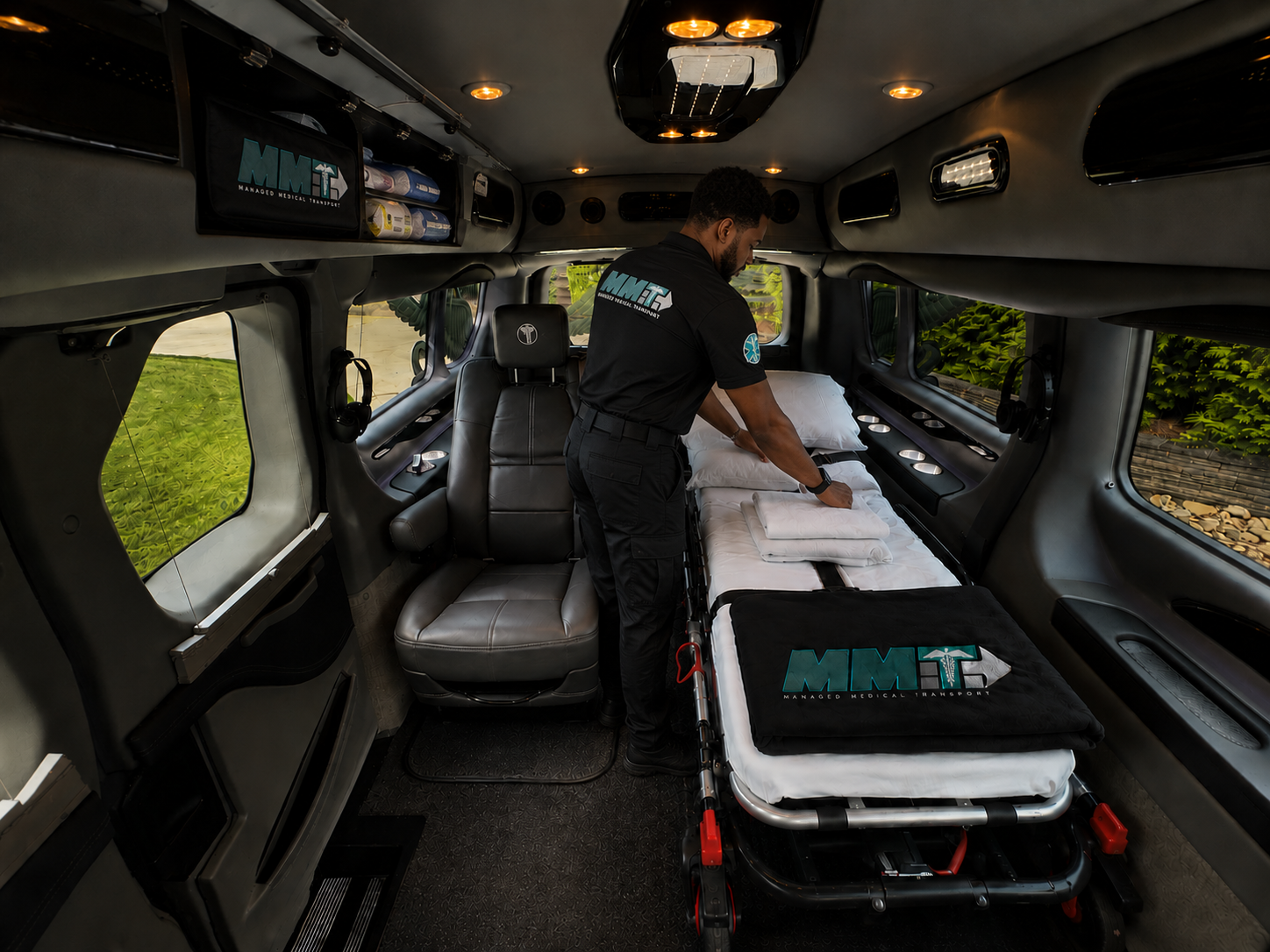
Why June planning details change the outcome
In long-distance, non-emergency medical patient transportation, small administrative delays can create outsized disruption. June tends to amplify that because availability windows can narrow: facility staff rotate, family schedules are tighter, and receiving arrangements (home setup, follow-up visits, caregiver coverage) may be less flexible.
Good contingency planning focuses on logistics you can control:
- Timeline buffers: a primary and alternate pickup window
- Information readiness: a complete, written care plan summary (what the patient already does—no new interventions)
- Chain of custody for instructions: one person responsible for confirming updates with both facilities and family
- Comfort and mobility fit: ensuring the transport setup matches non-ambulatory needs and long-trip comfort requirements
The real-world stakes: time, comfort, and coordination
When plans change late, the impact usually shows up in predictable places:
- Time: a discharge that moves by hours can trigger a multi-day reshuffle if no alternate window exists.
- Continuity: without a clear written routine (medication timing, feeding routine, hydration, oxygen use), handoffs become error-prone.
- Comfort: long trips magnify small discomforts—bedding, positioning needs, and planned stops matter more over hundreds of miles.
- Family stress: unclear roles lead to duplicated calls, conflicting messages, and “who approved that?” moments.
- Receiving readiness: if the home or receiving facility isn’t aligned on arrival timing, the first hours after arrival can become chaotic.
Common June missteps (use this checklist)
- ☐ Treating the discharge date as “locked” too early: paperwork and final approvals can shift; build a fallback window.
- ☐ No single point-of-contact: when five people call the facility, details drift and updates get missed.
- ☐ Missing the written routine: relying on “they usually take meds in the morning” is not specific enough for travel-day coordination.
- ☐ Underestimating non-ambulatory logistics: transfers, positioning, and toileting/incontinence planning need to be thought through ahead of time.
- ☐ Packing comfort items last: long-distance trips go better when essentials are accessible, not buried in luggage.
- ☐ Forgetting diet or swallow precautions: if a patient has restrictions, those details should be clearly documented and communicated.

A practical action plan for medical transport contingency planning
- ☐ Create two pickup windows: a primary window and an alternate window (same day or next day) agreed to by family and facility.
- ☐ Build a one-page “care continuity sheet”: medication schedule (times), feeding routine, hydration routine, oxygen requirements, repositioning schedule, and comfort measures already prescribed.
- ☐ Confirm mobility needs in plain terms: ambulatory vs. non-ambulatory, transfer assistance needs, and whether a forward-facing stretcher setup is preferred for comfort on long trips.
- ☐ Assemble a travel-day document packet: IDs, insurance cards if applicable, facility discharge contacts, receiving contacts, and any required cross-border documentation when relevant.
- ☐ Assign one communicator: one person to receive updates and relay them to everyone else.
- ☐ Plan essentials access: keep wipes, spare clothing, approved nutrition items, and comfort items in a small “reach bag.”
- ☐ Confirm arrival readiness: ensure the receiving location can accept the patient at the expected time window.
Professional Insight: what tends to prevent last-minute chaos
In practice, we often see the smoothest long-distance, non-emergency moves happen when the family treats the schedule like a range—not a single appointment time—and writes down the patient’s existing routine in a simple, shareable format. That combination reduces misunderstandings between facilities and family, and it keeps everyone focused on continuity rather than scrambling to reconstruct details during a busy handoff.
When it’s time to bring in professional transport support
- The patient is non-ambulatory and needs stretcher-based travel over long distance.
- The trip is 300+ miles and coordinating stops, comfort, and timing is beyond what family can safely manage.
- Care continuity needs are structured (medication timing, oxygen requirements, feeding routines, repositioning schedule) and must be maintained during travel.
- You’re coordinating between two facilities (rehab to skilled nursing, hospital to facility, facility to home) and need clear handoffs.
- Cross-border logistics apply (United States & Canada) and documentation/timing must be aligned.
Your Questions, Answered
What does a contingency plan include for a long trip?
A practical plan usually includes two pickup windows, a one-page summary of the patient’s existing routine (medications, oxygen, feeding/hydration, repositioning), and a consolidated contact list for the sending and receiving parties.
Can a prescribed routine be maintained during non-emergency travel?
Many non-emergency medical patient transport providers focus on maintaining the patient’s existing prescribed care plan during the trip (such as medication schedules, oxygen, feeding routines, hydration, and comfort measures) without initiating new interventions.
How far in advance should families start planning for a June move?
As soon as a likely discharge window is discussed, it helps to start organizing documents, confirming mobility needs, and setting a primary and alternate pickup window so schedule shifts don’t derail the move.
Is this the same as rideshare-based medical transport?
No. Long-distance, non-emergency medical patient transportation is typically scheduled and structured around patient mobility and care continuity needs, which is different from on-demand rideshare models.
What information should a discharge planner or facility share before pickup?
Clear contact information, the patient’s mobility status, a written summary of the existing routine (medications/timing, oxygen, feeding/hydration, repositioning), diet or swallow precautions, and any discharge timing constraints help reduce day-of confusion.
Taking Action: reduce risk before wheels roll
June moves go smoother when you plan for the most common disruption: timing changes. Build a Plan A and Plan B pickup window, write down the patient’s existing routine in one place, and keep communication flowing through a single point-of-contact. Those steps don’t just save time—they protect comfort and reduce stress during a sensitive transition. If you’re coordinating a long-distance, non-emergency medical patient move, getting clarity early makes every later decision easier.
Get Your Free Quote
Find out how we can help with a no-obligation quote.