

Planning a long trip for someone who can’t safely ride in a standard car can get confusing fast—especially when you’re trying to understand what’s included, what’s not, and who’s responsible for what. This checklist is for family members, caregivers, and discharge planners who need clarity on non-emergency transport scope before they book anything. Getting scope right matters because it affects safety, comfort, scheduling, paperwork, and cost expectations—without drifting into assumptions about medical treatment. If you’re coordinating travel during busy summer schedules, a clear scope checklist can prevent last-minute surprises when facilities are short-staffed and families are juggling calendars.
For a broader overview of how long-distance, non-emergency moves typically work, start with Understanding Non-Emergency Medical Transportation.
Non-Emergency Transport Scope in 60 Seconds
- It’s non-emergency only. The transport is planned, scheduled, and appropriate when the patient is stable for travel.
- Scope is logistical + supportive, not clinical. The goal is safe, comfortable movement while maintaining an existing care plan—not starting new treatment.
- Confirm mobility needs up front. Walking, wheelchair, or stretcher needs change the vehicle setup, staffing, and loading plan.
- Care continuity should be defined in writing. Medication timing, oxygen needs, feeding routines, and repositioning schedules should be clearly documented.
- Know what isn’t included. If your plan assumes diagnostics, changing medications, or higher-acuity monitoring, you’re outside typical non-emergency scope.
How Scope Boundaries Work for Long-Distance, Non-Emergency Trips
In plain terms, “scope” is the line between transport with supportive care and medical treatment. Long-distance, non-emergency medical patient transportation is designed to move a patient safely over extended distances while following the patient’s existing prescribed care plan. That often includes practical, non-clinical coordination (timing, routing, handoffs) and supportive tasks that help the patient stay comfortable and stable during travel.
Managed Medical Transport, Inc. describes its role as maintaining a patient’s current care plan during transport (for example: medication schedules, hydration routines, oxygen as prescribed, feeding routines, comfort measures, and prescribed diabetic care routines) while not initiating new medical interventions. That distinction is the heart of scope: it’s about continuity and safe logistics, not diagnosis or treatment changes.
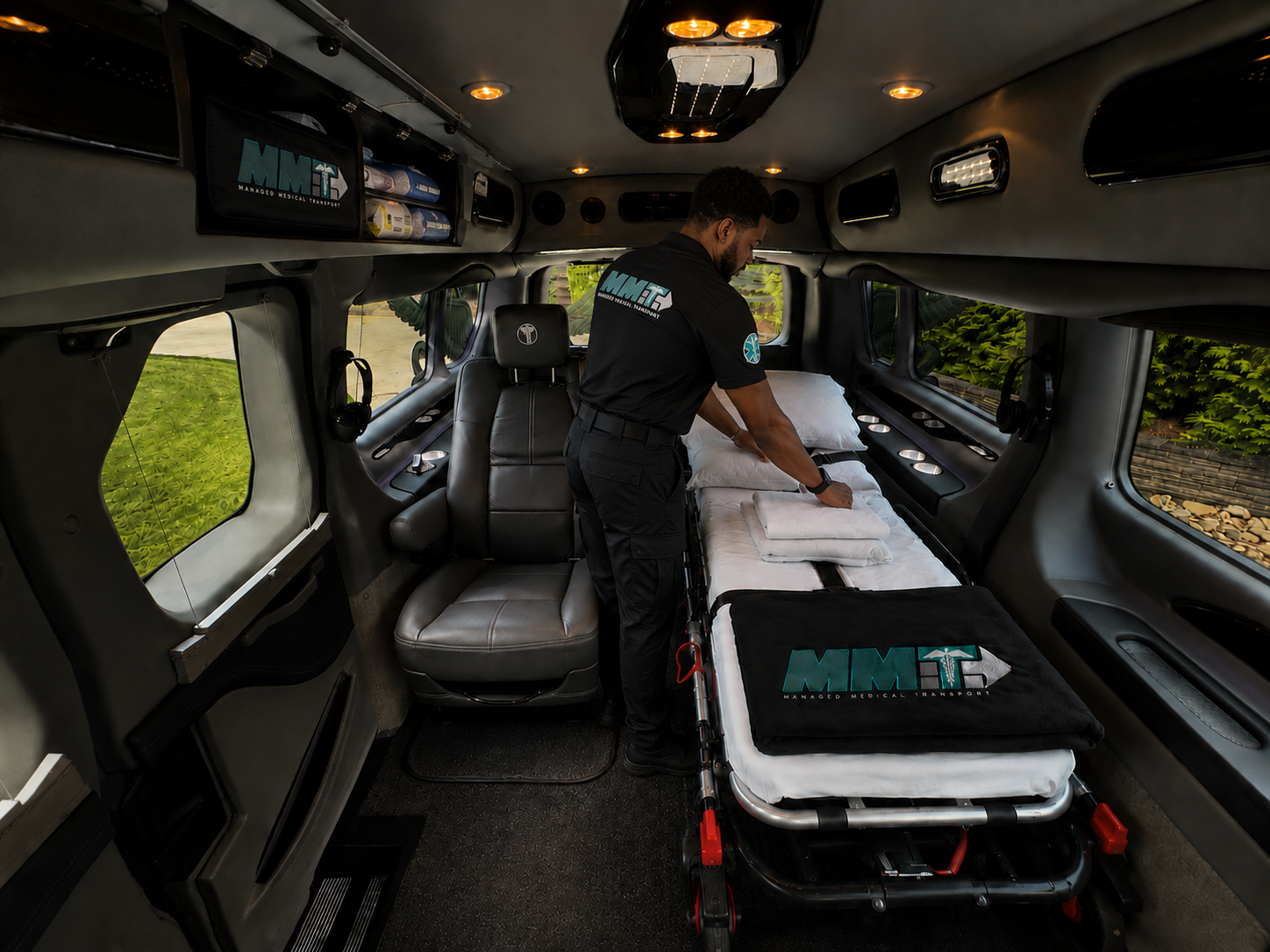

Your High-Confidence Scope Checklist (use before you book)
- ✓ Confirm the trip is planned and non-urgent. If the patient’s condition is unstable or requires immediate response capability, pause and consult the appropriate clinical team.
- ✓ Write down the patient’s baseline and mobility level. Ambulatory, wheelchair, or stretcher needs should be stated plainly, including transfer assistance required.
- ✓ List the existing care plan items that must continue. Include medication timing, hydration routines, oxygen requirements, feeding schedules, and any prescribed turning/repositioning schedule.
- ✓ Document dietary needs and swallow precautions. If the patient requires pureed foods or other specialized diets, note what’s required and who supplies it.
- ✓ Clarify what the transport team will and will not do. The key question: “Are you maintaining the current care plan only, with no new interventions?”
- ✓ Confirm what’s included in pricing. Ask whether mileage, tolls, meals, and planned stops are included so comparisons are fair.
- ✓ Plan the handoffs. Identify who the transport team will receive the patient from and who will receive the patient at the destination (facility, home caregiver, etc.).
- ✓ Prepare a travel packet. Include a printed care plan summary, medication list and schedule, contact numbers, and any required facility paperwork.
- ✓ Set a communication expectation. Decide who receives updates and how often, especially when multiple family members are coordinating.
- ✓ Ask about family ride-along options. If having one family member present reduces anxiety or improves cooperation, confirm the policy in advance.
When it’s time to ask for professional help
- ✓ The patient is non-ambulatory or bed-bound. Stretcher logistics, transfers, and comfort planning are easier with experienced coordination.
- ✓ There are multiple care elements to maintain. Oxygen + feeding routines + repositioning schedules benefit from a written plan and clear roles.
- ✓ Cognitive impairment affects cooperation or safety. Dementia or Alzheimer’s-related confusion can change timing, communication, and comfort needs.
- ✓ The trip is long-distance (300+ miles). Longer routes amplify small planning gaps—meals, stops, supplies, and handoffs matter more.
- ✓ You’re coordinating between facilities. Facility-to-facility transfers often require tighter documentation and timing alignment.
Your Questions, Answered
How do I know if a trip qualifies as non-emergency?
If the trip can be scheduled and the patient is stable for travel under their existing prescribed care plan, it may fit a non-emergency model. When in doubt, confirm with the patient’s clinical team and the transport provider’s intake process.
Can a transport team keep up with medications and routines during a long trip?
Some long-distance, non-emergency providers focus on maintaining the patient’s current care plan during transport, such as medication schedules, hydration, oxygen as prescribed, and feeding routines. Clarify exactly what will be maintained and what you must supply.
Is stretcher-based travel always the same as an ambulance?
No. Many people use “ambulance” casually to describe stretcher travel, but non-emergency stretcher transport is a different category and is not intended for urgent response or emergency medical treatment.
What details should I share during the first call?
Share mobility level, cognitive considerations, oxygen needs, feeding routines, incontinence care needs, repositioning schedule (if prescribed), and the planned origin/destination handoff points. The more specific you are, the easier it is to confirm fit.
Can a family member ride along?
Policies vary by provider. Some services allow one family member to ride with the patient, which can help with comfort and communication—confirm this early if it matters to your plan.
Lock in Scope Before You Schedule
Use the checklist above to define what must happen during the trip, what supplies are required, and which tasks stay within non-emergency boundaries. Clear scope protects comfort, improves coordination between facilities and families, and makes quotes easier to compare. When everyone agrees on “maintain the existing care plan during transport,” planning gets simpler and the day-of experience tends to be calmer.