
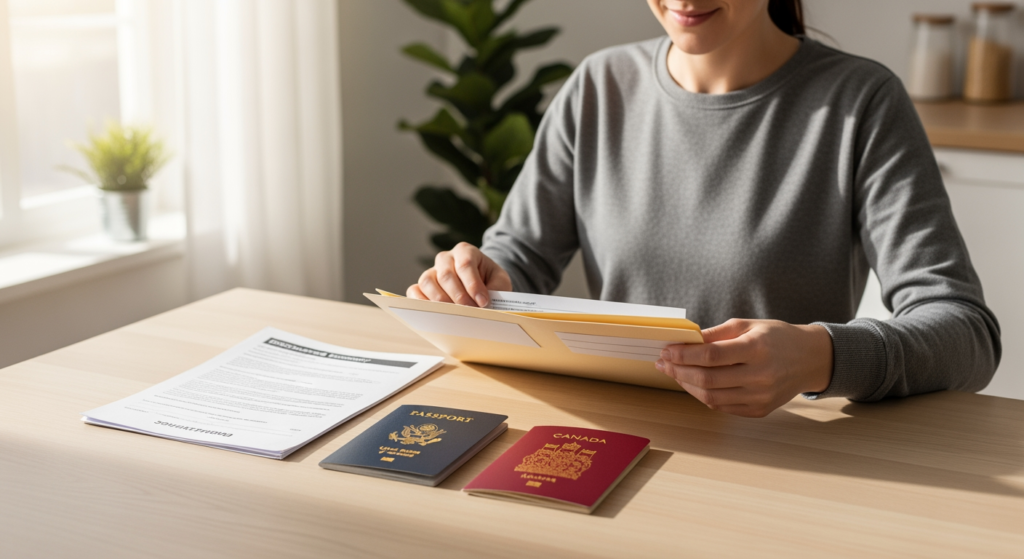
Cross-border medical transport can feel less like “travel planning” and more like assembling a small, highly important paper trail—especially when a loved one is non-ambulatory, medically fragile, or simply exhausted by transitions. This guide is for families, caregivers, and care coordinators who need a practical way to confirm what documents are typically requested for a non-emergency move between the United States and Canada. Getting the paperwork organized early helps reduce delays, prevents last-minute scrambling at pickup, and supports smoother handoffs between facilities and home. As spring brings a wave of relocations and care transitions, it’s a good time to tighten up your planning checklist before wheels are in motion.
If you’re still mapping out the overall process and what a long-distance, non-emergency move involves, start with Understanding Long-Distance Medical Patient Transport for a plain-language overview.
Bottom Line Upfront: Document Essentials
- Build a single “transport packet” that travels with the patient: IDs, care plan, medication list, and key contacts.
- Confirm border-entry requirements early (patient and accompanying family member), including valid identification and any required authorizations.
- Carry a current medication list (name, dose, schedule) and keep original labeled containers when possible.
- Include a concise clinical summary from the sending facility/provider to support continuity of the existing care plan during the trip.
- Have receiving details in writing: facility acceptance, address, unit/room, and the person who will receive the patient.
- Keep copies accessible (printed + digital) so a family member can produce documents without unpacking everything.
How Cross-Border Patient Transport Paperwork Usually Works
For non-emergency, long-distance medical patient transportation across the US–Canada border, documents typically serve one of three purposes: (1) identity and legal authority, (2) continuity of an existing care plan, and (3) destination coordination. The goal is not to create a new medical plan during transit—it’s to support the patient’s established routines (medications, oxygen as prescribed, feeding schedules, comfort measures) while ensuring the receiving party is ready.
Most families find it easiest to treat documents like a “handoff kit.” If multiple people are coordinating (a sibling, a facility social worker, and a receiving home health agency), designate one person to own the master packet and version control. That simple step prevents conflicting lists, outdated instructions, or missing signatures.
The Real-World Consequences of Missing Documents
Missing or unclear paperwork can create practical problems even in a completely non-emergency situation. The most common impacts are delays at pickup, confusion during facility discharge, slowed border processing, and avoidable stress for the patient—especially if they have cognitive impairment or fatigue easily during transitions.
Document gaps can also affect cost and timing indirectly. If a receiving facility can’t confirm acceptance details, or if a medication schedule isn’t clearly documented, you may spend valuable time making calls while the patient waits. For long trips, that can ripple into arrival windows, staffing availability at the destination, and family coordination.
Common Paperwork Mistakes (Use This Checklist)
- Relying on verbal instructions only: A quick phone call is helpful, but written details reduce misunderstandings between sending and receiving parties.
- Bringing an outdated medication list: Discharge medication changes can happen quickly; confirm you have the most current list.
- Not documenting who can make decisions: If the patient can’t consent, keep proof of legal authority readily available.
- Forgetting destination acceptance details: “They know we’re coming” is not the same as a named contact, address, unit/room, and a receiving confirmation.
- Scattering documents across bags: Split paperwork increases the chance something gets left behind during a pickup or room change.
- Skipping backup copies: A second printed set and a secure digital copy can save the day if something is misplaced.
A Smart Document Prep Plan Before You Travel
- Create a one-page cover sheet with patient name, DOB, allergies (if documented by the provider), primary diagnosis summary (high-level), and key contacts.
- Gather identity and border documents for the patient and any accompanying family member (valid, unexpired, and accessible).
- Request a discharge/transfer summary from the sending facility/provider that reflects the current status and existing care plan.
- Print a current medication administration schedule (times, doses) and pack medications in original labeled containers when feasible.
- Document prescribed equipment needs (for example, oxygen requirements as currently ordered) and include any written instructions provided by the clinician.
- Confirm receiving acceptance in writing (email/fax/portal message) with address, receiving contact, and any intake requirements.
- Prepare a “comfort and routines” note (non-clinical) for cognitive impairment: preferred name, calming strategies, mobility limitations, and communication tips.
- Store everything in a labeled folder that stays with the accompanying family member, not in packed luggage.
Professional Insight: The Small Detail That Prevents Big Delays
In practice, we often see that the smoothest cross-border trips happen when families treat the receiving facility acceptance details as a document—not a conversation. A single page showing the destination address, a named receiving contact, and confirmation that the patient will be received can eliminate a surprising amount of last-minute back-and-forth.
When It’s Time to Ask for Coordinated Help
Consider getting professional coordination support when any of the following are true:
- The patient cannot self-advocate due to dementia, cognitive impairment, or severe fatigue, and paperwork must be managed by others.
- Multiple facilities or agencies are involved (hospital, rehab, skilled nursing, hospice, home health), increasing the chance of conflicting instructions.
- The care plan is schedule-dependent (medications, feeding routines, oxygen as prescribed) and timing matters across a long drive.
- You need a single point of coordination to align pickup timing, receiving acceptance, and the transport packet contents.
- Border requirements feel unclear and you want a structured checklist approach to reduce avoidable delays.
Your Questions, Answered
What documents are usually needed for a non-emergency move between the US and Canada?
Needs vary by situation, but many families prepare: valid identification for the patient and accompanying family member, a current medication list and schedule, a transfer/discharge summary, proof of legal decision-making authority if applicable, and written receiving acceptance details.
Do I need paperwork from the sending facility if we’re going to a private home?
It’s often helpful to bring a discharge summary or care plan documentation even when the destination is home, because it supports continuity of the existing prescribed routines (medications, feeding schedules, oxygen as ordered) during the trip and during any follow-up care.
How should medications be packed for a long drive across the border?
Families commonly keep medications in original labeled containers when possible and carry a current written medication list and schedule. If you have questions about specific medications or documentation, ask the prescribing provider or dispensing pharmacy for guidance.
What if the patient can’t sign consent forms?
If the patient cannot provide consent, keep documentation showing who has legal authority to make decisions (as applicable in your situation). Having that paperwork accessible can reduce delays when facilities need confirmation.
Can a family member ride along during the trip?
Many long-distance, non-emergency medical patient transport arrangements allow one family member to ride with the patient, which can help with comfort, communication, and managing documents during transitions.
The Path Ahead
Crossing the US–Canada border with a medically fragile loved one is much easier when your documents are organized, current, and easy to produce on request. Focus on identity and authority, continuity of the existing care plan, and clear receiving acceptance details. A simple transport packet—and a backup copy—can prevent avoidable delays and reduce stress for everyone involved.
Learn More About Our Services
Discover how we can help you achieve your goals.