
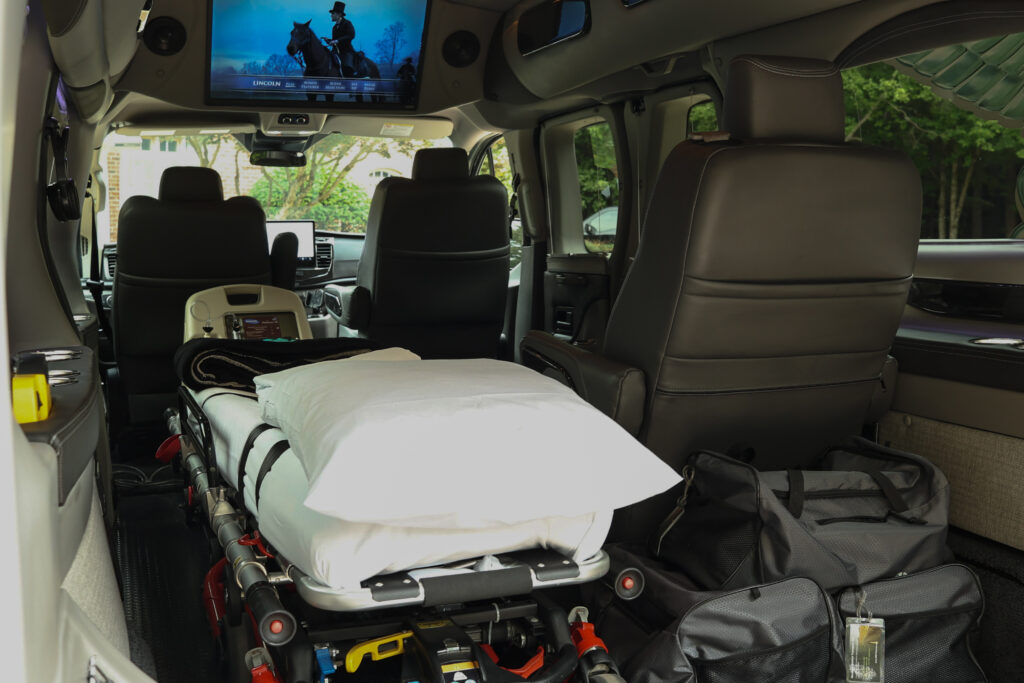
Ever been carsick and thought, “Okay, I just need to stare at the horizon and breathe”? Now imagine you’re the one coordinating long-distance medical patient transport for someone you love—someone who can’t just “switch seats” or “roll down the window” when the road gets rough.
That’s why I’m such a believer in forward-facing stretcher transport for long trips. It sounds like a small detail (and families often don’t think to ask), but when you’re talking about non-emergency stretcher transport over 300 miles, little comfort details stop being “nice-to-haves” and start becoming the whole experience.
Before we zoom in on the forward-facing part, if you want the bigger picture of what long-distance medical patient transportation actually involves (and what it doesn’t involve), I’d point you to this guide: Understanding Long-Distance Medical Patient Transport. It’s the kind of foundational read that makes the rest of the decisions feel less overwhelming.
The Importance of Forward-Facing Car Seats for Families
Most of us assume a stretcher is a stretcher is a stretcher. But orientation—literally which direction the patient faces—can change how the ride feels in a big way. When a patient is positioned forward-facing, their body experiences motion more like a typical passenger in a car or SUV.
And here’s the frustrating part: not every non-emergency stretcher setup prioritizes that. Families sometimes learn this after they’ve already booked with someone else, when their loved one spends hours feeling nauseated, disoriented, or just plain miserable. Sound familiar? (If you’ve ever taken a long road trip with a kid in the back seat, you already get it.)
Comfort on a 6–12+ hour ride: it’s not just “softness,” it’s orientation
When you’re coordinating a long trip, you’re usually thinking about big questions: “Is this non-emergency?” “Can they travel lying down?” “How do we do this safely?” All valid. But comfort is the quiet factor that can make the day feel manageable—or endless.
Forward-facing stretcher transport can help the ride feel more predictable. Predictability is calming. It’s easier for many people to rest when their brain isn’t constantly trying to “solve” confusing motion cues.
In my experience, families often notice comfort improvements in a few very human ways:
- Less motion discomfort on highways, ramps, and winding roads (nobody can promise “zero nausea,” but orientation can help).
- Less startle and stress because movement feels more intuitive—accelerating forward, slowing down, turning left/right.
- More natural rest—the kind where shoulders unclench and breathing settles.
Motion sickness and the brain-body mismatch (the part nobody warns you about)
Motion discomfort is one of those things that’s hard to explain until you’ve lived it. Your inner ear senses movement. Your eyes see… something else. If those signals don’t match, your body basically throws up its hands and says, “Nope.”
Forward-facing positioning can reduce that mismatch because it aligns more closely with what most of us are used to when traveling. The patient’s body experiences the ride in a way that’s more consistent with typical forward motion.
Now, quick reality check (stay with me here): every patient is different. Some people are sensitive no matter what. Road conditions matter. Medications can affect nausea. So I’m not saying forward-facing is magic. I’m saying it’s one of those practical, low-drama choices that can stack the odds in your favor for long-distance comfort.
Communication feels easier when the patient isn’t “away” from everyone
This is a big one, and it’s surprisingly emotional for families.
On long trips, the ride isn’t just transportation—it’s hours of being together in a small space while someone is vulnerable. When a patient is positioned forward-facing, communication can feel more natural. You’re not constantly trying to interpret muffled words or guess whether they’re uncomfortable. It’s often easier to check in, reassure them, and keep them oriented to what’s happening.
And if a family member is riding along (which is common in long-distance, non-emergency medical patient transportation), that sense of “we’re traveling together” matters. It’s not clinical. It’s human.
Orientation and anxiety: why “knowing what’s happening” reduces stress
We’ve all been there—someone else is driving, you can’t see where you’re going, and every turn feels bigger than it is. Now add illness, pain, dementia, or general fatigue. That uncertainty can spike anxiety fast.
Forward-facing stretcher transport can help some patients feel more oriented to the ride. Even if they’re resting, their body’s sense of movement matches the direction of travel. For patients with cognitive impairment, that can be especially helpful—less confusion, fewer “Where are we?” moments, and a calmer overall rhythm.
Again, not a promise. Just one of those thoughtful details that can make a long day feel less like a blur.
Safety: comfort and safety aren’t competing priorities
Sometimes families worry that “comfort features” are fluff, and safety is the only thing that matters. I don’t see it that way. Comfort and safety support each other—because a calmer, more settled patient typically tolerates the trip better.
Forward-facing doesn’t replace safety protocols (and it shouldn’t). It’s more like a design choice that can improve the ride experience while the transport team focuses on maintaining the patient’s existing prescribed care plan during a non-emergency trip.
If you want to dig into the broader safety framework families often ask about—without confusing this kind of service with emergency/911 care—this guide is helpful: Safety Protocols in Long-Distance Medical Transport.
Questions I’d ask any provider about stretcher orientation (because you deserve a straight answer)
When you’re comparing options for non-emergency stretcher transport over 300 miles, you don’t need a checklist the size of a textbook. You just need a few clear questions that reveal how the ride will actually feel.
Here are some simple ones I love (because they force clarity):
- “Is the stretcher forward-facing for the full trip?” (Not “sometimes,” not “if available.”)
- “If the patient gets motion discomfort, what adjustments can you make?” (You’re listening for practical, calm answers—not bravado.)
- “Can a family member ride along, and where will they sit relative to the patient?”
- “How do you keep the patient comfortable for a full-day drive?” (Comfort is a system, not a pillow.)
Where Managed Medical Transport, Inc. fits into this conversation (and why families bring it up)
Managed Medical Transport, Inc. focuses on long-distance medical patient transports over 300 miles across the United States and Canada, and one differentiator families often care about is forward-facing stretcher transport—specifically because it can reduce motion discomfort on long road trips.
They’re also firmly in the non-emergency category: this isn’t 911, it isn’t EMS, and it isn’t critical care. The goal is to transport patients safely and comfortably while maintaining the patient’s existing prescribed care plan during the trip (not creating a new one). Vehicles are owned and operated by Managed Medical Transport, Inc., and staff are direct employees—not subcontractors.
And if you take nothing else from this post, take this: when you’re planning a long trip for someone who can’t advocate for themselves the whole way, you’re not being “picky” by asking about forward-facing positioning. You’re being thoughtful. You’re protecting their comfort. And honestly? That’s love in logistical form.