

Choosing a stretcher-based option for a long trip can feel overwhelming—especially if you’re coordinating for a parent, spouse, or patient who can’t sit upright for hours. One detail that’s easy to overlook is the direction the stretcher faces during travel, which can affect comfort, motion sensitivity, and how stable the ride feels. During the winter months, longer travel days and layered clothing can also make positioning and comfort planning even more important. If you’re comparing services, asking about forward-facing stretcher transport is a practical way to narrow your options and set expectations for the trip.
For a broader overview of how long-distance, non-emergency medical patient transportation works, start with Understanding Long-Distance Medical Patient Transport.
Key Points to Know Before You Book
- Stretcher orientation can influence comfort on long rides, especially for patients who are sensitive to motion.
- Forward-facing positioning is often requested because it can feel more natural and stable for many riders.
- Non-emergency long-distance medical patient transportation is designed to maintain an existing care plan during travel—not to provide new treatment.
- Comfort is more than “soft bedding”: it also includes safe positioning, planned stops, and predictable routines.
- Ask detailed questions before scheduling so you know what the vehicle setup supports and what the team can accommodate.
How Stretcher Orientation Works in Non-Emergency Long Trips
In long-distance, non-emergency medical patient transportation, a stretcher is secured inside a specialized vehicle so the patient can travel lying down. “Orientation” refers to whether the patient’s head is positioned toward the front of the vehicle (forward-facing) or toward the rear (rear-facing).
For beginners, the simplest way to think about it is this: the body tends to feel movement differently depending on which direction you’re facing. Many people are more comfortable when they’re oriented in the same direction the vehicle is traveling, especially over many hours and varied road conditions.
Orientation is only one part of the comfort equation. A good long-distance setup also considers cushioning, securement, temperature control, and the ability to support the patient’s prescribed routines (for example, scheduled repositioning or oxygen use) during the trip.

Why Orientation Can Affect Comfort, Nausea, and Ride Stability
Families often focus on distance and price first, but comfort factors can drive the overall experience—especially for patients who are already fatigued, in pain, or living with cognitive impairment.
Here are practical ways stretcher direction may matter on long trips:
- Motion sensitivity: Some people feel less queasy when their body is aligned with the direction of travel. Others may be sensitive either way. The key is to discuss history of motion discomfort before booking.
- Sense of control and calm: Facing forward can feel more intuitive for some patients, which may help with anxiety—particularly when the patient is alert and aware of movement.
- Braking and acceleration feel different: How stops and starts feel to the patient can change depending on positioning. On long routes, repeated transitions (traffic, turns, uneven pavement) add up.
- Communication and observation: Depending on the vehicle layout, orientation may affect how easily staff can observe comfort cues and communicate with the patient.
Important boundary: non-emergency transport teams are not there to diagnose or treat nausea or other symptoms. The goal is to maintain the patient’s existing prescribed care plan and keep the trip as safe and comfortable as possible within that scope.
What It Can Mean for Your Timeline, Budget, and Peace of Mind
Orientation sounds like a small detail, but it can influence planning decisions that affect the whole trip.
- Trip tolerance: If the patient becomes uncomfortable early, you may need more frequent stops or additional comfort adjustments, which can make the day feel longer even when the mileage is the same.
- Care continuity: Long trips often require sticking to medication schedules, hydration routines, feeding routines, or repositioning plans. A comfortable, stable setup can make it easier to keep those routines consistent.
- Family coordination: When one family member is permitted to ride along, clarity about the patient’s setup helps everyone prepare—what to pack, what questions to ask, and what to expect during breaks.
- Comparing providers: Not every service offers the same vehicle configuration. Asking about stretcher direction early can quickly clarify whether a provider is a fit for your situation.
Common Missteps to Avoid (Quick Checklist)
- Assuming all stretcher transport is the same: Vehicle layouts and patient securement options vary. Ask what the setup supports.
- Waiting to mention motion sensitivity: If the patient has a history of nausea during travel, share that during planning so comfort strategies can be discussed.
- Skipping details about mobility and transfers: Clarify whether the patient is non-ambulatory, needs a lift assist, or requires careful transfer coordination at pickup and drop-off.
- Not confirming care-plan needs: If the patient has oxygen requirements, feeding tubes, incontinence care needs, or scheduled turning/repositioning, confirm the team can maintain the existing routine during travel.
- Confusing non-emergency transport with on-demand rides: Long-distance medical patient transportation is planned, scheduled, and care-continuity focused—not a rideshare model.
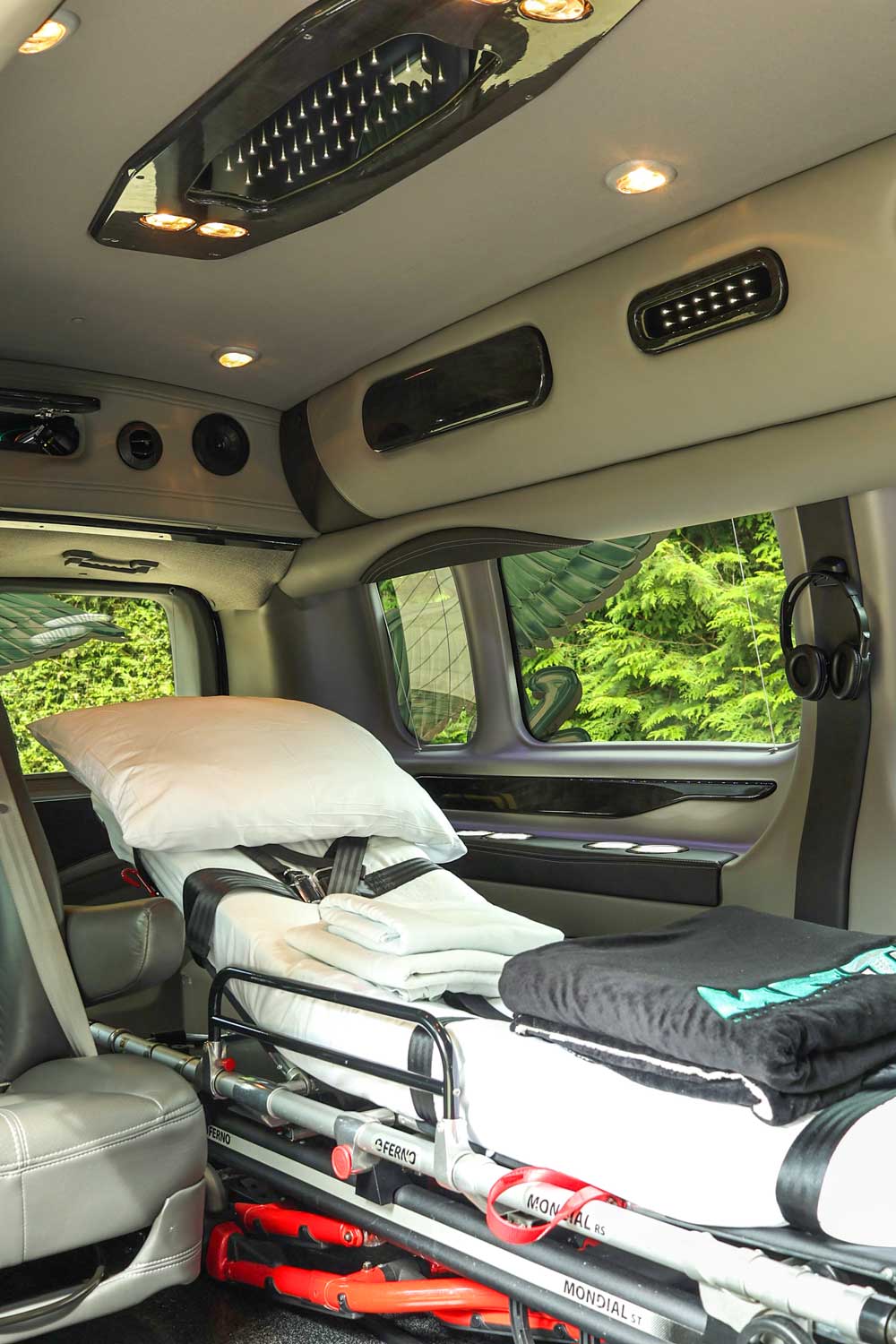
How to Plan for a More Comfortable Long-Distance Stretcher Trip
- Ask about stretcher direction during your first call: Confirm whether forward orientation is available and whether there are any constraints based on vehicle configuration.
- Share the patient’s baseline comfort needs: Include typical sleep position, pressure sensitivity, and any anxiety triggers related to travel.
- Provide a written care-plan summary: List medication times, hydration/feeding routines, oxygen flow requirements (as prescribed), and repositioning schedules.
- Plan clothing and bedding for long hours: Choose comfortable layers and consider items that support the patient’s normal routine (within what the transport team allows).
- Confirm pickup/drop-off logistics: Ask about doorway widths, elevator access, and who will coordinate the handoff at each end.
- Set a communication plan: Decide who receives updates and ensure contact numbers are correct before departure.
Professional Insight: The Small Detail Families Appreciate Later
In practice, we often see families focus on the big milestones—pickup time, total miles, and arrival—then realize mid-trip that comfort details (like orientation, bedding feel, and predictable routines) are what shape the patient’s experience hour by hour. When those details are discussed upfront, the trip tends to feel more manageable for everyone involved.
When It’s Time to Ask for Professional Transport Support
Consider reaching out to a long-distance, non-emergency medical patient transportation provider when:
- The patient cannot sit upright for extended periods and needs to travel lying down.
- The trip is long enough that routines matter (medication schedules, oxygen use, feeding routines, or repositioning plans).
- You’re coordinating a facility-to-facility or hospital-to-home transition and need a planned handoff at both ends.
- The patient has cognitive impairment and does better with structured support and calm communication.
- You need a clear, scheduled plan rather than an on-demand ride model.
Frequently Asked Questions
Is a forward-oriented stretcher setup available for non-emergency long trips?
It depends on the provider’s vehicle configuration. If orientation is important for comfort, ask directly during scheduling so you can confirm what setup is offered.
Does stretcher direction prevent motion sickness?
No setup can guarantee how someone will feel. However, some patients find that facing the direction of travel feels more natural and may reduce discomfort over long distances.
Can a transport team change medications or treat nausea during the trip?
Non-emergency medical patient transportation is intended to maintain the patient’s existing prescribed care plan during travel. It is not a substitute for a hospital or physician and does not initiate new medical treatment.
What information should I share before booking a long-distance stretcher trip?
Share mobility level, transfer needs, cognitive considerations, oxygen requirements (if prescribed), feeding routines, medication schedule, and any comfort concerns such as motion sensitivity.
How is this different from a medical rideshare option?
Long-distance, non-emergency medical patient transportation is typically scheduled and planned around patient mobility, comfort, and care continuity. It is not an on-demand rideshare model and is designed for patients who need more structured support during travel.
Where to Go from Here
Stretcher orientation is a practical, beginner-friendly question that can help you compare options and plan a smoother long trip. When you understand how the patient will be positioned, you can better anticipate comfort needs, routine timing, and the overall travel experience. The best next step is to gather the patient’s care-plan details and ask providers clear, specific setup questions before you schedule.
Learn More About Our Services
Discover how we can help you achieve your goals.