Facility-to-Facility Transfers Over 300 Miles: A Coordination Guide for Hospitals, SNFs, and Rehab Centers

Facility-to-Facility Transfers Over 300 Miles: A Coordination Guide for Hospitals, SNFs, and Rehab Centers

Coordinating facility-to-facility non-emergency medical patient transportation over 300 miles can feel like a high-stakes puzzle: the patient’s comfort, the sending team’s discharge timeline, and the receiving facility’s admission requirements all have to align. This guide is for hospital discharge planners, SNF and rehab administrators, case managers, and family decision-makers who need a reliable, repeatable way to plan long-distance, non-emergency transfers. When the handoff is organized, you reduce avoidable delays, prevent missing paperwork, and support care continuity during the trip. In the winter months, travel-day planning often benefits from a little extra buffer for scheduling and coordination.

For a broader foundation on how long-distance, non-emergency transport is typically structured, see Understanding Long-Distance Medical Patient Transport.

Key Points to Know First

  • Start with eligibility: these transfers are appropriate when the situation is non-emergency and the patient can travel safely without emergency response.
  • Plan for care continuity: confirm how the patient’s existing prescribed care plan (medications, oxygen, feeding routines, repositioning) will be maintained en route.
  • Align on timing: the sending facility, receiving facility, family, and transport provider should agree on a realistic pickup window and arrival expectations.
  • Standardize documentation: a consistent packet reduces last-minute calls and prevents “arrival-without-orders” problems.
  • Clarify what the service is (and isn’t): this is not on-demand rideshare and not emergency care; it’s planned, long-distance medical patient transportation.
  • Confirm who travels: if a family rider is needed, confirm the policy early so seating and communication expectations are clear.

How Long-Distance Facility Transfers Actually Work

A long-distance, non-emergency facility transfer is a scheduled move between care settings—commonly hospital-to-SNF, SNF-to-rehab, rehab-to-hospital, or facility-to-home—where the primary goal is safe transport while maintaining the patient’s existing prescribed care plan. The transport team’s role is logistical and supportive: they follow the established plan (for example, medication schedules, oxygen use, hydration routines, feeding routines, and comfort measures) without initiating new medical interventions or creating new care plans.

Because these moves exceed 300 miles, coordination tends to be more structured than local trips. The sending team typically provides clinical documentation and transfer instructions, the receiving facility confirms acceptance and bed readiness, and the transport provider confirms the travel plan, staffing, and any required accommodations (such as non-ambulatory positioning, incontinence care support, or swallow precautions).

compact van, minivan, van, ford transit

Why 300+ Mile Transfers Change the Planning Math

Long-distance moves amplify small gaps. A missing page in the transfer packet, an unclear medication time, or a vague receiving contact can create hours of delay or an uncomfortable experience for the patient.

  • Time: longer trips require clearer pickup windows, planned stops, and realistic arrival estimates shared with the receiving unit.
  • Comfort: extended time in transit makes bedding, positioning, and routine-based comfort measures more important.
  • Care continuity: the longer the trip, the more likely the patient will need scheduled medications, hydration, feeding routines, oxygen management, or repositioning per the existing plan.
  • Communication load: families and facilities often need periodic updates; a clear communication plan reduces inbound calls and confusion.
  • Cost clarity: long-distance pricing structures vary widely; confirm what’s included so there are no surprises tied to mileage or stops.

Common Missteps That Delay Admissions (Checklist)

  • Assuming “non-emergency” means “no planning”: long-distance transfers still require a structured handoff and confirmed receiving acceptance.
  • Sending incomplete paperwork: missing orders, a current medication list, or contact details can cause arrival delays.
  • Unclear mobility and positioning needs: not specifying non-ambulatory status, stretcher positioning preferences, or turning schedules can lead to avoidable discomfort.
  • Not confirming oxygen requirements in advance: oxygen use should be clearly documented as part of the existing prescribed care plan.
  • Overlooking diet and swallow precautions: if the patient has a specialized diet (pureed, thickened liquids), document it and align expectations for the travel day.
  • Mixing up service types: planned medical patient transportation is different from on-demand rideshare; treating it like a last-minute car request often creates avoidable gaps.

Coordination Plan Checklist for Hospitals and Care Facilities

  • Confirm acceptance and timing: get the receiving facility’s admission confirmation, bed readiness, and a best contact for arrival coordination.
  • Define the patient’s travel readiness: document mobility status, cognitive considerations (including dementia), and any comfort or safety needs relevant to a long trip.
  • Assemble a standardized transfer packet: include facesheet, orders, current medication schedule, allergies, advance directives (if applicable), and facility contact list.
  • Document care routines to be maintained: list medication times, feeding routines (including tube feeding schedules if applicable), hydration expectations, repositioning/turning schedule, and oxygen use.
  • Plan for personal items: ensure required items travel with the patient (glasses, hearing aids, chargers, comfort items) and are labeled.
  • Set a communication plan: identify who receives updates (family, case manager, receiving nurse) and how often updates are expected.
  • Clarify rider needs early: if one family member plans to ride along, confirm permission and logistics in advance.
  • Confirm what’s included in pricing: verify whether mileage, tolls, meals, and planned stops are included so approvals and authorizations are clean.
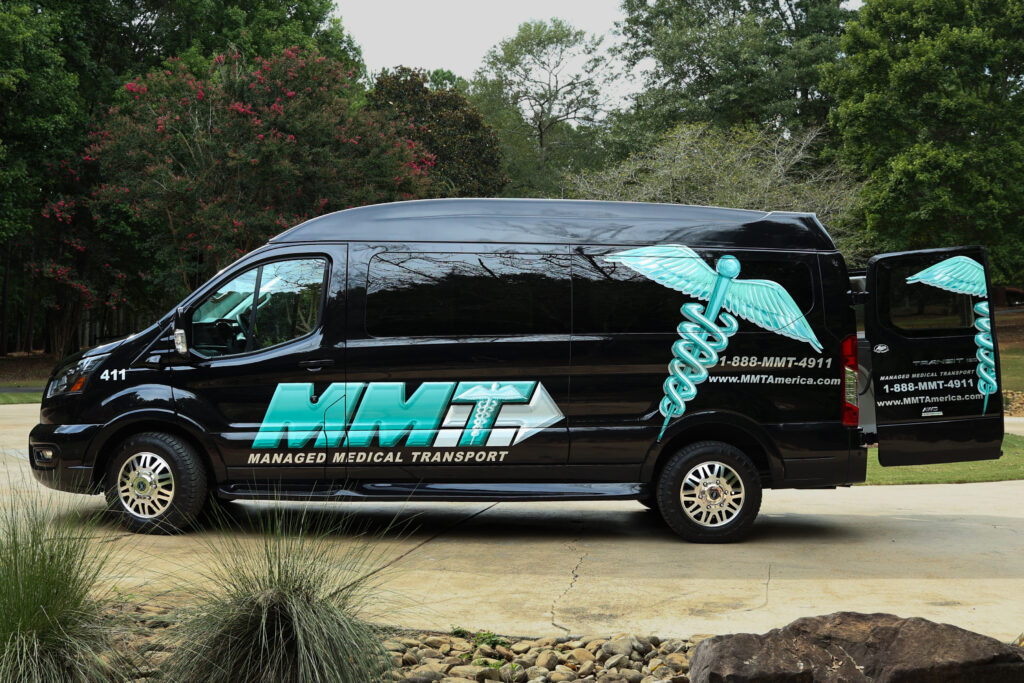
Minivan used for long-distance medical transport services by Managed Medical Transport, Inc.

The “One Owner” Rule Keeps Handoffs Smooth

In practice, we often see smoother long-distance transfers when one person is clearly designated as the coordination owner—someone who can confirm the receiving acceptance, validate the packet is complete, and stay reachable through pickup and arrival. When ownership is unclear, families and facilities may receive conflicting information, and small documentation gaps become last-minute delays.

When to Seek Professional Support for a Long-Distance Transfer

  • The patient is non-ambulatory or bed-bound: long-distance positioning, comfort, and routine adherence need explicit planning.
  • The patient has complex routines: scheduled medications, tube feeding, oxygen requirements, insulin-dependent diabetes routines, or turning schedules should be coordinated clearly for the full travel window.
  • Cognitive impairment is present: dementia or Alzheimer’s can make transitions harder; structured communication and consistent routines matter.
  • The receiving facility has strict intake requirements: if admission depends on specific documentation or timing, professional coordination can reduce avoidable rework.
  • The timeline is tight: if discharge and admission windows are narrow, it helps to involve a transport provider early to confirm feasibility and expectations.

Common Questions Answered

What makes a long-distance facility transfer “non-emergency”?

It generally means the transport is planned and the patient does not require emergency response. The goal is safe travel while maintaining the patient’s existing prescribed care plan, not initiating new treatment or replacing clinical care teams.

How should we prepare documentation for a receiving SNF or rehab center?

Use a standardized packet that includes the facesheet, orders, current medication schedule, allergies, and clear facility contacts. If the patient has routines that must continue during travel (oxygen use, feeding routines, turning schedule), document those clearly as part of the existing plan.

Can a family member ride with the patient on a long trip?

Some non-emergency long-distance medical patient transportation providers allow one family member to ride along. Confirm the rider policy early so seating, communication, and expectations are clear.

Is this the same as a “medical Uber” type of service?

No. Planned long-distance medical patient transportation is coordinated in advance and is designed around continuity of the patient’s existing prescribed care plan and mobility needs. On-demand rideshare models are typically not structured for long-distance, care-plan-based transfers.

What should we clarify about care during transport?

Clarify that the patient’s existing prescribed care plan will be maintained—such as medication timing, hydration, oxygen use, feeding routines, and comfort measures—without initiating new interventions or creating a new care plan.

Your Next Steps

Facility-to-facility transfers over 300 miles run best when everyone shares the same plan: confirmed acceptance, a complete packet, and a clear approach to maintaining the patient’s existing routine during the trip. Small coordination steps—like naming one point of contact and documenting care schedules—can prevent delays and reduce stress for the patient, family, and both facilities. If you’re organizing a long-distance, non-emergency move, use the checklists above to standardize the handoff and keep the transition predictable.

Learn More About Our Services

Discover how we can help you achieve your goals.

REQUEST A QUOTE

Read more Facility-to-Facility Transfers Over 300 Miles: A Coordination Guide for Hospitals, SNFs, and Rehab Centers
How Long Does Long-Distance Non-Emergency Medical Patient Transportation Take? A Timeline From First Call to Arrival

How Long Does Long-Distance Non-Emergency Medical Patient Transportation Take? A Timeline From First Call to Arrival

Planning a long trip for a patient can feel urgent even when it isn’t an emergency—especially when you’re coordinating discharge timing, family availability, and a receiving facility’s intake window. If you’re a family member, caregiver, or discharge planner, you’re likely asking: how long does long-distance non-emergency medical patient transportation take from the first phone call to arrival? The answer depends on a few predictable variables (distance, readiness, paperwork, and the patient’s care routines), and you can influence many of them with the right preparation. During the winter months, extra buffer time is often helpful for smoother coordination across facilities and family schedules.

For a plain-language overview of what this service is (and what it is not), start with Understanding Long-Distance Medical Patient Transport.

The Essentials: Typical Timing Drivers and What You Can Control

  • You’re planning two timelines: (1) booking and coordination and (2) travel day duration. Both matter.
  • Distance is only part of the clock: patient readiness, facility discharge steps, and care-plan details can add meaningful time.
  • Same-day vs. scheduled: availability and coordination requirements often make scheduled transports easier to execute smoothly.
  • Care continuity affects pacing: planned stops for comfort, repositioning, hydration, and routine needs can extend travel time.
  • Paperwork and contacts prevent delays: having the right documents and phone numbers ready can shorten the pre-departure phase.

How the End-to-End Timeline Works (From First Call to Drop-Off)

The overall duration is best understood as a sequence of phases. Your goal is to reduce avoidable delays in the early phases so travel day can run as predictably as possible.

Prerequisites (what to have ready before you start)

  • Patient basics: name, age, mobility level (ambulatory vs. non-ambulatory), and current location (home, hospital, skilled nursing, rehab).
  • Destination details: receiving address, point of contact, and any intake requirements or time windows.
  • Care plan summary: medication schedule, oxygen requirements (if prescribed), feeding routines (if applicable), repositioning/turning needs, and swallow precautions or diet texture.
  • Facility coordination info: nurse station number, case manager/discharge planner contact, and the best time to call for updates.
  • Personal items list: essentials that must travel with the patient (identification, discharge packet, comfort items).

Step 1) Make the first call and define the transport window

What you’re doing: Establishing the desired pickup date/time range and confirming the trip is appropriate for non-emergency medical patient transportation.

  • Tip: Ask what information is needed to quote and schedule so you can gather it in one pass (instead of multiple callbacks).
  • Tip: If a family member will ride along, confirm that early so seating and logistics are planned appropriately.

Step 2) Share patient needs so the trip can be paced safely and comfortably

What you’re doing: Communicating the patient’s existing prescribed care plan and routine needs so the trip plan accounts for them.

  • Tip: Provide the timing of routines (e.g., when medications are due) rather than only listing medications.
  • Tip: If oxygen is prescribed, confirm the prescribed flow requirements and how it’s typically managed day-to-day.

Step 3) Align pickup logistics with the sending facility or home setting

What you’re doing: Coordinating where the patient will be released, what time they will be ready, and who will sign or hand off documents.

  • Tip: Request that the sending facility prepare a single packet (discharge summary, medication list, care instructions) for the travel team to reference.
  • Tip: Confirm whether the patient must be dressed, medicated, and fed before pickup to avoid last-minute delays.

Step 4) Confirm destination intake and handoff requirements

What you’re doing: Ensuring the receiving facility (or home caregiver) is ready to accept the patient at the expected arrival time.

  • Tip: Ask for a primary and backup contact number at the destination in case the first person is unavailable.
  • Tip: If the destination has a check-in window, build a buffer so arrival does not become a rush.

Step 5) Travel day: pickup, transport, planned stops, and arrival

What you’re doing: Executing the trip while maintaining the patient’s existing care plan and comfort routine (without initiating new medical interventions). For long trips, travel time typically includes planned stops for comfort, repositioning, and routine needs.

  • Tip: Keep a small “day-of” checklist: phone charger, patient comfort items, and any required documents.
  • Tip: If family is coordinating from a distance, designate one point person for updates to reduce confusion.
Van with car seat and head restraint for safe medical transport.

The Importance of Timing: Discharge Windows and Costs

Timing impacts more than convenience—it affects the smoothness of the transition between care settings. If the patient is leaving a hospital or facility, discharge steps can take time, and mismatched timing can create long waits for the patient and family. On travel day, a realistic pace helps preserve comfort and reduces the chance of missed routine care moments (like scheduled medications or feeding routines) during the trip.

From a planning standpoint, having a clear timeline also helps families coordinate work schedules, destination readiness, and any required paperwork. For long-distance, non-emergency medical patient transportation over 300 miles, it’s smart to treat the schedule as a coordination project—not just a drive.

Common Missteps That Slow Everything Down (Checklist)

  • Waiting to confirm receiving acceptance: A destination that isn’t ready can force last-minute rescheduling.
  • Providing incomplete care-plan details: Missing routine needs (oxygen, feeding, repositioning, swallow precautions) can create day-of surprises.
  • Assuming discharge timing is fixed: Facilities often have moving parts; confirm “patient will be ready” versus “paperwork will be ready.”
  • Not consolidating contacts: If no one knows who the decision-maker is, simple questions can turn into long delays.
  • Packing essentials in multiple bags: Scattered items increase the chance something critical is left behind during handoff.
  • Trying to force a tight arrival window: Long trips can require planned comfort stops; overly narrow timing can add stress.

Your Practical Action Plan to Keep the Timeline on Track (Checklist)

  • Choose a realistic pickup window: Build buffer for facility processes and patient readiness.
  • Create a one-page care routine summary: Include timing for medications, feeding/hydration routines, and repositioning needs.
  • Confirm two contacts at both ends: Sending nurse station/case manager and receiving intake/charge nurse (or home caregiver).
  • Ask what documents must travel with the patient: Keep them together in a clearly labeled folder.
  • Plan for comfort needs: Clothing layers, incontinence supplies (if used), and familiar items that reduce anxiety.
  • Designate one family coordinator: One person handles updates and decisions to avoid mixed messages.
compact van, minivan, van, ford transit

The Key Detail That Often Determines the Schedule

In practice, we often see the biggest time savings when families and facilities align on a single, specific definition of “ready”: the patient is prepared, the discharge packet is complete, medications and routine needs are accounted for, and the handoff person is identified. When “ready” is vague, the timeline tends to stretch in unpredictable ways.

When It’s Time to Ask for Professional Coordination

  • The patient is non-ambulatory or bed-bound: You’ll want a plan that supports safe transfers and comfort over a long distance.
  • The trip involves oxygen, feeding tubes, or scheduled repositioning: These needs can affect pacing and stop planning.
  • There are multiple stakeholders: Hospital, receiving facility, and family members across time zones or schedules.
  • You have a tight discharge-to-admission handoff: Professional coordination can reduce avoidable gaps.
  • The patient has cognitive impairment: Clear routines and communication can make the day more manageable.

Frequently Asked Questions

What factors usually change the overall timeline?

Common factors include the total distance, the patient’s routine care needs during travel, how quickly sending paperwork is completed, and whether the receiving location has a specific intake window.

Is the travel day schedule only based on miles?

No. Long trips often need planned stops for comfort and routine needs. The patient’s existing prescribed care plan and comfort pacing can influence the total duration.

Can a family member ride with the patient?

Yes. Managed Medical Transport, Inc. allows one family member to ride with the patient, which can help with reassurance and communication during the trip.

Does non-emergency medical patient transportation include medical treatment?

No. These transports are non-emergency and do not provide medical treatment or diagnosis. The transport team maintains the patient’s existing prescribed care plan during the trip and does not initiate new interventions.

How do updates work during a long trip?

Managed Medical Transport, Inc. provides continuous communication and updates with family and offers real-time vehicle tracking throughout transport.

Where to Go from Here

Timing becomes much easier to manage when you separate the process into phases: booking, coordination with both ends, and travel day pacing. If you gather care-plan details and confirm contacts early, you can reduce avoidable delays and create a more predictable arrival window. The goal is a smooth transition that supports comfort and continuity on a long trip.

Book Your Consultation

Schedule a free consultation with our experts.

REQUEST A QUOTE

Read more How Long Does Long-Distance Non-Emergency Medical Patient Transportation Take? A Timeline From First Call to Arrival
Non-Emergency Medical Transport vs 911/EMS: How to Tell What You Need (And What We Don’t Provide)

Non-Emergency Medical Transport vs 911/EMS: How to Tell What You Need (And What We Don’t Provide)

Choosing between non-emergency medical transport vs ambulance-style emergency response can feel confusing—especially when you’re coordinating care for a parent, spouse, or patient who can’t safely ride in a standard car. This guide is for families, caregivers, and discharge planners who need a clear way to decide what type of help fits the situation, without guessing or overcomplicating it. The right choice matters because it affects timelines, cost expectations, and—most importantly—whether the patient’s current care plan can be supported during the trip. In winter months, long trips can also require more planning for comfort, pacing, and continuity of routine.

For a deeper overview of how long-distance, non-emergency medical patient transportation works, see Understanding Long-Distance Medical Patient Transport.

Bottom Line Upfront: How to Choose the Right Type of Help

  • If the situation is time-critical or unstable, you should rely on local emergency services. Non-emergency providers are not a substitute for emergency response.
  • Non-emergency medical patient transportation is for planned, scheduled moves where the patient’s condition is stable enough for a coordinated trip.
  • Long-distance non-emergency transport is a logistics-and-continuity solution—focused on maintaining an existing care plan during travel, not creating a new one.
  • Ask one core question: “Can this be safely scheduled, or does it require immediate response?”
  • Clarify scope before booking: confirm what’s included (staffing, equipment, communication) and what is not (treatment, diagnosis, emergency response).

Non-Emergency Transport vs Ambulance: Key Differences

People often use the word “ambulance” as a catch-all for any stretcher-based ride. In reality, non-emergency medical patient transportation and emergency response serve different purposes.

Non-emergency medical patient transportation is typically scheduled in advance and designed to support a patient’s existing, prescribed care plan during travel (for example: medication schedules, hydration routines, oxygen already prescribed, feeding routines, comfort measures). It is not intended to replace hospitals, physicians, or emergency services, and it does not involve diagnosis or new medical interventions.

911/EMS is designed for urgent situations where rapid response and emergency capabilities are needed. If you are unsure whether a situation is urgent, it’s safer to treat it as such and rely on emergency services.

Comparison criteria Non-emergency medical patient transportation (planned) 911/EMS (urgent response)
Primary purpose Scheduled transport that maintains an existing care plan during travel Immediate response for urgent or unstable situations
Timing Pre-arranged, coordinated pickup and destination planning Dispatched as quickly as possible
Care scope Continuity of prescribed routines; no diagnosis or new treatment initiated Emergency assessment and response capabilities (varies by jurisdiction)
Best fit for Facility-to-facility moves, hospital discharge travel, long-distance relocation when stable Sudden changes, severe symptoms, or when immediate medical response is needed
Cost/value framing Often evaluated as a planned service with defined inclusions and trip expectations Value is tied to rapid response and emergency readiness

Where Managed Medical Transport, Inc. fits: Managed Medical Transport, Inc. provides long-distance, non-emergency medical patient transports over 300 miles. It does not provide emergency or critical care transports, and it does not provide 911, EMS, or emergency ambulance services.

Compact van for efficient long-distance medical transport services.

Why the Decision Impacts Cost, Comfort, and Care Continuity

When you choose the right category of help, you reduce avoidable stress and last-minute changes. When you choose the wrong one, you can run into delays, mismatched expectations, or gaps in how the patient’s routine is supported during travel.

  • Timing and coordination: Planned transport usually involves aligning pickup windows, destination readiness, and documentation. Emergency response is not designed around scheduled coordination.
  • Patient comfort over long distances: For extended trips, comfort features (positioning, bedding, pacing, and routine) can meaningfully affect the experience.
  • Care continuity: Many patients do best when medication schedules, hydration, feeding routines, oxygen already prescribed, and comfort measures remain consistent during the move.
  • Budget expectations: Non-emergency transport is often evaluated as a defined service with clear inclusions, while emergency response costs and billing structures can differ widely.
  • Family communication: For planned moves, families often prioritize proactive updates and predictable logistics.

Checklist: Common Mix-Ups That Lead to the Wrong Call

  • Assuming “stretcher ride” automatically means emergency care: Stretcher-based travel can be non-emergency when the patient is stable enough for a scheduled trip.
  • Using on-demand rideshare for complex mobility needs: Medical rideshare-style options may not be appropriate for non-ambulatory patients who need specialized positioning, incontinence support, or continuous routine management.
  • Skipping a scope-of-service conversation: Always confirm what the provider will and will not do during transport (especially around care-plan continuity vs initiating treatment).
  • Not clarifying who provides the transport: If you care about consistency and accountability, ask whether vehicles and staff are owned/operated directly by the company or handled by third parties.
  • Underestimating the planning needed for cognitive impairment: Dementia and similar conditions often require extra attention to routine, reassurance, and predictable pacing during a long trip.
  • Waiting too long to coordinate destination readiness: Even a well-run trip can be disrupted if the receiving facility/home setup isn’t ready at arrival.

Smart Preparation Steps for a Safe, Non-Emergency Long-Distance Move

  • Confirm the trip is non-emergency and can be scheduled: If the patient’s status is uncertain, rely on appropriate clinical decision-makers and emergency resources.
  • Write down the existing care plan in a travel-friendly format: Include medication timing, feeding routines, hydration preferences, oxygen requirements already prescribed, repositioning schedules, and swallow precautions if applicable.
  • List mobility and comfort needs: Note non-ambulatory status, transfer needs, bedding preferences, and any motion sensitivity.
  • Plan for dignity and hygiene: Pack supplies for incontinence care and comfort items that help the patient stay calm and oriented.
  • Align pickup and handoff details: Confirm who will sign paperwork, what entrance to use, and who receives updates during the trip.
  • Ask about communication: Confirm how updates are shared and whether real-time tracking is available.
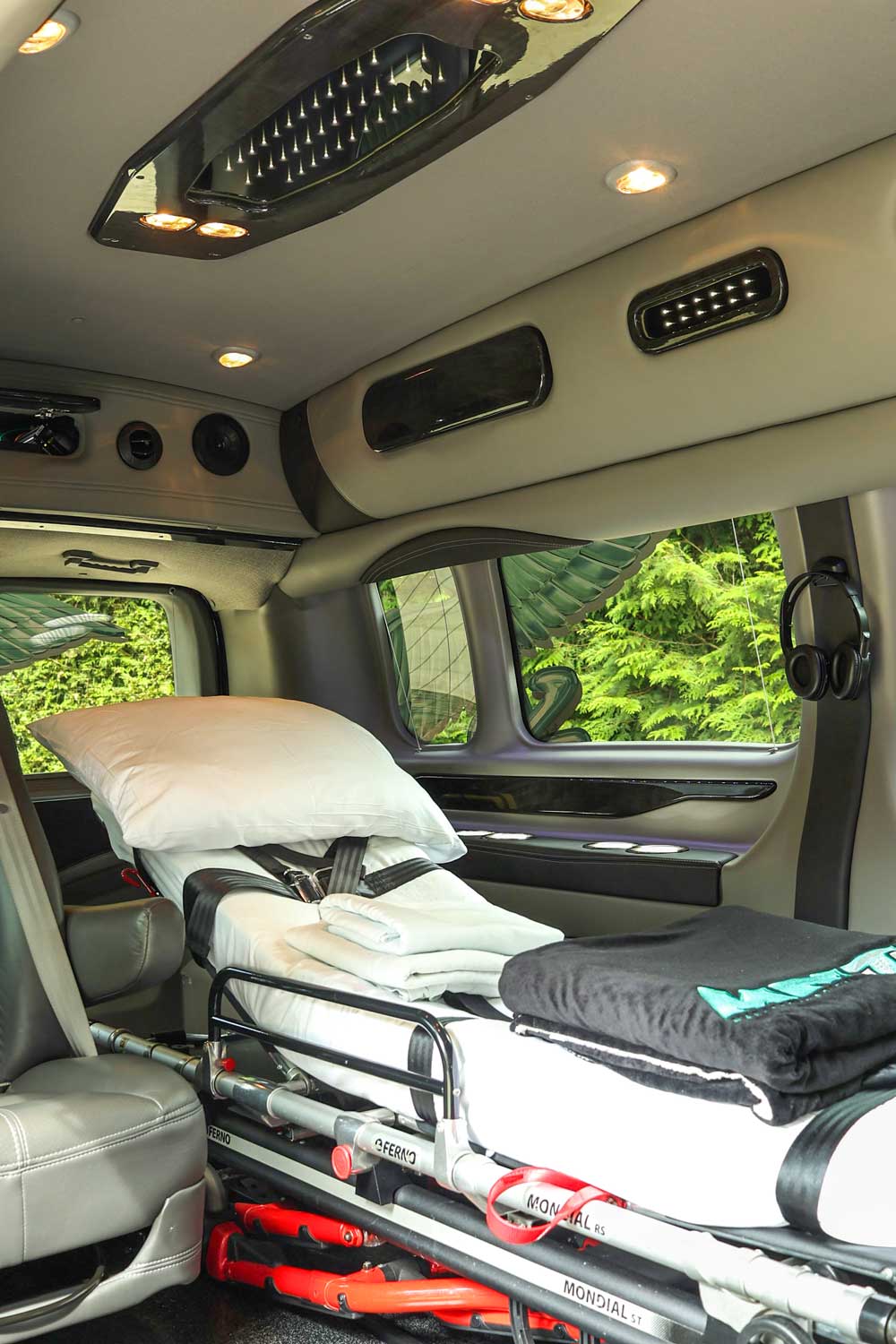
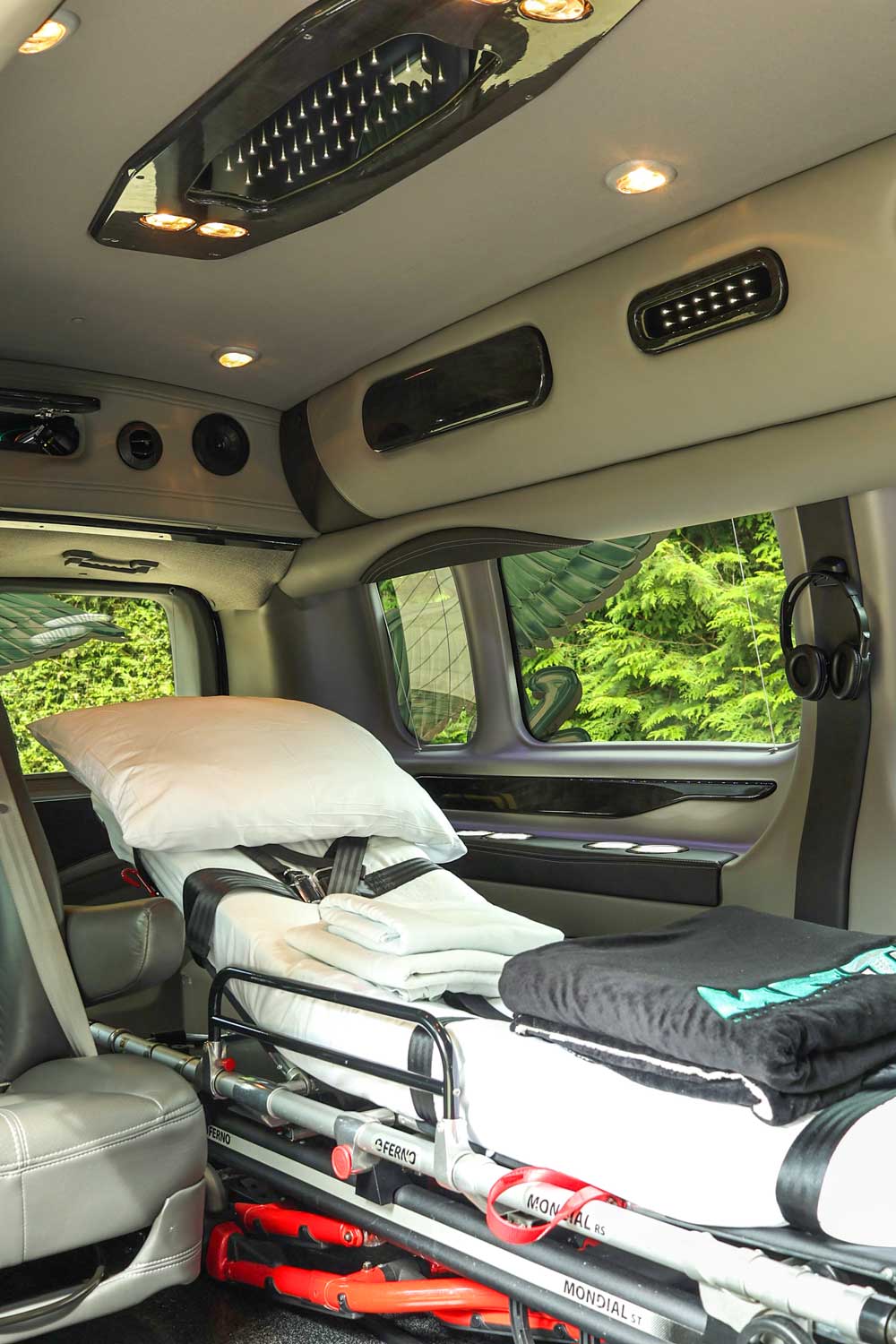
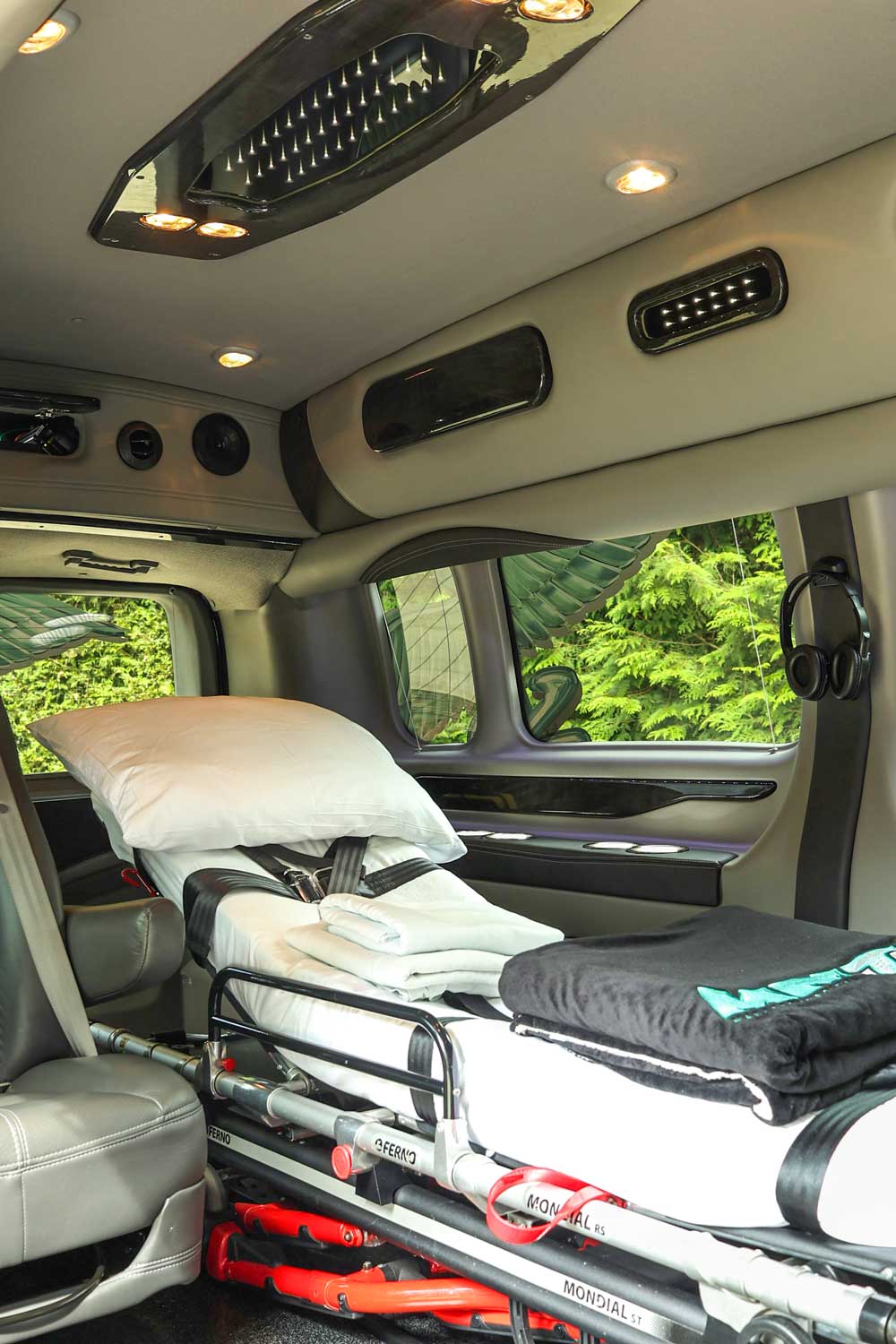
Luxury minivan with stretcher and seating for safe medical transport.

Professional Insight: The One Detail Families Often Miss

In practice, we often see that the smoothest long-distance moves happen when families treat transport as a care transition, not just a ride—meaning the existing routine (medications, hydration, feeding, comfort measures, and prescribed oxygen) is clearly documented and the receiving side is ready to continue it without a gap.

When It’s Time to Involve a Professional Transport Team

  • The patient cannot safely ride in a standard car due to non-ambulatory status, inability to sit upright for long periods, or transfer limitations.
  • The trip is long-distance (hundreds of miles) and you need predictable logistics, comfort planning, and continuity of routine.
  • The patient has care needs that must be maintained during travel (for example: feeding tubes, incontinence care, dementia-related support, prescribed oxygen requirements, diabetic routines already prescribed).
  • You need structured communication so family members and facilities know where the patient is in the process.
  • You want clarity on scope and accountability (who provides the vehicle, who provides the staff, and what is included).

Frequently Asked Questions

How do I know if a situation can be scheduled instead of requiring urgent response?

If the patient’s condition is stable enough for a planned pickup and coordinated handoff, it may be appropriate to schedule a non-emergency option. If you’re unsure whether it’s urgent, rely on emergency resources and clinical decision-makers.

Can long-distance non-emergency transport support prescribed routines during the trip?

Some long-distance non-emergency providers focus on maintaining an existing care plan during travel—such as medication schedules, feeding routines, hydration, comfort measures, and prescribed oxygen—without initiating new interventions.

Is a medical rideshare the same as a long-distance medical patient transport service?

No. Medical rideshare-style options are generally designed for simpler, on-demand trips. Long-distance medical patient transportation is typically planned and may be better suited for patients who are non-ambulatory or need consistent routine support over many hours.

What does Managed Medical Transport, Inc. provide—and what is excluded?

Managed Medical Transport, Inc. provides long-distance, non-emergency medical patient transports over 300 miles across the United States and Canada. It does not provide emergency or critical care transports, does not provide 911/EMS or emergency ambulance services, and does not initiate new care plans or provide diagnosis or treatment.

Can a family member ride along during a long-distance trip?

With Managed Medical Transport, Inc., one family member is permitted to ride with the patient, which can help with reassurance, communication, and continuity for longer moves.

Where to Go from Here

The safest decision starts with clarity: is this a situation that can be planned, or does it require urgent response? Once you confirm it’s non-emergency, compare options based on care-plan continuity, comfort for long distances, communication, and accountability for who is providing the transport. If your goal is a scheduled, long-distance move that maintains an existing routine, a dedicated non-emergency medical patient transportation provider is often the better fit than on-demand alternatives. If the situation is unstable or time-critical, rely on emergency resources.

Get Your Free Quote

Find out how we can help with a no-obligation quote.

REQUEST A QUOTE

Read more Non-Emergency Medical Transport vs 911/EMS: How to Tell What You Need (And What We Don’t Provide)
January Winter Travel Checklist for Long-Distance Medical Patient Transportation

January Winter Travel Checklist for Long-Distance Medical Patient Transportation

Planning a long trip for a patient who can’t safely ride in a standard car is stressful—especially in the winter months, when comfort needs and travel logistics can take more coordination. If you’re a family member, caregiver, discharge planner, or facility staff arranging a non-emergency move, a clear plan helps you avoid last-minute surprises and keep the patient’s routine consistent.

This Understanding Long-Distance Medical Patient Transport guide can help you confirm what long-distance, non-emergency medical patient transportation typically includes and what it does not. Below, you’ll find a practical winter long-distance medical patient transportation checklist you can use to organize paperwork, care continuity, and travel-day details—without drifting into medical advice or emergency planning.

What You Need to Know First

  • Start with eligibility: These trips are designed for non-emergency situations where the patient can travel safely without 911/EMS-level response.
  • Keep the care plan consistent: The goal is to maintain the patient’s existing prescribed routines (medications, hydration, oxygen, feeding schedules) during the trip—not to create new treatment plans.
  • Confirm mobility needs early: If the patient is non-ambulatory, clarify whether a forward-facing stretcher setup is needed for comfort on long rides.
  • Winter adds friction: Cold-weather clothing, extra supplies, and schedule buffers reduce stress and help prevent avoidable delays.
  • One point of contact matters: Choose a single family member or care coordinator to manage documents, updates, and arrival timing.

Winter Long-Distance Medical Patient Transportation Explained

Long-distance, non-emergency medical patient transportation is built around safe, scheduled travel for patients who need more support than a standard vehicle can provide. The focus is logistical and comfort-oriented: getting the patient from one care setting to another while keeping their existing prescribed care plan consistent during the trip.

In practice, planning usually includes confirming the patient’s mobility level (ambulatory vs. non-ambulatory), any prescribed equipment needs (such as oxygen), and the timing of routine care tasks that must continue en route. Families and facilities also coordinate transfer details—who is releasing the patient, who is receiving them, and what paperwork must travel with the patient.

sport utility vehicle, suv, car, pickup truck

Why Timing Matters More in January

Winter planning isn’t about alarm—it’s about reducing preventable complications in a process that already has many moving parts. When you’re coordinating a multi-state or cross-province trip, small gaps (missing documents, unclear receiving instructions, incomplete supply packing) can cascade into longer handoff times and more discomfort for the patient.

January is also a common time for transitions—post-hospital discharge, facility-to-facility moves, and family-driven relocations. The earlier you align the sending facility, receiving facility (or home caregivers), and transport provider on timing and documentation, the smoother the day-of experience tends to be.

Winter Planning Mistakes to Avoid (Quick Checklist)

  • Waiting to request records until the last minute: Even basic transfer paperwork can take time to compile and sign.
  • Assuming the receiving location is “ready” without confirmation: Always verify the arrival window, who will accept the patient, and where the handoff happens.
  • Packing “comfort items” but forgetting essentials: IDs, insurance cards, and the current medication list often matter more than extra clothing.
  • Not clarifying oxygen requirements in advance: If oxygen is part of the patient’s prescribed routine, confirm the logistics before travel day.
  • Overloading the day-of schedule: Stacking appointments, discharge timing, and arrivals too tightly increases stress for everyone.
  • Using on-demand rideshare for non-ambulatory patients: Medical patient transportation is not the same as a “medical Uber” model; it requires planned support and appropriate equipment.

Your Winter Long-Distance Medical Patient Transportation Checklist

  • Confirm the trip is non-emergency: Ensure the patient’s situation is appropriate for scheduled, non-emergency transport (not urgent response).
  • Choose one coordinator: Assign a single person to manage calls, documents, and updates across family and facilities.
  • Collect a “travel packet” folder: Include photo ID, insurance information, a current medication list, and key contact numbers for sending and receiving parties.
  • Align the care routine for the travel window: Document the timing of routine needs (medications, hydration, feeding schedule, repositioning) so it can be maintained consistently.
  • Pack winter comfort essentials: Warm layers that are easy to remove, socks, skin-safe moisturizer if used in the current routine, and an extra blanket if permitted.
  • Plan for dietary and swallow needs: If the patient has swallow precautions or a specialized diet, note what is already prescribed and what should travel with them.
  • Confirm mobility and equipment needs: Clarify whether the patient is non-ambulatory and whether a stretcher-based setup is required for the full trip.
  • Verify the receiving handoff: Confirm arrival timing, the exact receiving point, and who will sign/accept the patient.
  • Build in buffer time: Add extra time for facility discharge steps, handoffs, and comfort breaks to avoid rushing.
compact van, minivan, van, ford transit

Professional Insight: The Smoothest Trips Start With One Shared Plan

In practice, we often see that the most comfortable long-distance trips happen when the family, sending facility, and receiving location all work from the same simple written plan—what documents are needed, what the patient’s routine looks like during the travel window, and who is responsible for each handoff step.

When It’s Time to Ask for Professional Support

Consider getting help coordinating long-distance, non-emergency medical patient transportation if any of the following apply:

  • The patient is non-ambulatory: You’ll likely need a stretcher-based setup and a team experienced with safe transfers.
  • Care routines must continue on a schedule: If missed routines would create significant discomfort, coordination becomes more important.
  • Multiple parties must align: Facility discharge + receiving facility intake + family timing is easier with a structured plan.
  • Cross-state or cross-province logistics are involved: Longer distances increase the value of clear documentation and communication.
  • The patient has cognitive impairment: Familiar items, consistent routines, and calm communication can be critical to comfort.

Common Questions Answered

How far is considered “long-distance” for non-emergency medical patient trips?

Many providers define long-distance as trips over 300 miles. Always confirm distance thresholds and what the service includes before scheduling.

Can a family member ride along during the trip?

Some long-distance medical patient transportation services allow one family member to accompany the patient. Confirm seating availability and any requirements during scheduling.

What information should be ready before scheduling a winter trip?

Have the patient’s mobility status, pickup and drop-off details, key contacts, and a current summary of the existing prescribed care routine available so planning stays efficient.

Is this the same as a rideshare option with extra assistance?

No. Long-distance, non-emergency medical patient transportation is planned and equipped for patients who need more support than a standard vehicle or on-demand rideshare can provide.

Does the transport team provide new medical treatment during travel?

Non-emergency medical patient transportation is not a replacement for hospital care. The role is to maintain the patient’s existing prescribed care plan during transport, not to initiate new medical interventions.

Your Next Steps

A winter move is easier when you treat it like a coordinated handoff—not “just a ride.” Use the checklist to gather documents, align the patient’s routine for the travel window, and confirm who is receiving the patient on arrival. If anything feels unclear, tighten the plan before travel day so the patient’s comfort and continuity stay the priority.

Book Your Consultation

Schedule a free consultation with our experts.

Schedule Now

Read more January Winter Travel Checklist for Long-Distance Medical Patient Transportation
The Family Caregiver’s Long-Distance Transport Checklist: Documents, Medications, and Comfort Items

The Family Caregiver’s Long-Distance Transport Checklist: Documents, Medications, and Comfort Items

Planning a multi-hour medical patient move can feel overwhelming—especially when you’re coordinating paperwork, personal items, and day-to-day care needs at the same time. This long-distance medical transport checklist is designed for family caregivers, care partners, and discharge planners who want a clear, practical way to prepare for a non-emergency trip without missing critical details. In the winter months, small preparation gaps (like missing backup supplies or hard-to-access documents) can create avoidable stress during an already emotional transition. The goal is simple: help you confirm the right documents are accessible, the patient’s existing routines can be maintained, and comfort needs are covered—so the trip is as smooth and predictable as possible. For a broader overview of how these trips typically work, see Understanding Long-Distance Medical Patient Transport.

What You Need to Know First (High-Priority Takeaways)

  • ✓ Keep essentials with you, not packed away: Put documents, medications, and must-have supplies in a single “grab bag” that stays accessible.
  • ✓ Plan to maintain the existing care routine: Confirm timing for meds, hydration, feeding, repositioning, and comfort measures already prescribed.
  • ✓ Prepare for delays without panic: Bring reasonable backups of key items (meds, briefs, wipes, batteries) so a schedule change doesn’t become a crisis.
  • ✓ Confirm mobility and transfer needs in plain language: Note whether the patient is non-ambulatory, needs a stretcher, or requires extra help with transfers.
  • ✓ Align expectations with non-emergency support: Long-distance medical patient transportation is logistical and care-continuity focused; it does not replace hospital care or emergency services.

How a Non-Emergency, Long Trip Is Typically Supported

For family caregivers, the most helpful way to think about long-distance, non-emergency medical patient transportation is “continuity and coordination.” The priority is keeping the patient safe and comfortable while following their existing prescribed care plan during the trip—such as medication schedules, hydration, feeding routines, oxygen use, and comfort measures. Your checklist should focus on what the patient already uses day-to-day and what information a transport team needs to follow those routines.

This also differs from on-demand rideshare-style options. A long trip with a medically complex or non-ambulatory patient often requires more structured planning: confirming what the patient can tolerate, what supplies must be within reach, and who will communicate updates to family.

compact van, minivan, van, ford transit

Why Missing One Item Can Disrupt the Whole Day

On a long trip, small gaps can have outsized consequences. A missing document can slow admission at the receiving facility. An inaccessible medication can throw off the patient’s established routine. A forgotten comfort item can increase agitation or discomfort for someone with cognitive impairment. Even when pricing is flat-rate and logistics are handled, caregivers often feel the pressure of “getting everything right” because the patient’s stability depends on predictable routines.

Using a checklist reduces last-minute decision-making and helps you prioritize what must stay with the patient versus what can be packed separately.

Common Caregiver Missteps to Avoid (Checklist)

  • ✓ Packing medications in checked luggage or sealed boxes: Keep time-sensitive meds and supplies immediately accessible for scheduled routines.
  • ✓ Bringing bottles without a clear list: A simple written medication list (name, dose, timing) helps prevent confusion during handoffs.
  • ✓ Forgetting “small but essential” items: Chargers, spare hearing-aid batteries, glasses, and denture supplies can affect comfort and communication.
  • ✓ Assuming the receiving facility has everything on arrival: Even when a facility is prepared, having a short bridge supply of basics can reduce stress during intake.
  • ✓ Not clarifying cognitive or behavioral needs: If the patient has dementia or becomes anxious with change, note proven comfort strategies and triggers.
  • ✓ Mixing must-have items with non-essentials: Separate “during transport” items from “arrive and unpack later” items.

Long-Distance Medical Transport Checklist: Essentials

  • ✓ (High) Identification and administrative documents: Photo ID (if available), insurance cards, facility contact names/numbers, and any required admission paperwork.
  • ✓ (High) Current medication list: A readable list that matches the patient’s existing routine (include timing notes). Keep it with you.
  • ✓ (High) Medications for the travel window + reasonable backup: Bring what’s needed for the trip and a small buffer in case of schedule shifts.
  • ✓ (High) Care routine notes: A one-page summary of what the patient typically needs (hydration cadence, feeding routine if applicable, repositioning schedule if prescribed, incontinence care preferences).
  • ✓ (High) Oxygen and related items (if already prescribed): Note current usage requirements and any accessories the patient uses as part of their existing plan.
  • ✓ (High) Feeding tube supplies (if applicable): Only what the patient already uses day-to-day, plus basic backups you rely on at home/facility.
  • ✓ (Medium) Hygiene and skin-care essentials: Briefs, wipes, barrier cream, disposable pads, gloves—packed for quick access.
  • ✓ (Medium) Clothing layers and easy-change items: Comfortable, non-restrictive clothing; an extra set within reach.
  • ✓ (Medium) Swallow-precaution or diet items (if already required): Pureed foods or approved items consistent with the patient’s current diet plan.
  • ✓ (Medium) Comfort and calming tools: Familiar blanket, pillow, music/headphones, simple fidget item, or a photo—especially helpful for cognitive impairment.
  • ✓ (Medium) Mobility and transfer notes: Clear description of what the patient can/can’t do (non-ambulatory, needs assistance to reposition, etc.).
  • ✓ (Low) Personal communication kit: Phone, charger, backup battery, and a short contact list for updates.
  • ✓ (Low) Arrival kit: A separate bag for items needed at the destination (toiletries, extra clothes, paperwork copies).
compact van, minivan, van, compact sport utility vehicle

A Word from Experience

In practice, we often see trips go more smoothly when caregivers create a single-page “care snapshot” and keep it with the medications—so everyone involved can follow the patient’s established routine without relying on memory during a stressful day.

When You Should Ask for Professional Coordination

  • ✓ The patient is non-ambulatory or bedridden: A structured plan helps ensure safe transfers and comfort over many hours.
  • ✓ The patient has complex daily routines: Feeding tubes, oxygen requirements, insulin-dependent schedules, or prescribed repositioning can require careful timing.
  • ✓ Cognitive impairment makes transitions difficult: If confusion, agitation, or anxiety is common, planning for comfort and communication becomes more important.
  • ✓ You’re coordinating a facility-to-facility transfer: Paperwork, intake timing, and handoff details can be easier with dedicated coordination.
  • ✓ The trip is long enough that “winging it” feels risky: If you’re worried about missed meds, discomfort, or inconsistent routines, it’s a sign you need a clearer plan.

Your Questions, Answered

What should I keep with me during the trip versus packed separately?

Keep documents, the medication list, time-sensitive medications, and immediate-care supplies (briefs, wipes, barrier cream, chargers) in one accessible bag. Pack arrival-only items separately.

How do I document the patient’s routine without writing a full care plan?

Create a one-page summary of the existing routine: medication timing, hydration/feeding cadence (if applicable), oxygen usage requirements (if prescribed), and comfort strategies that already work for the patient.

Can a family member ride along?

Some long-distance, non-emergency medical patient transportation providers allow one family member to ride with the patient. Confirm this in advance so you can plan what you’ll bring and how updates will be handled.

What if the patient uses specialized diet textures or swallow precautions?

Bring items consistent with the patient’s current diet requirements and any tools you already rely on. If a facility is receiving the patient, confirm what will be available upon arrival.

How do I know if the situation is non-emergency?

If the patient needs urgent or immediate medical attention, that is not a non-emergency situation. For planned transitions where the goal is maintaining an existing routine during travel, non-emergency coordination may be appropriate.

Moving Forward

A well-built checklist helps you protect the patient’s routine, reduce stress, and avoid last-minute scrambling on a long day of travel. Focus first on what must stay accessible: documents, medication timing, and the supplies that support existing care. Then add comfort items that help the patient stay calm and comfortable for hours. If you’re coordinating a complex move, writing a one-page care snapshot can make communication clearer for everyone involved.

Want More Information?

Download our free resource to learn more about this topic.

Download Free Guide

Read more The Family Caregiver’s Long-Distance Transport Checklist: Documents, Medications, and Comfort Items
How to Plan a State-to-State Hospital Discharge When the Patient Can’t Sit Upright

How to Plan a State-to-State Hospital Discharge When the Patient Can’t Sit Upright

Planning a state-to-state hospital discharge transport gets more complicated when your loved one can’t tolerate sitting upright for long periods. Families, caregivers, and discharge planners often have to coordinate timing, paperwork, mobility needs, and comfort measures—while also protecting the patient’s continuity of care during a long trip. The goal is simple: get the patient from one care setting to the next safely, comfortably, and without avoidable delays. During winter months, longer travel times can make it even more important to confirm the plan, supplies, and communication process in advance. This guide walks you through the prerequisites, step-by-step actions, and common pitfalls so you can set up a realistic discharge timeline and the right non-emergency travel arrangement.

For a plain-language overview of what long-distance non-emergency medical patient transportation typically includes (and what it does not), review Understanding Long-Distance Medical Patient Transport before you finalize your discharge plan.

Key Points to Know Before You Schedule

  • Confirm the trip is non-emergency: long-distance medical patient transportation is designed for stable patients who can travel without emergency response.
  • Plan for a forward-facing stretcher option when upright sitting isn’t possible: it can improve comfort and reduce motion-related discomfort on long trips.
  • Match transport to the existing care plan: medication timing, oxygen, feeding routines, and repositioning schedules should continue during travel as prescribed.
  • Coordinate discharge timing with receiving care: align pickup windows, admission hours, and paperwork so the patient isn’t stuck waiting.
  • Prepare a “travel-ready” packet: documents, contacts, and essential supplies should be organized and accessible.

State-to-State Discharge Transport When Upright Sitting Fails

When a patient can’t sit upright, the planning focus shifts from “getting a ride” to building a safe, non-emergency handoff between care settings. That usually means confirming the patient’s mobility limitations, identifying the safest positioning for extended travel, and ensuring the transport team can follow the patient’s existing prescribed care plan (for example, medication schedules, oxygen requirements, feeding routines, hydration, and repositioning/turning). It also means clarifying what the service is: this is not emergency response and does not replace a hospital, physician, or EMS.

Because this is a cross-state transition, you’ll also need a clean chain of communication: discharging unit, receiving facility (or home caregivers), family decision-makers, and the transport provider. The smoother the information flow, the fewer last-minute surprises on discharge day.

sport utility vehicle, suv, car, pickup truck

Why Planning Details Can Make or Break the Discharge Timeline

State-to-state care transitions often fail for logistical reasons—not because anyone did “nothing,” but because small gaps compound quickly. If the receiving facility can’t accept the patient yet, the patient may wait longer in the discharging room. If medications or orders aren’t ready, departure can slip by hours. If the patient’s positioning needs aren’t clearly communicated, comfort and safety can suffer during a long trip.

Cost predictability can also be affected by unclear scope. Confirming what’s included (and what isn’t) helps reduce stressful, last-minute changes. Most importantly, good planning supports continuity: the patient’s routine and comfort measures can be maintained consistently during a long-distance move.

Common Missteps to Avoid (Discharge-Day Checklist)

  • Assuming “any ride” can handle a non-ambulatory patient: if the patient can’t sit upright, you need a plan built around stretcher-based positioning and safe transfers.
  • Waiting to request records until the morning of discharge: delays often happen when transfer paperwork and orders aren’t ready.
  • Not confirming oxygen details: clarify prescribed flow rate, equipment type, and how continuity will be maintained during travel.
  • Forgetting time-sensitive routines: feeding schedules, insulin timing, and repositioning plans should be communicated clearly and followed as prescribed.
  • Overpacking the wrong items: prioritize essentials that support the care plan and comfort, not bulky extras that complicate access.
  • Unclear decision-maker and contacts: if the transport team can’t reach the right person quickly, small questions can become major delays.

Your Step-by-Step Plan for a Smooth Cross-State Discharge

What you’ll achieve: a confirmed, non-emergency travel plan that aligns the hospital discharge, the receiving destination, and the patient’s positioning and care continuity needs.

Prerequisites (gather these first)

  • Discharge planner or unit contact name and phone number
  • Receiving facility/home caregiver contact and acceptance details
  • Patient mobility limitations (cannot sit upright; transfer needs)
  • Current prescribed care plan highlights (med schedules, oxygen, feeding, turning schedule)
  • Insurance and identification documents as required by the care settings
  1. Confirm the patient is appropriate for non-emergency travel.

    Tip: Ask the discharging care team to state clearly whether the patient is stable for non-emergency medical patient transportation and whether any special monitoring is required beyond the existing care plan.

  2. Document why upright sitting isn’t feasible and what positioning works.

    Tip: Get a simple, written summary of tolerated positions (for example, “stretcher only,” “head-of-bed angle limits,” or “requires scheduled repositioning”) so the transport plan matches reality.

  3. Align discharge timing with the receiving destination’s intake rules.

    Tip: Confirm admission hours, after-hours procedures, and who can accept the patient on arrival. Build in buffer time for paperwork completion.

  4. Create a continuity-of-care “travel packet.”

    Tip: Include medication lists and timing, allergies, diet/swallow precautions, oxygen requirements, feeding instructions (if applicable), and key phone numbers. Keep originals or copies in one folder that stays with the patient.

  5. Plan the essentials for comfort, hygiene, and dignity.

    Tip: Pack incontinence supplies, skin-protection items used in the current routine, wipes, gloves, and a change of clothing in an accessible bag—not in a trunk or sealed box.

  6. Confirm who will travel and how updates will be shared.

    Tip: If a family member is riding along, confirm what they should bring and who will receive trip updates. Decide who will be the primary point of contact for decisions.

  7. Do a final “day-of” verification call.

    Tip: Reconfirm pickup location within the facility, discharge readiness, destination acceptance, and any last-minute changes to the prescribed care plan.

MMT

Professional Insight: The Small Detail Families Often Miss

In practice, we often see discharge plans stall because the receiving side isn’t fully synchronized—room assignment changes, intake hours, or a missing acceptance confirmation can turn a well-timed pickup into hours of waiting. A quick confirmation with the receiving facility (or home care coordinator) before discharge day tends to prevent the most stressful delays.

When It’s Time to Bring in a Long-Distance Transport Professional

  • The patient cannot sit upright at all and requires stretcher-based positioning for the entire trip.
  • The trip is over 300 miles and you need continuity of the existing care plan during travel.
  • The patient has oxygen, feeding tube needs, dementia/cognitive impairment, or incontinence care that must be managed consistently as prescribed.
  • You need coordinated communication between the hospital, family, and receiving facility to avoid discharge-day delays.
  • You want predictable logistics with a defined scope for a cross-state care transition.

Your Questions, Answered

Can a patient be moved long-distance if they must remain on a stretcher?

In many non-emergency situations, yes—if the patient is stable for non-emergency travel and the transport plan is built around stretcher positioning and the patient’s existing prescribed care plan.

What information should I collect from the hospital before the patient leaves?

Have a discharge summary or transfer packet, medication schedule, allergies, diet/swallow precautions, oxygen requirements (if applicable), and clear contact numbers for the discharging unit and the receiving destination.

How do we handle medications and routines during a long trip?

For non-emergency long-distance medical patient transportation, the goal is to maintain the patient’s existing prescribed care plan during transport—such as medication timing, feeding routines, hydration, comfort measures, oxygen, and prescribed diabetic care routines—without initiating new interventions.

Is this the same as a rideshare or on-demand medical ride?

No. Long-distance medical patient transportation for non-ambulatory patients is typically planned in advance, built around the patient’s positioning and care continuity needs, and coordinated with discharge and receiving arrangements rather than on-demand pickup.

How far in advance should we start planning a cross-state discharge move?

As soon as the discharge destination is identified and the patient’s travel readiness is being discussed. Earlier planning helps align paperwork, acceptance timing, and the patient’s positioning and care needs.

Taking Action on Discharge Planning

A successful cross-state discharge for someone who can’t sit upright depends on aligning three things: the patient’s stable, non-emergency status; a positioning plan designed for long travel; and a continuity-of-care packet that keeps routines consistent. When you confirm acceptance at the destination and remove paperwork surprises, you reduce delays and improve comfort on travel day. If you’re coordinating a state-to-state hospital discharge transport, a structured checklist and clear communication can make the process far less stressful.

Book Your Consultation

Schedule a free consultation with our experts.

Schedule Now

Read more How to Plan a State-to-State Hospital Discharge When the Patient Can’t Sit Upright
Forward-Facing Stretcher Transport: Why Orientation Matters on Long Trips (Comfort, Nausea, and Safety)

Forward-Facing Stretcher Transport: Why Orientation Matters on Long Trips (Comfort, Nausea, and Safety)

Choosing a stretcher-based option for a long trip can feel overwhelming—especially if you’re coordinating for a parent, spouse, or patient who can’t sit upright for hours. One detail that’s easy to overlook is the direction the stretcher faces during travel, which can affect comfort, motion sensitivity, and how stable the ride feels. During the winter months, longer travel days and layered clothing can also make positioning and comfort planning even more important. If you’re comparing services, asking about forward-facing stretcher transport is a practical way to narrow your options and set expectations for the trip.

For a broader overview of how long-distance, non-emergency medical patient transportation works, start with Understanding Long-Distance Medical Patient Transport.

Key Points to Know Before You Book

  • Stretcher orientation can influence comfort on long rides, especially for patients who are sensitive to motion.
  • Forward-facing positioning is often requested because it can feel more natural and stable for many riders.
  • Non-emergency long-distance medical patient transportation is designed to maintain an existing care plan during travel—not to provide new treatment.
  • Comfort is more than “soft bedding”: it also includes safe positioning, planned stops, and predictable routines.
  • Ask detailed questions before scheduling so you know what the vehicle setup supports and what the team can accommodate.

How Stretcher Orientation Works in Non-Emergency Long Trips

In long-distance, non-emergency medical patient transportation, a stretcher is secured inside a specialized vehicle so the patient can travel lying down. “Orientation” refers to whether the patient’s head is positioned toward the front of the vehicle (forward-facing) or toward the rear (rear-facing).

For beginners, the simplest way to think about it is this: the body tends to feel movement differently depending on which direction you’re facing. Many people are more comfortable when they’re oriented in the same direction the vehicle is traveling, especially over many hours and varied road conditions.

Orientation is only one part of the comfort equation. A good long-distance setup also considers cushioning, securement, temperature control, and the ability to support the patient’s prescribed routines (for example, scheduled repositioning or oxygen use) during the trip.

compact van, minivan, van, ford transit

Why Orientation Can Affect Comfort, Nausea, and Ride Stability

Families often focus on distance and price first, but comfort factors can drive the overall experience—especially for patients who are already fatigued, in pain, or living with cognitive impairment.

Here are practical ways stretcher direction may matter on long trips:

  • Motion sensitivity: Some people feel less queasy when their body is aligned with the direction of travel. Others may be sensitive either way. The key is to discuss history of motion discomfort before booking.
  • Sense of control and calm: Facing forward can feel more intuitive for some patients, which may help with anxiety—particularly when the patient is alert and aware of movement.
  • Braking and acceleration feel different: How stops and starts feel to the patient can change depending on positioning. On long routes, repeated transitions (traffic, turns, uneven pavement) add up.
  • Communication and observation: Depending on the vehicle layout, orientation may affect how easily staff can observe comfort cues and communicate with the patient.

Important boundary: non-emergency transport teams are not there to diagnose or treat nausea or other symptoms. The goal is to maintain the patient’s existing prescribed care plan and keep the trip as safe and comfortable as possible within that scope.

What It Can Mean for Your Timeline, Budget, and Peace of Mind

Orientation sounds like a small detail, but it can influence planning decisions that affect the whole trip.

  • Trip tolerance: If the patient becomes uncomfortable early, you may need more frequent stops or additional comfort adjustments, which can make the day feel longer even when the mileage is the same.
  • Care continuity: Long trips often require sticking to medication schedules, hydration routines, feeding routines, or repositioning plans. A comfortable, stable setup can make it easier to keep those routines consistent.
  • Family coordination: When one family member is permitted to ride along, clarity about the patient’s setup helps everyone prepare—what to pack, what questions to ask, and what to expect during breaks.
  • Comparing providers: Not every service offers the same vehicle configuration. Asking about stretcher direction early can quickly clarify whether a provider is a fit for your situation.

Common Missteps to Avoid (Quick Checklist)

  • Assuming all stretcher transport is the same: Vehicle layouts and patient securement options vary. Ask what the setup supports.
  • Waiting to mention motion sensitivity: If the patient has a history of nausea during travel, share that during planning so comfort strategies can be discussed.
  • Skipping details about mobility and transfers: Clarify whether the patient is non-ambulatory, needs a lift assist, or requires careful transfer coordination at pickup and drop-off.
  • Not confirming care-plan needs: If the patient has oxygen requirements, feeding tubes, incontinence care needs, or scheduled turning/repositioning, confirm the team can maintain the existing routine during travel.
  • Confusing non-emergency transport with on-demand rides: Long-distance medical patient transportation is planned, scheduled, and care-continuity focused—not a rideshare model.
sport utility vehicle, suv, car, pickup truck

How to Plan for a More Comfortable Long-Distance Stretcher Trip

  • Ask about stretcher direction during your first call: Confirm whether forward orientation is available and whether there are any constraints based on vehicle configuration.
  • Share the patient’s baseline comfort needs: Include typical sleep position, pressure sensitivity, and any anxiety triggers related to travel.
  • Provide a written care-plan summary: List medication times, hydration/feeding routines, oxygen flow requirements (as prescribed), and repositioning schedules.
  • Plan clothing and bedding for long hours: Choose comfortable layers and consider items that support the patient’s normal routine (within what the transport team allows).
  • Confirm pickup/drop-off logistics: Ask about doorway widths, elevator access, and who will coordinate the handoff at each end.
  • Set a communication plan: Decide who receives updates and ensure contact numbers are correct before departure.

Professional Insight: The Small Detail Families Appreciate Later

In practice, we often see families focus on the big milestones—pickup time, total miles, and arrival—then realize mid-trip that comfort details (like orientation, bedding feel, and predictable routines) are what shape the patient’s experience hour by hour. When those details are discussed upfront, the trip tends to feel more manageable for everyone involved.

When It’s Time to Ask for Professional Transport Support

Consider reaching out to a long-distance, non-emergency medical patient transportation provider when:

  • The patient cannot sit upright for extended periods and needs to travel lying down.
  • The trip is long enough that routines matter (medication schedules, oxygen use, feeding routines, or repositioning plans).
  • You’re coordinating a facility-to-facility or hospital-to-home transition and need a planned handoff at both ends.
  • The patient has cognitive impairment and does better with structured support and calm communication.
  • You need a clear, scheduled plan rather than an on-demand ride model.

Frequently Asked Questions

Is a forward-oriented stretcher setup available for non-emergency long trips?

It depends on the provider’s vehicle configuration. If orientation is important for comfort, ask directly during scheduling so you can confirm what setup is offered.

Does stretcher direction prevent motion sickness?

No setup can guarantee how someone will feel. However, some patients find that facing the direction of travel feels more natural and may reduce discomfort over long distances.

Can a transport team change medications or treat nausea during the trip?

Non-emergency medical patient transportation is intended to maintain the patient’s existing prescribed care plan during travel. It is not a substitute for a hospital or physician and does not initiate new medical treatment.

What information should I share before booking a long-distance stretcher trip?

Share mobility level, transfer needs, cognitive considerations, oxygen requirements (if prescribed), feeding routines, medication schedule, and any comfort concerns such as motion sensitivity.

How is this different from a medical rideshare option?

Long-distance, non-emergency medical patient transportation is typically scheduled and planned around patient mobility, comfort, and care continuity. It is not an on-demand rideshare model and is designed for patients who need more structured support during travel.

Where to Go from Here

Stretcher orientation is a practical, beginner-friendly question that can help you compare options and plan a smoother long trip. When you understand how the patient will be positioned, you can better anticipate comfort needs, routine timing, and the overall travel experience. The best next step is to gather the patient’s care-plan details and ask providers clear, specific setup questions before you schedule.

Learn More About Our Services

Discover how we can help you achieve your goals.

Learn More

Read more Forward-Facing Stretcher Transport: Why Orientation Matters on Long Trips (Comfort, Nausea, and Safety)
7 Red Flags When Booking Long-Distance Non-Emergency Medical Patient Transportation (And What to Ask Instead)

7 Red Flags When Booking Long-Distance Non-Emergency Medical Patient Transportation (And What to Ask Instead)

Booking long-distance medical patient transportation is often happening alongside discharge planning, a family move, or a change in care setting—and it can be hard to tell which provider is truly equipped for the trip. This guide is for family members, caregivers, and care teams who want to avoid preventable problems by spotting long-distance non-emergency medical transport red flags early. These warning signs matter because a 300+ mile trip can expose gaps in staffing, planning, and communication that may not show up on a short local ride. During winter months, longer drive times and more frequent comfort breaks can make preparation and transparency even more important.

For a clear baseline of what a well-run trip should include, review Understanding Long-Distance Medical Patient Transport before you compare quotes or commit to a date.

Bottom Line Upfront: The 7 Warning Signs to Screen For

  • Vague answers about who will be in the vehicle and what their role is during the trip.
  • Unclear scope that blurs non-emergency transport with services they don’t actually provide.
  • Pricing that isn’t truly all-inclusive (surprise add-ons for mileage, tolls, stops, or meals).
  • No written plan for care continuity (med schedules, oxygen, feeding routines, repositioning).
  • Limited communication (no real-time updates, unclear point of contact, or inconsistent responsiveness).
  • Equipment and comfort details are glossed over (stretcher orientation, bedding, securement, breaks).
  • Border or cross-state logistics are “figured out later” instead of planned in advance.

Long-Distance Non-Emergency Medical Transport Explained

Long-distance non-emergency medical patient transportation is designed for patients who need help traveling safely and comfortably over extended distances (often 300+ miles), but who are not in an emergency situation. The focus is logistical and supportive: coordinating pickup and drop-off details, ensuring the patient can travel in an appropriate mobility setup (such as a stretcher), and maintaining the patient’s existing prescribed care plan during the trip.

A legitimate provider should be able to explain—plainly and consistently—what they do during transport (comfort, monitoring, assistance with routine needs) and what they do not do (diagnosis, treatment, initiating new medical interventions, or replacing a hospital or emergency service).

compact van, minivan, van, ford transit

Why These Red Flags Matter on a 300+ Mile Trip

On long trips, small operational gaps can turn into major stressors: missed medication windows, preventable discomfort, avoidable delays, or confusion between facilities and family. The stakes are practical:

  • Safety and comfort: positioning, securement, and routine care needs matter more over hours than minutes.
  • Continuity of care: if the plan for meds, feeding, oxygen, or turning isn’t clear, it’s easier for something to be missed.
  • Budget predictability: unclear pricing can create last-minute cost pressure when you have limited alternatives.
  • Coordination: facility discharge timing, family availability, and arrival handoff can unravel without a communication plan.

7 Booking Mistakes to Avoid (Red-Flag Checklist)

  • Red flag #1: They can’t clearly explain who will be staffing the trip.
    Why it matters: Long-distance trips require more than “a driver”—you need clarity on who is responsible for patient support during transport.
    What to do: Ask, “Who will be in the vehicle the entire trip, and what patient-care tasks are they responsible for?”
  • Red flag #2: They use confusing language that blurs non-emergency transport with higher-acuity services.
    Why it matters: If a company isn’t precise about scope, you may be booking a service that doesn’t match the patient’s needs—or your expectations.
    What to do: Ask, “Is this transport strictly non-emergency, and what are your service boundaries during the trip?”
  • Red flag #3: Pricing is vague or built on add-ons.
    Why it matters: For long distances, add-on pricing (mileage, tolls, meals, stops) can become unpredictable.
    What to do: Ask, “Is the quote flat-rate and all-inclusive? What exactly is included and excluded?”
  • Red flag #4: No plan to follow the patient’s existing care routine.
    Why it matters: Many patients need consistent routines—medication schedules, hydration, oxygen, feeding tubes, incontinence care, or repositioning.
    What to do: Ask, “How do you document and follow the current care plan during transport (med times, oxygen, feeding, turning)?”
  • Red flag #5: Communication is inconsistent or unstructured.
    Why it matters: Families and receiving facilities often need timing updates to coordinate safe handoff.
    What to do: Ask, “Who is the point of contact on transport day, and how will updates be provided?”
  • Red flag #6: They can’t describe the patient’s ride setup and comfort approach.
    Why it matters: Over many hours, details like stretcher orientation, bedding, and planned comfort breaks can significantly affect tolerance of the trip.
    What to do: Ask, “Will the patient be transported on a stretcher, and what comfort measures are standard for long trips?”
  • Red flag #7: Cross-state or cross-border logistics are not discussed upfront.
    Why it matters: Longer-distance coordination can involve documentation, timing windows, and facility communication that should be planned—not improvised.
    What to do: Ask, “What information do you need from the sending and receiving facilities, and when do you confirm pickup and drop-off details?”

A Practical Action Plan to Vet a Provider Before You Book

  • Write down the patient’s must-haves (mobility level, oxygen needs, feeding routine, repositioning schedule, cognitive status, diet constraints) and share them early.
  • Request a clear scope statement that confirms the trip is non-emergency and focused on maintaining the existing prescribed care plan.
  • Ask for an all-inclusive price explanation and have them confirm in writing what is and isn’t included.
  • Confirm staffing and accountability: who is responsible for patient support during the trip and who updates the family.
  • Confirm the transport configuration (for example, stretcher setup and comfort measures) and how breaks are handled.
  • Align the handoff plan with both facilities (pickup readiness, receiving availability, required paperwork).
  • Keep a single page “transport summary” with medications, routines, contacts, and special instructions to reduce day-of confusion.
sport utility vehicle, suv, car, pickup truck

Key Detail to Avoid Day-Of Issues

In practice, we often see that the smoothest long-distance trips happen when one person (a family coordinator or discharge planner) owns a single, written “source of truth” for the patient’s routine and the facility contacts—then confirms it with the transport provider before the pickup window. That one step reduces last-minute surprises like missing items, unclear medication timing, or confusion about who is authorized to receive the patient.

When to Seek Professional Support Instead of Trying to Patch a Plan Together

Consider getting help from a qualified long-distance non-emergency medical patient transportation provider when any of the following are true:

  • The patient is non-ambulatory or cannot safely transfer in and out of a standard vehicle.
  • The trip is 300+ miles and the patient needs consistent routines (medications, oxygen, feeding, repositioning).
  • Cognitive impairment is present (for example, dementia) and supervision/structure is needed during travel.
  • The sending/receiving facility requires coordinated handoff and you need predictable timing and communication.
  • You’re hearing multiple red flags—vague staffing, unclear scope, or pricing that keeps changing.

If you believe the situation may be urgent or beyond non-emergency support, contact the patient’s licensed medical team for guidance on the appropriate level of care.

Common Questions Families Ask Before a Long Trip

How do I know whether a trip qualifies as non-emergency?

Non-emergency transport is generally appropriate when the patient is stable enough to travel without emergency response and the goal is safe relocation while maintaining an existing prescribed care plan. A licensed medical professional can help confirm what level of transport is appropriate for the patient’s condition.

What information should I have ready before requesting pricing?

Have the pickup and drop-off addresses, the desired timeframe, the patient’s mobility level, and any routine needs (oxygen, feeding tube schedule, medication timing, repositioning needs, cognitive considerations, diet constraints). This helps the provider quote and plan accurately.

Can a family member ride along?

Policies vary by provider. If having a family member in the vehicle is important, ask directly and get the answer confirmed before booking.

What should a communication plan look like on transport day?

You should know who the point of contact is, how updates will be delivered, and what milestones will be communicated (departure, major stops as applicable, and estimated arrival). Clear expectations reduce stress for families and facilities.

What’s the best way to compare providers without getting overwhelmed?

Use a short checklist: scope boundaries (non-emergency), staffing clarity, care-continuity plan, pricing transparency, and communication practices. If a provider can’t answer these consistently, it’s a sign to keep looking.

The Path Ahead

Most booking problems are avoidable when you know what to listen for and what to ask. Use the red-flag checklist to screen providers quickly, then confirm the details that matter most: staffing, care continuity, communication, and transparent pricing. If anything feels vague or improvised, pause and get clarity before you commit. A well-planned long-distance trip should feel structured, predictable, and respectful of the patient’s existing routine.

Ready to Get Started?

Our team is here to help. Give us a call to discuss your needs.

Call Now

Read more 7 Red Flags When Booking Long-Distance Non-Emergency Medical Patient Transportation (And What to Ask Instead)
Long-Distance Medical Patient Transport for Dementia or Alzheimer’s: What Families Should Plan for (Non-Emergency)

Long-Distance Medical Patient Transport for Dementia or Alzheimer’s: What Families Should Plan for (Non-Emergency)

There’s a certain kind of stress that shows up when you’re planning a long trip for someone you love… and that person is living with dementia or Alzheimer’s. It’s not just the distance. It’s the change. The unfamiliar voices. The new routine. The “why are we doing this again?” loop (sound familiar?).

And if you’re coordinating a non-emergency medical patient transport—the kind that’s planned, scheduled, and meant to keep someone safe and comfortable over 300+ miles—you’re probably juggling a dozen details while also trying to protect your loved one’s dignity. I’ve seen families do this beautifully, and I’ve also seen how one small missing detail (like the wrong name being used, or a surprise pickup time) can turn a calm day into a rough one.

So let’s talk about what actually helps when you’re arranging long-distance medical patient transport for dementia—specifically the non-clinical, practical planning items that make the trip smoother for everyone.

(If you want the bigger-picture overview of how this type of transport works in general—what it is, what it isn’t, what to expect—this guide is worth bookmarking: Understanding Long-Distance Medical Patient Transport.)

Set the Right Expectations for You and Your Loved One

One thing that frustrates families (and honestly, discharge planners too) is when everyone is using the same words but meaning different things. “Medical transport” can mean a lot of things in the real world.

For this article, we’re talking about non-emergency long-distance medical patient transportation. That means it’s planned—not a 911 situation—and it’s designed to maintain an existing care plan during the trip, not create a new one. If anything about your loved one’s condition is unstable or you’re worried about an emergency scenario, you’ll want to check with the treating team about the right level of care before travel.

Now, here’s the dementia-specific twist: your loved one may not be able to “buy into” the plan, even if it’s a good plan. So your job becomes less about convincing and more about reducing surprises.

1) Create a “comfort narrative” (yes, a script) everyone can use

Ever notice how one caregiver can calm someone down in 10 seconds… and another can accidentally escalate things without meaning to? With dementia and Alzheimer’s, the way information is delivered matters as much as the information itself.

What helps is a simple, consistent story that everyone repeats—family, facility staff, and the transport team. Keep it short. Keep it positive. Keep it familiar.

Examples of a comfort narrative:

  • “We’re going for a drive to get you settled somewhere comfortable.”
  • “We’re heading to a place where you can rest and be taken care of.”
  • “We’re going to see the doctor and then get you cozy.”

You’re not trying to win a debate about details. You’re trying to reduce fear. (And if you’re thinking, “But is it okay to simplify?”—that’s a personal and clinical conversation. Many families coordinate language choices with the care team and follow facility guidance.)

Choose timing like planning for a toddler

We’ve all been there: you schedule something at the “logical” time… and then you realize logic has nothing to do with how your loved one’s day actually goes.

With cognitive impairment, timing can make or break the trip. In many cases, families try to avoid known agitation windows—late afternoon “sundowning” is the classic example, but every person is different.

What to coordinate ahead of time:

  • Best time of day for calmness and cooperation
  • Typical nap windows
  • Meal times and routines that shouldn’t be disrupted if you can help it
  • Any scheduled care routines that the facility wants maintained during travel

This is a big part of how to prepare for long-distance medical transport with dementia: you’re not just planning miles—you’re planning mood, energy, and routine.

3) Pack familiar items like they’re “anchors” (because they are)

If you only take one idea from this post, take this: familiar items aren’t just “nice to have.” They can be anchors—little reminders that the world is still understandable.

Common anchors families bring:

  • A favorite blanket or throw (texture matters!)
  • A small pillow from home
  • A well-worn sweater or jacket (familiar smell can be calming)
  • A simple photo (one or two, not an overwhelming stack)
  • A familiar playlist or music (if they respond well to it)

And here’s the part people forget: if your loved one tends to grab, fidget, or pick, bring something safe and familiar for their hands—like a soft cloth, a stress ball, or a textured item they already like.

4) Document “how to help” in plain language (not medical language)

Facilities are great at sending medical paperwork. Families are great at knowing the real-life stuff that never makes it into a chart.

I love when families create a one-page “About Me” sheet. Not a biography—just the practical things that prevent confusion and agitation.

Include details like:

  • Preferred name and what not to call them
  • Best way to approach them (from the front, gentle tone, etc.)
  • Topics that calm them (grandkids, pets, old job) and topics that upset them
  • Known triggers (being rushed, loud voices, certain phrases)
  • Comfort cues (what “pain” or “anxiety” looks like for them specifically)
  • Hearing aids/glasses/dentures: what they wear and where they’re stored

Stay with me here: this isn’t about “managing behavior.” It’s about respecting the person and making the trip less scary.

5) Clarify communication preferences (because dementia changes what “reassurance” means)

Some people want constant reassurance. Others get more anxious the more you talk. Some do best with one calm voice. Others respond better when a specific family member speaks.

Before the trip, decide:

  • Who is the “primary voice” for reassurance?
  • Do they do better with step-by-step explanations—or simple, repeated phrases?
  • Is touch comforting or startling for them?
  • Do they become distressed when they hear phone calls being made around them?

If one family member is riding along (when permitted), it can help to align on roles: Who talks? Who handles paperwork? Who watches for anxiety cues? It’s a small thing that prevents big overwhelm.

6) Plan for bathroom/incontinence realities without making it awkward

This is the part nobody wants to talk about, but everyone ends up dealing with. Long trips are long. Bodies do what bodies do. Dementia can make it harder to communicate needs—or to cooperate when it’s time for care.

What you can do ahead of time (non-clinical planning):

  • Confirm what supplies should travel with the patient (and pack extras)
  • Send a change of clothes that’s easy to put on (avoid tricky buttons if possible)
  • Share any dignity preferences (e.g., “Please keep covered,” “Explain before moving”)
  • Ask how stops are handled and how privacy is protected during the trip

It’s not glamorous. But planning for it is one of the kindest things you can do.

7) Coordinate meds and routine details like you’re passing a baton

For non-emergency medical transport for Alzheimer’s patients, continuity is the name of the game. Typically, the goal is to maintain the existing prescribed care plan during travel—not to introduce new treatments.

So your coordination job is basically: make sure the baton handoff is clean.

Double-check with the sending facility and receiving facility:

  • What paperwork must physically travel with the patient
  • Medication schedule documentation and who is responsible for sending what
  • Any diet notes that matter for comfort (texture, swallow precautions, preferred foods)
  • Mobility and transfer notes (what helps them feel safe during movement)

I’m intentionally not giving medical instructions here—your care team should guide anything clinical. But from a planning standpoint, the key is making sure routine information isn’t trapped in someone’s head or buried in a fax.

8) Build an escalation plan (because “what if” is not pessimism—it’s love)

Here’s where it gets interesting: families often plan the route, the pickup, the drop-off… and forget to plan for the moment when their loved one becomes frightened, angry, or convinced they’re being taken somewhere against their will.

An escalation plan doesn’t mean you expect disaster. It means you’ve agreed on what to do if distress shows up.

Consider coordinating:

  • Who gets called first if the patient becomes very distressed (and who is the backup)?
  • Whether the receiving facility has a preferred arrival process for dementia patients
  • What to do if the patient refuses to exit the vehicle on arrival (it happens)
  • When the situation should be treated as a medical concern and evaluated by clinicians

That last point matters: non-emergency transport isn’t a replacement for emergency services or hospital care. If something truly urgent occurs, the right move is to involve appropriate emergency resources. It’s worth discussing “what counts as urgent” with the medical team before travel so you’re not deciding under stress.

9) Make the receiving facility part of your plan (not just the destination)

Want a smoother arrival? Loop in the receiving facility early.

Ask questions like:

  • Where exactly should the vehicle arrive, and who will meet the patient?
  • Can the room be set up with familiar items before arrival?
  • Do they prefer arrival at a certain time for staffing and calm intake?
  • Who is the point person for the first 24 hours if the patient is disoriented?

In my experience, a calm handoff is half the battle. If the first 10 minutes are chaotic, your loved one may stay unsettled for hours.

A quick note on “medical rideshare” vs true long-distance medical patient transport

I’ll say this plainly because it trips people up: long-distance, non-emergency medical patient transportation is not the same thing as calling a rideshare and hoping for the best. When dementia is involved, you typically need a plan for comfort, positioning, scheduled care routines, and a structured handoff between facilities.

Many people also use the term “long-distance ambulance” casually to describe stretcher-based travel, but non-emergency medical patient transport is different from emergency ambulance care. Different purpose, different scope, different expectations.

Where Managed Medical Transport, Inc. fits (and where it doesn’t)

Managed Medical Transport, Inc. focuses on long-distance medical patient transports over 300 miles across the United States and Canada. These are non-emergency trips designed around safety, comfort, and maintaining the patient’s existing prescribed care plan during the journey—things like medication schedules, hydration routines, oxygen requirements, and comfort measures (as already prescribed).

They don’t provide emergency or critical care transport, and they don’t replace hospitals, physicians, or EMS. This is planned transportation—often between facilities, or from a hospital to home, or for a relocation—when the goal is continuity and a calmer experience.

If you’re in the middle of planning and your brain is spinning (because of course it is), the best next step is usually to gather the “About Me” sheet, facility paperwork, and your timing preferences—then talk through feasibility with the transport provider and the sending/receiving teams.


Important note: This article is for informational purposes only. It isn’t medical advice, and it can’t predict or guarantee how any individual will respond to travel. For clinical guidance, always check with your loved one’s medical team.

Frequently Asked Questions

What services does Managed Medical Transport, Inc. provide for long-distance transport for dementia patients?

We offer specialized long-distance medical transport services designed to cater to the unique needs of dementia and Alzheimer’s patients. Our trained professionals ensure a safe, comfortable, and dignified journey, including assistance with mobility and emotional support throughout the trip.

How can I prepare my loved one for a long-distance trip?

Preparation is key for a smooth journey. Familiarize your loved one with the travel plan, keep their routine as consistent as possible, and bring along comforting items such as blankets or favorite photographs. Communication is vital; explaining the journey in simple terms can help ease anxiety.

What should I expect during the transport process?

During transport, you can expect our team to prioritize safety and comfort. We will provide regular updates to families, ensure the patient is monitored throughout the journey, and make necessary stops to accommodate their needs. Our staff is trained to handle any challenges that may arise with compassion and professionalism.

Is it safe for someone with dementia to travel long distances?

Yes, with proper planning and support, it can be safe for someone with dementia to travel long distances. Our specialized services are designed to minimize stress and confusion, ensuring a secure environment that respects the patient’s needs and preferences throughout the journey.

How far in advance should I book transportation services?

We recommend booking transportation services at least a few weeks in advance to ensure availability and allow for thorough planning. This timeframe helps us accommodate any specific needs and make necessary arrangements for a smooth trip.

What happens if my loved one becomes agitated during the trip?

Our trained staff is experienced in handling such situations with care and empathy. We employ strategies to soothe and redirect agitation, ensuring a calm environment. Additionally, we encourage families to share any specific techniques that work for their loved one to help us provide the best support possible.

Read more Long-Distance Medical Patient Transport for Dementia or Alzheimer’s: What Families Should Plan for (Non-Emergency)
How Long-Distance Non-Emergency Medical Patient Transport Works with Oxygen: Planning, Equipment, and What Families Should Confirm

How Long-Distance Non-Emergency Medical Patient Transport Works with Oxygen: Planning, Equipment, and What Families Should Confirm

If you’re coordinating a long trip for someone who relies on oxygen, I’m guessing you’ve had this thought at least once: “Okay… but how does the oxygen part actually work for hours and hours on the road?” You’re not overthinking it. Oxygen is one of those details that turns a “simple transfer” into something you want planned like a mini mission (because comfort and continuity matter).

Let’s walk through what families typically need to gather, how long-distance medical patient transport with oxygen is usually planned, and the practical questions worth confirming—without drifting into clinical advice. (Stay with me here—this is the stuff that prevents last-minute surprises.)

First, a quick reality check: this is non-emergency transport

One thing that can be confusing: a lot of people casually say “long-distance ambulance” when they really mean a stretcher-based ride. But non-emergency medical patient transportation is different—no 911 response, no emergency interventions, and it doesn’t replace a hospital or EMS.

If you want the big-picture overview of how these trips work (timelines, who this is for, what to expect), I’d point you to this guide: Understanding Long-Distance Medical Patient Transport. It’s a solid foundation before you zoom in on oxygen-specific planning.

Why oxygen changes the planning (and why that’s a good thing)

Here’s what I love about oxygen planning when it’s done right: it forces everyone to get aligned. No vague assumptions. No “I think the facility will send it.” No “We’ll figure it out on the way.”

For oxygen-dependent patients, the goal during a long-distance trip is usually pretty simple: maintain the patient’s existing prescribed oxygen plan consistently from pickup to drop-off. Not reinvent it. Not adjust it. Just keep it steady and predictable.

That’s the heart of oxygen planning for long-distance patient transport: continuity, redundancy, and clear handoffs.

The information families should gather before you book anything

We’ve all been there—someone says, “They’re on oxygen,” and that’s the whole report. But “on oxygen” can mean a lot of different setups.

In my experience, the most helpful thing you can do early is collect oxygen details in plain language and have them ready for the transport coordinator and the discharging facility.

1) The current oxygen order details (as documented)

You’re not trying to interpret it—just capture it accurately. Typically, families confirm:

  • Whether oxygen is continuous or only at certain times (for example, during activity or sleep)
  • The delivery method being used now (for example, nasal cannula or mask)
  • Any notes about comfort or tolerance (dryness, skin irritation, etc.)—the practical stuff people forget to mention

2) What equipment the patient currently uses day-to-day

This is where things get interesting. Some patients use concentrators at home or in a facility, some use cylinders, and many use a mix depending on the setting. Ask:

  • Are they currently using a stationary concentrator, portable concentrator, or oxygen cylinders?
  • Do they have backup oxygen at the facility/home right now?
  • Are there accessories that must travel with them (tubing length they tolerate, specific cannula style, humidification setup if already part of the plan, etc.)?

3) The “handoff” contacts who can confirm details

Sound familiar? You call the facility and get transferred three times. To avoid that on transport day, try to get:

  • A primary nurse/staff contact at pickup
  • A receiving contact at drop-off
  • The oxygen supplier/DME contact if the destination setup needs to be ready immediately

Handling Oxygen in Long-Distance Medical Patient Transport

Let’s talk logistics—because that’s what families really want to know.

For long-distance medical patient transport with oxygen, the transport team typically plans around two realities:

  1. The patient needs reliable oxygen delivery for the entire drive (including delays, traffic, weather, and comfort stops).
  2. You don’t want a single point of failure (meaning: it’s smart to have redundancy rather than relying on one device or one supply source).

Exactly what equipment is used can vary by provider and patient needs, but the best trips are the ones where oxygen is treated like a core part of the plan—not an “add-on.”

With Managed Medical Transport, Inc., the focus is on maintaining the patient’s existing prescribed care plan during the trip—including oxygen—without initiating new medical interventions. That “maintain, don’t change” approach is what keeps the ride predictable.

Oxygen Requirements for Non-Emergency Medical Transport

This is the checklist section I wish every family had in their back pocket. Not because you should interrogate anyone—just because clear answers lower anxiety (yours and the patient’s).

Questions to ask the transport provider

When you’re comparing options, you might want to confirm:

  • How is oxygen supplied during the trip? (What equipment is used, and what’s the backup plan?)
  • How do you plan oxygen supply for a long route? (Do they plan for delays and extra time, not just the GPS estimate?)
  • Can you maintain the patient’s existing oxygen plan as ordered? (Continuity is the whole point.)
  • Who monitors the patient during transport? (You want clarity on staff presence and patient-care background.)
  • What happens if the patient’s condition changes and it becomes an emergency? (A reputable non-emergency provider will be clear about boundaries and escalation—without pretending to be EMS.)
  • Can a family member ride along? If that matters to you, ask early. (With Managed Medical Transport, Inc., one family member is permitted to ride with the patient.)

Questions to ask the sending facility (hospital, rehab, nursing home)

Facilities are busy, and discharge can feel like a conveyor belt. These questions help slow it down—just enough:

  • Can you provide the current oxygen order documentation for the transport team?
  • What oxygen setup is the patient using right now, today? (Not “usually,” not “last week.”)
  • Are there comfort considerations we should know? (Skin sensitivity, preferred cannula style, etc.)
  • Who will physically hand off the patient at pickup? (Name and role—so transport day isn’t a scavenger hunt.)

Questions to ask the receiving facility or home care setup

This is the part families sometimes forget because they’re so focused on getting through the drive. But oxygen continuity doesn’t end at drop-off.

  • Will oxygen equipment be ready immediately on arrival?
  • Who is receiving the patient and confirming the oxygen plan?
  • If this is a home destination, has the oxygen supplier confirmed delivery/setup timing?

What continuity looks like during a long trip (the human side of it)

Let’s be honest: long drives are tiring even when you’re healthy. For an oxygen-dependent patient, little things can feel big—dry air, uncomfortable tubing, the stress of movement, the “newness” of a different environment.

What tends to help most is a transport plan that respects the patient’s routine. That usually means:

  • Keeping oxygen consistent with the existing plan (no surprises)
  • Planning stops in a way that doesn’t feel rushed
  • Making the patient comfortable on a forward-facing stretcher (motion matters on long trips)
  • Communicating clearly with family—because silence for six hours feels like an eternity

Managed Medical Transport, Inc. also provides real-time vehicle tracking and continuous updates, which—if you’ve ever waited on a “we’ll call you when they arrive” situation—you know is a huge relief.

Red flags I’d pay attention to (because you deserve straight answers)

Not to be dramatic, but oxygen is not the place for vague promises. If you’re hearing any of these, I’d slow down and ask more questions:

  • “Don’t worry about the oxygen—we’ll figure it out.”
  • Unclear answers about backup supply or how they plan for delays
  • They blur the line between non-emergency transport and emergency/ambulance-level care
  • They can’t clearly explain who is on the vehicle and what their role is

If you want to zoom out and understand how safety is approached overall (beyond oxygen), you can also read Safety Protocols in Long-Distance Medical Transport. It pairs nicely with oxygen-specific planning because it shows the bigger safety framework.

One more thing: don’t confuse “medical rides” with long-distance medical patient transport

I’ll say this plainly because it trips people up: long-distance, non-emergency medical patient transportation (especially for stretcher patients and oxygen-dependent patients) isn’t the same as booking a rideshare or a basic “medical Uber” style trip.

When oxygen is involved, you want a team that plans the ride like a coordinated transfer—equipment, timing, continuity, and communication—because the patient’s comfort and stability depend on it.

If you’re coordinating a trip soon…

If you take nothing else from this: get the oxygen details documented, confirm the handoffs, and ask how the plan stays consistent for the entire route. That’s what makes long-distance transport feel manageable instead of scary.

Important note: This article is for informational purposes only and isn’t medical advice. Always follow the patient’s licensed clinician orders and confirm specifics with the sending/receiving care teams and your transport provider.

Frequently Asked Questions

What is long-distance non-emergency medical transport with oxygen?

Long-distance non-emergency medical transport with oxygen is a specialized service designed for patients who require oxygen support while traveling to medical appointments or facilities. It ensures that patients receive safe and comfortable transport without the urgency of emergency services.

How do I arrange for oxygen during the transport?

When booking your transport, it’s essential to communicate your oxygen needs clearly. Our team will coordinate with you to ensure that the necessary oxygen equipment is provided and set up for the journey.

Can I travel with a caregiver or family member?

Yes, we encourage family members or caregivers to accompany patients during long-distance transport. Their support can be invaluable for the patient’s comfort and assistance throughout the journey.

What kind of vehicles do you use for long-distance transport?

We utilize specially equipped vehicles designed for medical transport, ensuring that they are comfortable and meet safety standards. Each vehicle is equipped to handle oxygen needs and other medical equipment as required.

Are there any restrictions on the distance I can travel?

While we cater to long-distance transport, specific distance limitations may apply based on various factors such as the patient’s condition and destination. It’s best to discuss your travel needs with our team to determine the best arrangements.

What should I prepare before the transport?

Before your transport, gather all necessary medical documents, confirm your oxygen requirements, and discuss any specific needs with our team. This preparation helps ensure a smooth and efficient trip for you or your loved one.

Read more How Long-Distance Non-Emergency Medical Patient Transport Works with Oxygen: Planning, Equipment, and What Families Should Confirm