

Planning repositioning during transport can feel like one more moving part when you’re already coordinating a long trip for someone who can’t easily shift position on their own. This how-to is for family members, caregivers, and discharge planners who need a practical way to maintain comfort and protect skin integrity during non-emergency long-distance medical patient transportation. It matters because long hours in one position can increase discomfort, agitation, and the risk of preventable issues—especially for bed-bound patients or those who need turning routines as part of their prescribed care plan. In summer, travel calendars often get tighter, so having a simple plan you can share with a facility and a transport team helps keep everyone aligned.
Before you build a schedule, it helps to understand what non-emergency long-distance medical patient transportation typically includes, and where the boundaries are. A solid starting point is this guide: Understanding Long-Distance Medical Patient Transport.
What You Need to Know First
- Your goal: keep the patient comfortable while following their existing prescribed turning/reposition routine—without introducing new medical interventions.
- Start with the current care plan: use the facility’s or caregiver’s established reposition schedule as the default.
- Make it trip-realistic: plan around loading/unloading, meal or hydration breaks, and any required equipment checks.
- Define “who does what”: clarify what the patient can do, what a riding family member can help with, and what the transport team will handle.
- Document it simply: a one-page schedule with cues (“every X hours,” “after restroom care,” “after feeding”) reduces missed turns.
How a Repositioning Schedule Works on Long Trips
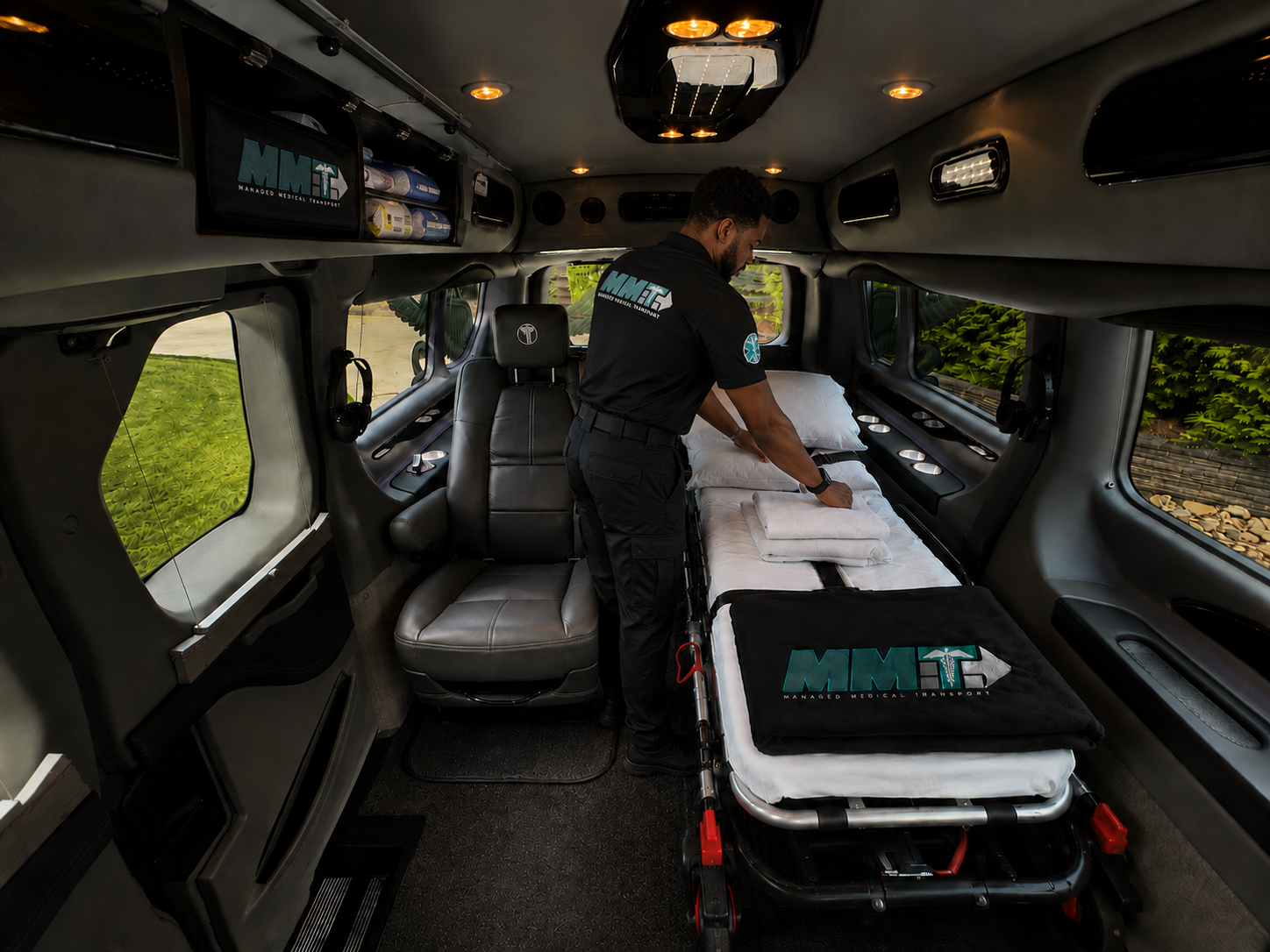
A repositioning schedule is a plain, written plan for when and how a patient’s position will be adjusted during a long-distance, non-emergency medical patient transport. For some patients, that means small changes (pillows adjusted, a slight tilt, leg support repositioned). For others—especially non-ambulatory or bed-bound patients—it may include regular turning or offloading pressure points, consistent with their existing prescribed routine.
The key is coordination. A good schedule is built around (1) the patient’s current care plan, (2) the realities of travel time, and (3) safe, respectful handling. The schedule should also note comfort preferences that reduce distress, such as familiar blankets, a preferred side, or a calming routine—without treating it like a clinical protocol.
Why Timing and Consistency Affect Comfort on the Road
On a long trip, “we’ll do it when we can” often turns into “we forgot,” especially during handoffs and stops. A clear plan can help you manage practical stakes like:
- Comfort: fewer pain spikes and less restlessness when position changes are predictable.
- Skin and pressure management: staying consistent with an established routine can reduce avoidable irritation during extended sitting or stretcher time.
- Trip flow: planned position changes can be coordinated with natural pauses (stops, hygiene care, feeding routines) so the day runs smoother.
- Family stress: a simple schedule reduces the “Should we be doing something right now?” anxiety.
- Communication: facilities and families can align expectations before pickup and at drop-off.
Common Missteps That Disrupt Turning Routines
- Assuming the schedule is “standard” for everyone: reposition needs vary widely—use the patient’s existing plan as the baseline.
- Relying on memory instead of a written cue: long trips are distracting; missed turns are more likely without a simple checklist.
- Not planning around feeding or hygiene: if the patient has routine care moments, those are natural times to coordinate position adjustments.
- Forgetting comfort supports: leaving behind preferred pillows, wedges, or a familiar blanket can make position changes harder and less effective.
- Overcomplicating the plan: a schedule that reads like a textbook often gets ignored—keep it practical and easy to follow.
- Unclear roles: if no one knows who’s responsible for tracking the next change, it can slip.
Step-by-Step: Build a Practical Reposition Plan for Transport Day
Prerequisites (gather these first):
- The patient’s current care plan notes related to turning/repositioning (from the facility, hospice team, or primary caregiver)
- A basic trip outline (estimated duration, planned stops, pickup/drop-off windows)
- Comfort and support items approved for travel (pillows, wedges, extra linens, skin-safe barriers already used by the patient)
- A single-page tracking sheet (printed or on a phone note) for time-stamping position changes
-
Confirm the patient’s existing routine (don’t reinvent it).
Ask the current caregivers what’s already working: frequency, preferred positions, and any “do not” notes.
Tip: Use plain language like “every two hours” or “after hygiene care,” and write it exactly as you were told.
-
Translate the routine into travel-friendly triggers.
Long trips rarely run on perfect clockwork. Convert the routine into triggers that still preserve timing.
Tip: Pair time-based cues (“every X hours”) with event cues (“at each planned stop,” “after feeding routine,” “after incontinence care”).
-
List the comfort supports needed for each change.
Note what makes each position comfortable: pillow placement, leg support, or a preferred head elevation—based on what the patient already uses.
Tip: Pack supports in a single labeled bag so you’re not digging for a wedge like it’s a lost TV remote.
-
Define roles and permissions ahead of time.
Clarify what the transport team will handle, what the family rider can help with (if applicable), and what should be left to trained staff.
Tip: If a family member is riding, assign them one job: track the schedule and speak up when the next change is due.
-
Create a one-page schedule and tracking log.
Make it scannable: planned times/triggers, the intended position, and a checkbox/time-stamp line.
Tip: Add a “notes” column for comfort observations (e.g., “more comfortable with extra knee support”).
-
Review the plan at pickup and again before arrival.
Do a quick read-through at the start and near the end so nothing gets lost during transitions.
Tip: At drop-off, hand the log to the receiving facility or caregiver to support continuity.
Professional Insight: The Small Detail That Prevents Missed Turns
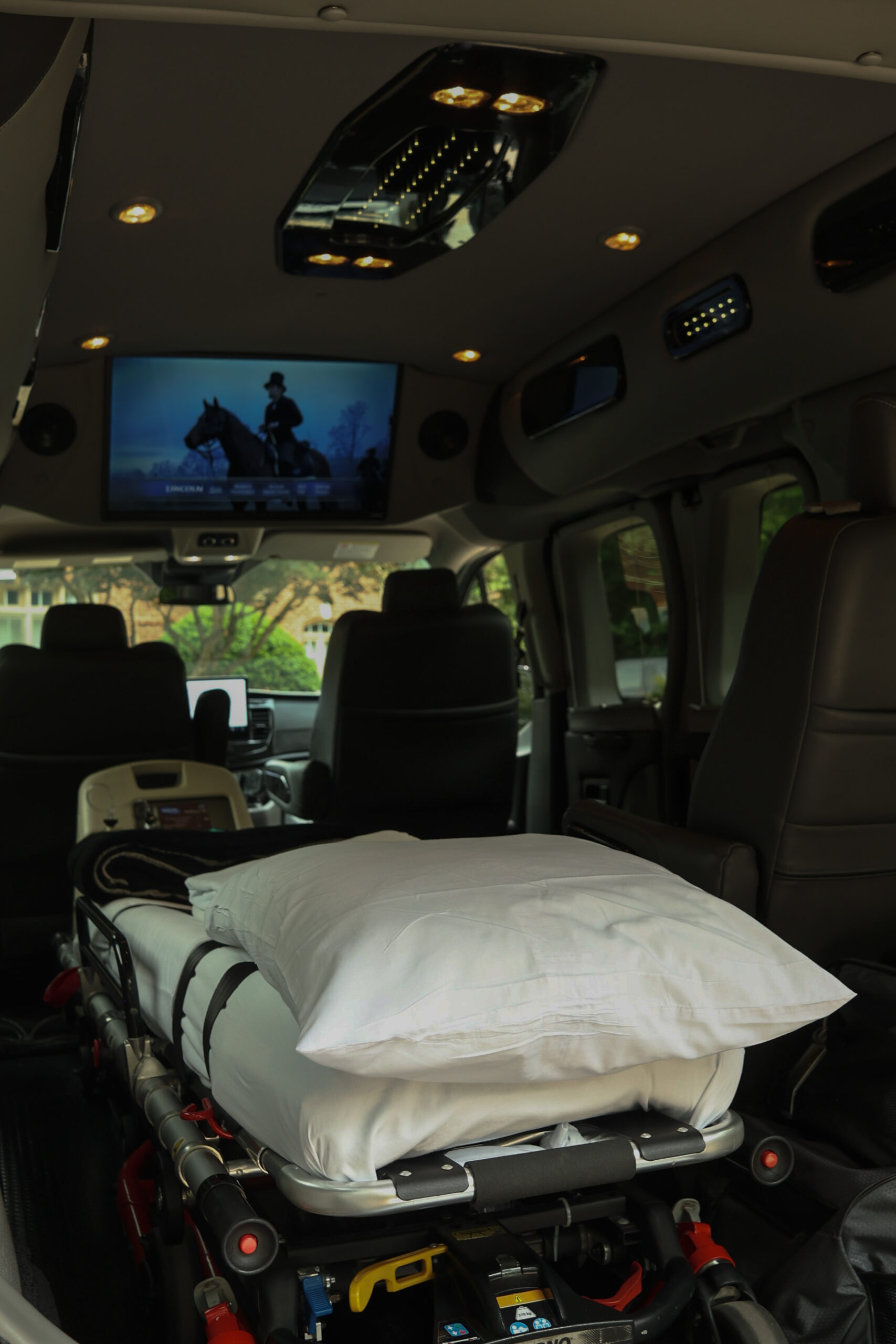
In practice, we often see reposition routines go off-track not because people don’t care, but because the schedule lives in someone’s head. A single visible tracking sheet—kept with the patient’s travel items—creates a shared reference point that’s easy to follow during stops, handoffs, and long stretches of driving.
When It’s Time to Involve a Professional Transport Team
Consider professional help for long-distance, non-emergency medical patient transportation when:
- The patient is non-ambulatory or bed-bound and needs regular turning as part of their existing care routine.
- The trip is long enough that multiple position changes will be required to maintain comfort.
- The patient has cognitive impairment (such as dementia) and becomes distressed with unfamiliar routines or handling.
- Oxygen, feeding routines, incontinence care, or scheduled comfort measures need to be maintained consistently during travel.
- Family can’t safely manage the physical demands of repositioning during a multi-hour trip.
Frequently Asked Questions
How do we decide how often position changes should happen on a long trip?
Use the patient’s existing prescribed routine from their current care setting as the starting point, then map it to travel-friendly timing and stop triggers. If you need clarification, ask the current care team to restate the routine in simple, written terms.
Can a family member ride along and help track the schedule?
Some non-emergency long-distance medical patient transportation providers allow one family member to ride. If a rider is permitted, they can be especially helpful as the “schedule keeper” who tracks timing and communicates when the next change is due.
What should be written on the schedule so it’s easy to follow?
Keep it short: the timing or trigger, the intended position or adjustment, and a checkbox or time-stamp line. Add a small notes area for comfort observations that can help the receiving caregiver continue the routine.
Is a reposition plan the same thing as a new medical care plan?
No. A transport-day schedule should reflect the patient’s existing prescribed routine and comfort needs. It’s a coordination tool to support continuity during travel, not a new treatment plan.
Taking Action
A practical schedule keeps comfort measures consistent and reduces missed position changes during long-distance, non-emergency travel. Start with the patient’s current routine, convert it into simple triggers that work on the road, and write it down so everyone follows the same playbook. When roles are clear and the plan is easy to track, the trip tends to feel more manageable for both the patient and the family.
Book Your Consultation
Schedule a free consultation with our experts.