
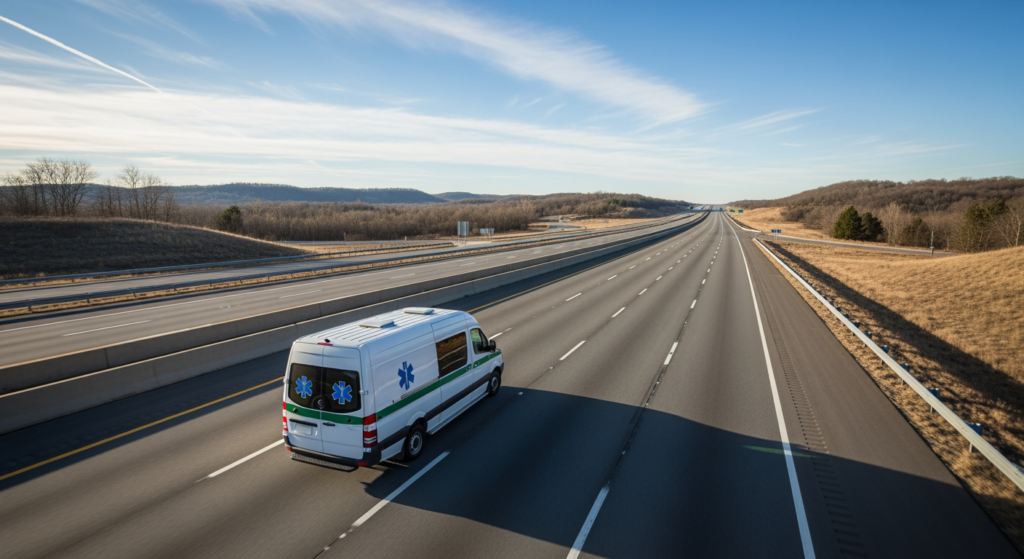
Planning a medical move for a loved one can feel overwhelming when they can’t safely ride in a standard car or sit upright for hours. This guide is for families, caregivers, and discharge planners trying to understand what long-distance non-emergency medical patient transportation is, who it’s for, and what the process typically involves over trips of 300+ miles. During winter months, longer trips can also involve more planning for comfort and routine needs. The goal isn’t medical treatment—it’s a safe, structured way to relocate a patient between care settings while keeping their existing care plan consistent and minimizing avoidable stress for everyone involved.
For a deeper overview of how these trips are structured, see Understanding Long-Distance Medical Patient Transport.
The Essentials at a Glance
- It’s non-emergency: This type of transport is designed for stable patients who do not need emergency response or new medical interventions during the trip.
- It’s long-distance: Typically refers to medical patient transports over 300 miles, often crossing state lines or U.S.–Canada borders.
- It supports limited mobility: Options may include stretcher-based travel for patients who are non-ambulatory or cannot tolerate prolonged sitting.
- Care routines stay consistent: The goal is to maintain the patient’s existing prescribed care plan (medications, hydration, oxygen routines, comfort measures) while traveling.
- Planning is part of the service: Scheduling, routing, and coordinating pickup/drop-off details are central to a smooth transfer.
Long-Distance Non-Emergency Medical Transport Over 300 Miles
This service is a planned, scheduled medical relocation for patients who need more support than a typical car ride but do not require emergency care. It’s commonly used for hospital-to-home transitions, facility-to-facility moves, and long-distance relocations to be closer to family or ongoing care.
In simple terms, the process usually includes:
- Trip planning: Confirming the patient’s mobility needs, equipment needs (such as oxygen), and timing requirements.
- Pickup and transfer: Helping the patient move safely from bed-to-stretcher (if needed) and into the transport vehicle.
- Comfort and routine support en route: Following the patient’s existing schedule for medications, hydration, feeding routines (when prescribed), repositioning, and comfort needs—without initiating new treatment.
- Arrival and handoff: Coordinating arrival timing and assisting with transfer into the receiving home or facility.
It’s also important to separate this from on-demand rideshare. Medical rideshare is typically designed for ambulatory passengers who can get in and out of a car with minimal assistance. Long-distance medical patient transport is built for extended travel time, higher support needs, and continuity of routine care.
Why This Choice Affects Comfort, Timing, and Continuity of Care
Over 300+ miles, small gaps in planning can become big problems. The stakes are usually practical: keeping the patient comfortable, avoiding missed routine care, and making sure the receiving party is ready at arrival.
Key implications families often care about include:
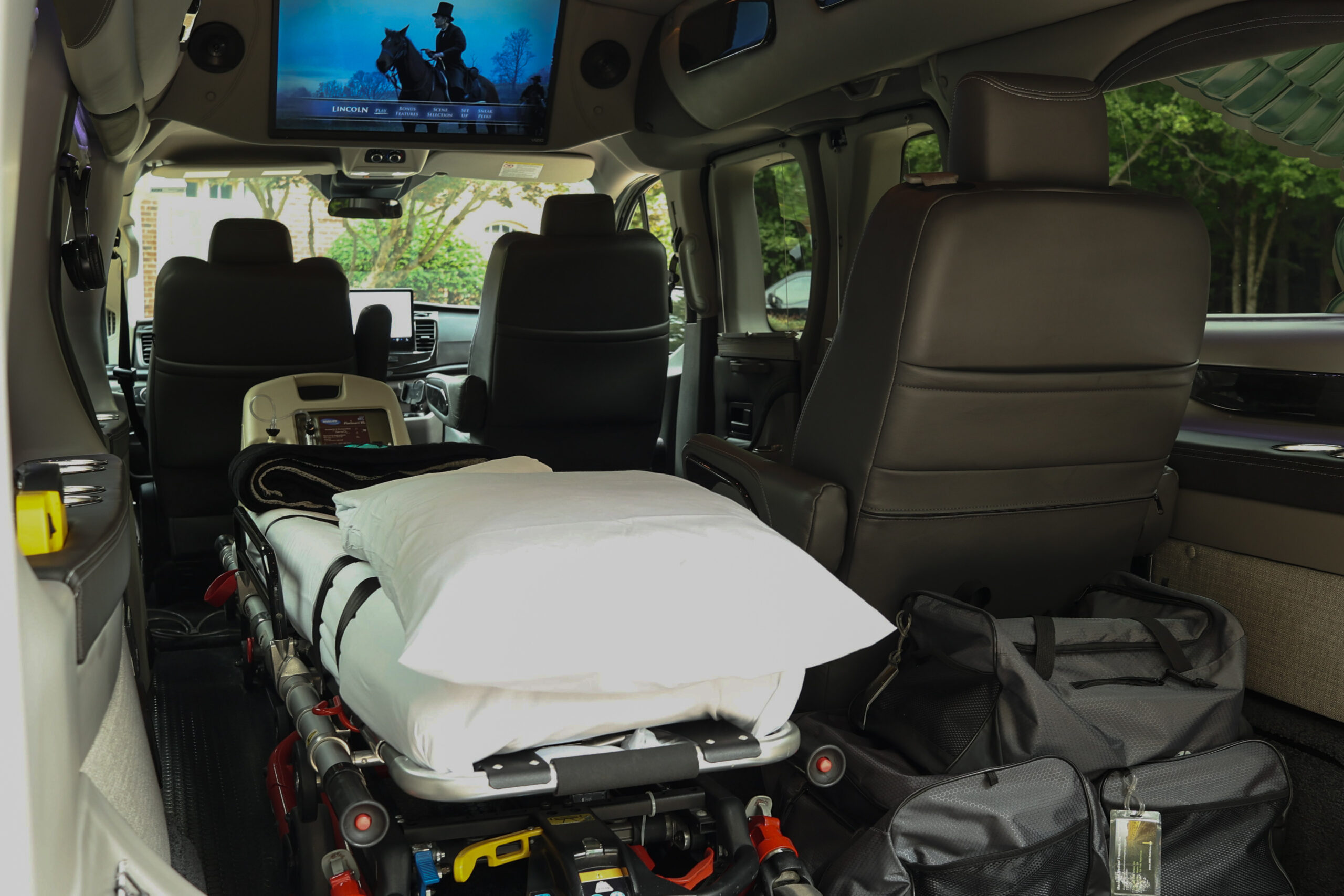
- Comfort on long trips: Patients who cannot sit for long periods may need a stretcher-based option to reduce pain, fatigue, or agitation.
- Predictable scheduling: Facilities and families often need a clear pickup window and estimated arrival time to coordinate staffing, admissions, or home setup.
- Care continuity: Maintaining the existing care plan (meds, oxygen routines, feeding schedules, repositioning) helps reduce avoidable discomfort and confusion.
- Family coordination: Communication during the trip can reduce anxiety for family members who can’t travel alongside the patient.
Avoid These Common Mistakes in Non-Emergency Medical Transport
- Assuming any “medical ride” can handle 300+ miles: Long trips require different planning, staffing, and comfort considerations than local appointments.
- Not clarifying mobility level: If the patient is non-ambulatory or bed-bound, the transport plan needs to match that reality from the start.
- Overlooking routine needs: Medication timing, feeding routines, hydration, oxygen use, and incontinence care should be discussed before the trip.
- Forgetting cognitive or behavioral considerations: Dementia or confusion can change what “comfortable travel” means and may require more preparation and communication.
- Planning the handoff too loosely: If the receiving facility or home isn’t ready, the arrival can become stressful and disrupt routines.
A Practical Pre-Trip Checklist for Families and Discharge Planners
- Confirm the trip is non-emergency: Ensure the patient is stable enough for scheduled transport and does not require emergency response.
- Write down current routines: List medication times, feeding/hydration routines (if applicable), oxygen flow requirements (as prescribed), and repositioning needs.
- Document mobility needs: Note whether the patient can stand/pivot, needs a stretcher, or requires extra assistance for transfers.
- Prepare essential items: Pack prescribed supplies needed during travel (for example, required oxygen equipment, incontinence supplies, and comfort items).
- Coordinate the receiving handoff: Confirm receiving address, point of contact, and any check-in procedures so arrival is smooth.
- Set communication expectations: Decide who should receive updates and ensure contact numbers are correct.
Professional Insight: What Most People Miss About 300+ Mile Patient Moves
In practice, we often see that the smoothest long-distance transfers happen when families focus less on the vehicle and more on the patient’s day-to-day routine—then build the travel plan around maintaining that routine as closely as possible.
When It’s Time to Ask for Professional Transport Support
Consider getting help from a long-distance, non-emergency medical patient transport provider when:
- The patient cannot safely sit upright for extended periods due to mobility limits, fatigue, or discomfort.
- The trip is 300+ miles and you need a structured plan for breaks, timing, and continuity of routine care.
- The patient has prescribed routines that must be maintained (medication schedules, oxygen requirements, feeding routines, repositioning).
- Cognitive impairment makes travel unpredictable and you need consistent support and communication.
- A facility-to-facility transfer requires coordination for admission timing, documentation handoff, and arrival readiness.
Common Questions Answered
Is this the same as an ambulance?
No. This is scheduled, non-emergency medical patient transportation designed to maintain an existing care plan during travel. It does not provide emergency response or critical care.
Who typically uses this kind of service?
Families, caregivers, discharge planners, nursing homes, and rehabilitation facilities commonly use it for hospital-to-home transitions, facility transfers, and long-distance relocations.
Can a family member ride along?
Some providers allow one family member to accompany the patient. Always confirm ride-along policies during scheduling.
What kinds of patient needs can be supported during the trip?
Support often includes maintaining prescribed routines such as medication schedules, hydration, feeding routines (when prescribed), oxygen requirements, incontinence care, and comfort measures—without initiating new medical interventions.
How is this different from a medical rideshare?
Medical rideshare is usually intended for shorter, local trips for passengers who can ride in a standard vehicle. Long-distance medical patient transport is planned for extended mileage, higher support needs, and continuity of routine care.
Where to Go from Here
Long-distance non-emergency patient moves are primarily about planning: matching the transport setup to the patient’s mobility, keeping prescribed routines consistent, and coordinating a smooth handoff at the destination. When you understand what the service is—and what it is not—you can make decisions with less stress and fewer surprises. If you’re comparing options, focus on comfort, continuity, and clear communication throughout the trip.
Learn More About Our Services
Discover how we can help you achieve your goals.