

Transporting a medically-fragile family member over a long distance can feel like a high-stakes puzzle: you’re balancing comfort, safety, schedules, and paperwork—often while you’re already exhausted. This how-to guide is for families, caregivers, and discharge planners who need a clear process for arranging non-emergency transportation that supports an existing care plan without turning the trip into a guessing game. When summer travel schedules and family calendars get crowded, planning early becomes even more important. The goal is simple: move your loved one from one safe setting to another with predictable logistics, minimal stress, and the right level of support for mobility and monitoring—without confusing this service with on-demand rideshare options.
Before you start calling providers, it helps to understand what long-distance, non-emergency medical patient transport typically includes and what it doesn’t.
At a Glance: The Safest Path for Long Trips
- Start with the current care plan: the safest long-distance trip is one that maintains existing routines (meds, oxygen, feeding, repositioning) without introducing new treatment.
- Match the vehicle to mobility needs: confirm whether a wheelchair seat or a forward-facing stretcher is required for comfort and stability.
- Confirm who’s providing care during the ride: ask what patient-care support is included and how updates are handled.
- Get pricing in writing: prioritize clear, all-in pricing so the budget doesn’t change mid-trip due to mileage, tolls, or stops.
- Coordinate both facilities: safe transfers depend on aligned pickup/drop-off times, paperwork readiness, and realistic arrival windows.
How Long-Distance, Non-Emergency Medical Patient Transport Works
For medically-fragile patients, “safe transport” usually means a controlled environment and a plan that’s consistent from departure to arrival. Long-distance, non-emergency medical patient transportation is designed for scheduled moves—such as facility-to-facility transfers or transitions home—where the patient is stable enough to travel but needs more support than a standard car ride.
In practical terms, safety comes from aligning four things: (1) the patient’s mobility and positioning needs, (2) the existing prescribed care plan (medication timing, oxygen, feeding routines, comfort measures), (3) the trip logistics (distance, stops, handoffs), and (4) communication with family and facilities. The transport team should follow the existing plan during the trip and avoid initiating new medical interventions.
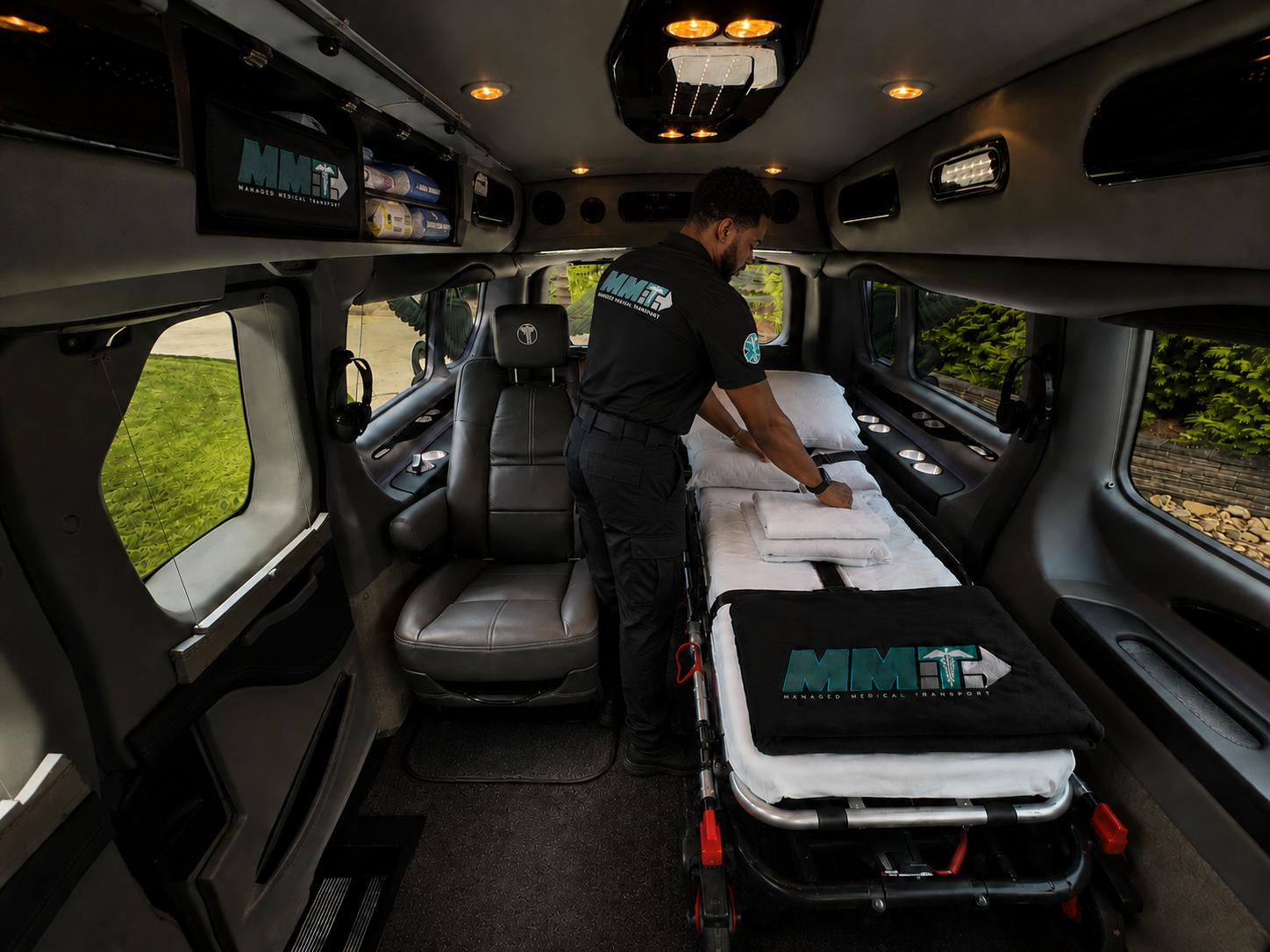
Why Safety Planning Changes Everything on a 300+ Mile Trip
Over longer distances, small gaps become big problems: a missed medication window, unclear oxygen supply expectations, or a pickup time that doesn’t match discharge readiness can create avoidable discomfort and delays. Safety planning also affects:
- Time: realistic routing and planned breaks reduce last-minute scrambling and rushed handoffs.
- Comfort: proper positioning and bedding matter more hour-by-hour than they do on short rides.
- Continuity: maintaining routines (hydration, feeding schedules, repositioning) helps keep the trip predictable for the patient and the family.
- Cost control: clear, all-inclusive pricing can prevent surprise add-ons for mileage-related items.
- Family stress: proactive coordination and regular updates reduce the “waiting by the phone” experience.
Common Safety Mistakes Families Can Avoid (Quick Checklist)
- Assuming rideshare is “medical”: on-demand rides are rarely equipped for stretcher needs, complex mobility assistance, or care-plan continuity.
- Not confirming mobility requirements: “can’t walk far” is different from “non-ambulatory.” Be specific about transfers, stairs, and positioning.
- Skipping the written medication schedule: verbal instructions get lost during handoffs; written timing reduces confusion.
- Forgetting comfort and hygiene basics: extra linens, incontinence supplies, and simple comfort items can matter as much as the route.
- Loose coordination with facilities: if paperwork, discharge readiness, or receiving-bed timing isn’t aligned, you can end up waiting in limbo.
- Unclear communication expectations: if you don’t ask how updates are provided, you may not get them when you need reassurance most.
Your Step-by-Step Plan to Arrange a Safer Long-Distance Transfer
Prerequisites: Before you begin, gather (1) the patient’s current care plan details (as provided by the care team), (2) the sending and receiving facility contacts, (3) a realistic travel window, and (4) mobility/positioning needs (wheelchair vs. stretcher, assistance level).
-
Step 1: Define what “safe” means for your loved one.
- Do: list non-negotiables (positioning, oxygen requirement, feeding routine timing, cognitive support needs, repositioning schedule if applicable).
- Tip: write it as a one-page “trip brief” you can share with facilities and the transport provider.
-
Step 2: Confirm the trip qualifies as non-emergency.
- Do: ensure the move is scheduled and the patient is stable for travel per the sending care team’s direction.
- Tip: if the patient’s condition changes, pause planning and consult the appropriate clinical team for next steps.
-
Step 3: Match the vehicle setup to mobility and comfort needs.
- Do: confirm whether the patient needs a forward-facing stretcher or can ride seated with assistance.
- Tip: ask what bedding and cushioning are used for extended trips to reduce discomfort over many hours.
-
Step 4: Align care-plan continuity for the entire travel window.
- Do: provide the medication timing list and routine schedule (feeding/hydration/comfort measures) as written instructions.
- Tip: include “what works” notes (calming routines for dementia, swallow precautions as provided by the care team, preferred positioning).
-
Step 5: Coordinate pickup, paperwork, and receiving readiness.
- Do: confirm discharge timing, who releases the patient, and what documents must travel with them.
- Tip: ask the receiving facility about arrival procedures so the handoff is smooth and not rushed.
-
Step 6: Set expectations for updates and family participation.
- Do: ask how progress updates are provided and whether a family member may ride along.
- Tip: choose one primary contact person to reduce crossed wires and repeated calls.
-
Step 7: Confirm pricing, inclusions, and “what could change.”
- Do: request a clear quote that explains what’s included (stops, tolls, meals, mileage-related items).
- Tip: ask what information could affect the quote later (mobility level, stairs, extra assistance needs).

When It’s Time to Bring in a Long-Distance Transport Team
Consider professional help when any of the following are true:
- The trip is 300+ miles and the patient cannot safely ride in a standard vehicle.
- The patient is bed-bound, non-ambulatory, or needs a stretcher for positioning and comfort.
- There are ongoing routine needs to maintain during travel (oxygen requirement, feeding tube routines, incontinence care, scheduled repositioning).
- The patient has cognitive impairment and needs calm, consistent support and communication.
- You need cross-state or cross-border coordination and want one plan from pickup to arrival.
Frequently Asked Questions
How do I know if this kind of transport is appropriate for my family member?
If the move is scheduled, the patient is stable for travel based on the sending care team’s direction, and the main need is maintaining an existing routine (not starting new treatment), this type of service may be a fit.
Can a family member ride along during the trip?
Some long-distance medical patient transport providers allow one family member to ride with the patient. Confirm this early so seating, comfort, and communication expectations are clear.
What information should I have ready when requesting a quote?
Have pickup and drop-off locations, desired travel window, mobility level (wheelchair vs. stretcher), and key routine needs (oxygen requirement, feeding schedule timing, repositioning needs) available in writing.
Will the transport team provide medical treatment on the road?
Non-emergency medical patient transportation is typically focused on maintaining the patient’s existing prescribed care plan during travel. It is not a substitute for a hospital or physician and does not initiate new care plans.
How is this different from a standard ride service?
This option is designed for scheduled, long-distance moves where the patient needs structured assistance, positioning support, and care-plan continuity—not an on-demand pickup designed for independent riders.
Call Managed Medical Transport to Safely Transport Your Loved One
The safest long-distance transfer is rarely about finding a “quick ride”—it’s about building a clear plan that matches mobility needs, maintains existing routines, and coordinates both ends of the trip. When you document the care-plan basics, confirm the right vehicle setup, and establish communication expectations, you reduce surprises and protect your loved one’s comfort. If you’re comparing options, ask direct questions about who provides the transport, what’s included, and how continuity is handled. For families who want a structured approach to long-distance, non-emergency medical patient transportation, Managed Medical Transport, Inc. (MMT America) is one provider that focuses on maintaining prescribed care plans during transport.