What Is Long-Distance Non-Emergency Medical Patient Transportation (Over 300 Miles)?

What Is Long-Distance Non-Emergency Medical Patient Transportation (Over 300 Miles)?

Planning a medical move for a loved one can feel overwhelming when they can’t safely ride in a standard car or sit upright for hours. This guide is for families, caregivers, and discharge planners trying to understand what long-distance non-emergency medical patient transportation is, who it’s for, and what the process typically involves over trips of 300+ miles. During winter months, longer trips can also involve more planning for comfort and routine needs. The goal isn’t medical treatment—it’s a safe, structured way to relocate a patient between care settings while keeping their existing care plan consistent and minimizing avoidable stress for everyone involved.

For a deeper overview of how these trips are structured, see Understanding Long-Distance Medical Patient Transport.

The Essentials at a Glance

  • It’s non-emergency: This type of transport is designed for stable patients who do not need emergency response or new medical interventions during the trip.
  • It’s long-distance: Typically refers to medical patient transports over 300 miles, often crossing state lines or U.S.–Canada borders.
  • It supports limited mobility: Options may include stretcher-based travel for patients who are non-ambulatory or cannot tolerate prolonged sitting.
  • Care routines stay consistent: The goal is to maintain the patient’s existing prescribed care plan (medications, hydration, oxygen routines, comfort measures) while traveling.
  • Planning is part of the service: Scheduling, routing, and coordinating pickup/drop-off details are central to a smooth transfer.

Long-Distance Non-Emergency Medical Transport Over 300 Miles

This service is a planned, scheduled medical relocation for patients who need more support than a typical car ride but do not require emergency care. It’s commonly used for hospital-to-home transitions, facility-to-facility moves, and long-distance relocations to be closer to family or ongoing care.

In simple terms, the process usually includes:

  • Trip planning: Confirming the patient’s mobility needs, equipment needs (such as oxygen), and timing requirements.
  • Pickup and transfer: Helping the patient move safely from bed-to-stretcher (if needed) and into the transport vehicle.
  • Comfort and routine support en route: Following the patient’s existing schedule for medications, hydration, feeding routines (when prescribed), repositioning, and comfort needs—without initiating new treatment.
  • Arrival and handoff: Coordinating arrival timing and assisting with transfer into the receiving home or facility.

It’s also important to separate this from on-demand rideshare. Medical rideshare is typically designed for ambulatory passengers who can get in and out of a car with minimal assistance. Long-distance medical patient transport is built for extended travel time, higher support needs, and continuity of routine care.

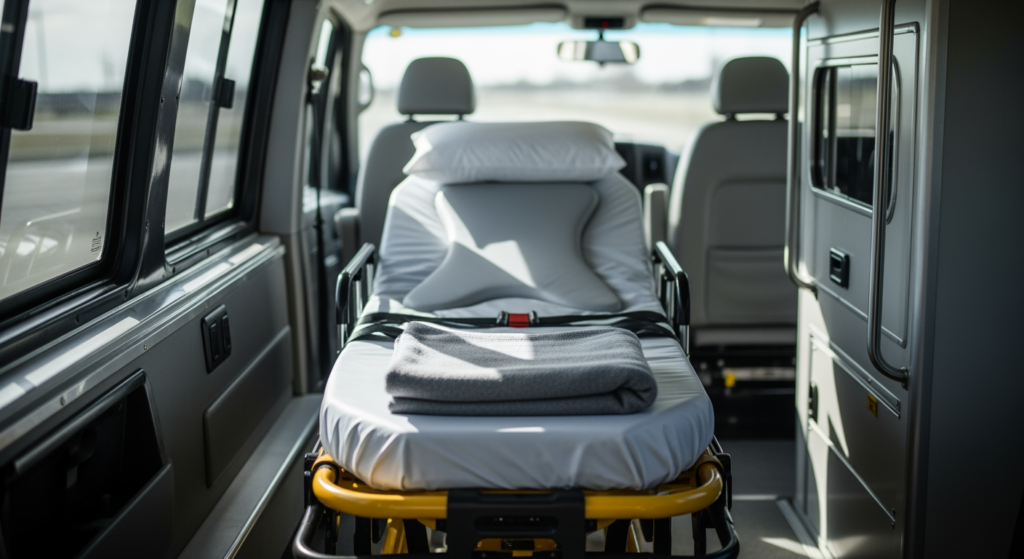
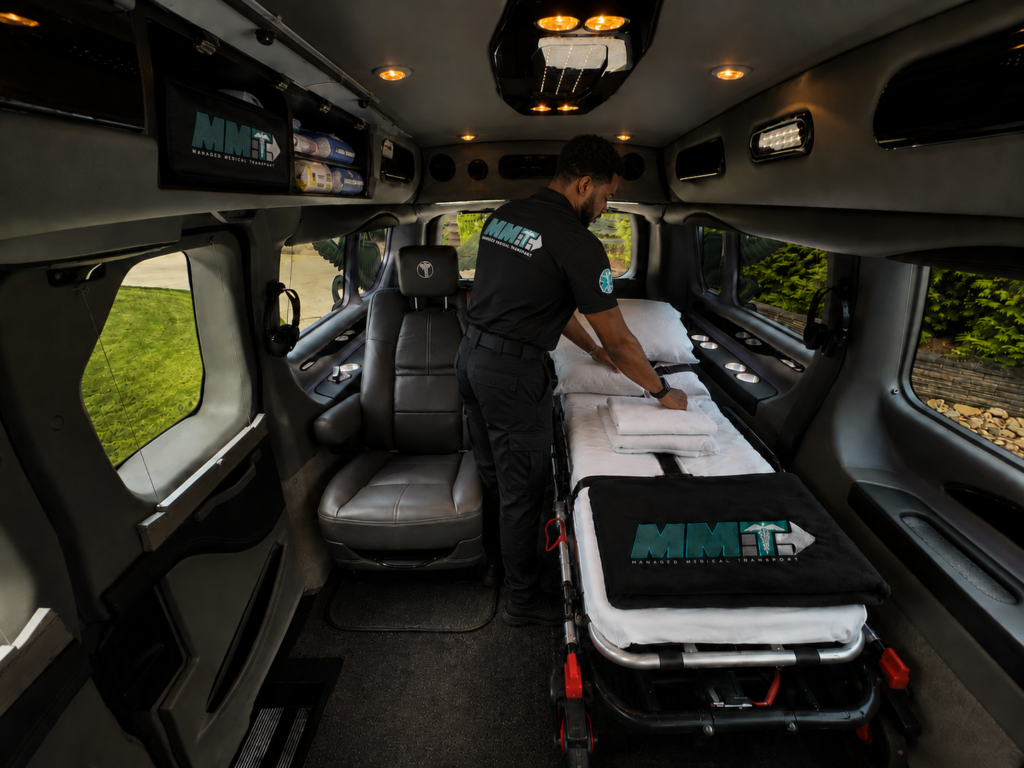
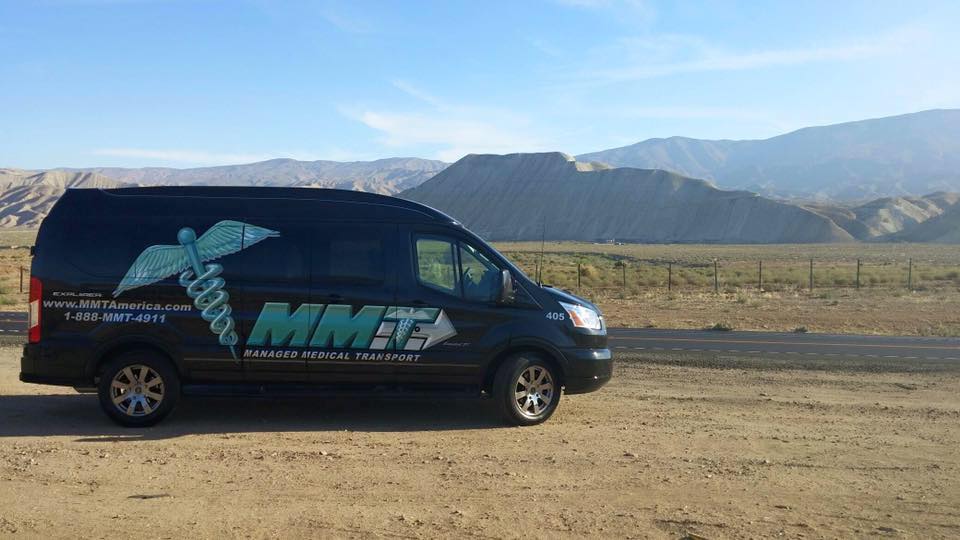
Van with safety features for long-distance medical transport by Managed Medical Transport.

Why This Choice Affects Comfort, Timing, and Continuity of Care

Over 300+ miles, small gaps in planning can become big problems. The stakes are usually practical: keeping the patient comfortable, avoiding missed routine care, and making sure the receiving party is ready at arrival.

Key implications families often care about include:

  • Comfort on long trips: Patients who cannot sit for long periods may need a stretcher-based option to reduce pain, fatigue, or agitation.
  • Predictable scheduling: Facilities and families often need a clear pickup window and estimated arrival time to coordinate staffing, admissions, or home setup.
  • Care continuity: Maintaining the existing care plan (meds, oxygen routines, feeding schedules, repositioning) helps reduce avoidable discomfort and confusion.
  • Family coordination: Communication during the trip can reduce anxiety for family members who can’t travel alongside the patient.

Avoid These Common Mistakes in Non-Emergency Medical Transport

  • Assuming any “medical ride” can handle 300+ miles: Long trips require different planning, staffing, and comfort considerations than local appointments.
  • Not clarifying mobility level: If the patient is non-ambulatory or bed-bound, the transport plan needs to match that reality from the start.
  • Overlooking routine needs: Medication timing, feeding routines, hydration, oxygen use, and incontinence care should be discussed before the trip.
  • Forgetting cognitive or behavioral considerations: Dementia or confusion can change what “comfortable travel” means and may require more preparation and communication.
  • Planning the handoff too loosely: If the receiving facility or home isn’t ready, the arrival can become stressful and disrupt routines.
Minivan with car seat, ideal for safe long-distance medical transport.

A Practical Pre-Trip Checklist for Families and Discharge Planners

  • Confirm the trip is non-emergency: Ensure the patient is stable enough for scheduled transport and does not require emergency response.
  • Write down current routines: List medication times, feeding/hydration routines (if applicable), oxygen flow requirements (as prescribed), and repositioning needs.
  • Document mobility needs: Note whether the patient can stand/pivot, needs a stretcher, or requires extra assistance for transfers.
  • Prepare essential items: Pack prescribed supplies needed during travel (for example, required oxygen equipment, incontinence supplies, and comfort items).
  • Coordinate the receiving handoff: Confirm receiving address, point of contact, and any check-in procedures so arrival is smooth.
  • Set communication expectations: Decide who should receive updates and ensure contact numbers are correct.

Professional Insight: What Most People Miss About 300+ Mile Patient Moves

In practice, we often see that the smoothest long-distance transfers happen when families focus less on the vehicle and more on the patient’s day-to-day routine—then build the travel plan around maintaining that routine as closely as possible.

When It’s Time to Ask for Professional Transport Support

Consider getting help from a long-distance, non-emergency medical patient transport provider when:

  • The patient cannot safely sit upright for extended periods due to mobility limits, fatigue, or discomfort.
  • The trip is 300+ miles and you need a structured plan for breaks, timing, and continuity of routine care.
  • The patient has prescribed routines that must be maintained (medication schedules, oxygen requirements, feeding routines, repositioning).
  • Cognitive impairment makes travel unpredictable and you need consistent support and communication.
  • A facility-to-facility transfer requires coordination for admission timing, documentation handoff, and arrival readiness.

Common Questions Answered

Is this the same as an ambulance?

No. This is scheduled, non-emergency medical patient transportation designed to maintain an existing care plan during travel. It does not provide emergency response or critical care.

Who typically uses this kind of service?

Families, caregivers, discharge planners, nursing homes, and rehabilitation facilities commonly use it for hospital-to-home transitions, facility transfers, and long-distance relocations.

Can a family member ride along?

Some providers allow one family member to accompany the patient. Always confirm ride-along policies during scheduling.

What kinds of patient needs can be supported during the trip?

Support often includes maintaining prescribed routines such as medication schedules, hydration, feeding routines (when prescribed), oxygen requirements, incontinence care, and comfort measures—without initiating new medical interventions.

How is this different from a medical rideshare?

Medical rideshare is usually intended for shorter, local trips for passengers who can ride in a standard vehicle. Long-distance medical patient transport is planned for extended mileage, higher support needs, and continuity of routine care.

Where to Go from Here

Long-distance non-emergency patient moves are primarily about planning: matching the transport setup to the patient’s mobility, keeping prescribed routines consistent, and coordinating a smooth handoff at the destination. When you understand what the service is—and what it is not—you can make decisions with less stress and fewer surprises. If you’re comparing options, focus on comfort, continuity, and clear communication throughout the trip.

Learn More About Our Services

Discover how we can help you achieve your goals.

Learn More

Read more What Is Long-Distance Non-Emergency Medical Patient Transportation (Over 300 Miles)?
Cross-Border Medical Transport Documents Guide

Cross-Border Medical Transport Documents Guide

Cross-border medical transport can feel less like “travel planning” and more like assembling a small, highly important paper trail—especially when a loved one is non-ambulatory, medically fragile, or simply exhausted by transitions. This guide is for families, caregivers, and care coordinators who need a practical way to confirm what documents are typically requested for a non-emergency move between the United States and Canada. Getting the paperwork organized early helps reduce delays, prevents last-minute scrambling at pickup, and supports smoother handoffs between facilities and home. As spring brings a wave of relocations and care transitions, it’s a good time to tighten up your planning checklist before wheels are in motion.

If you’re still mapping out the overall process and what a long-distance, non-emergency move involves, start with Understanding Long-Distance Medical Patient Transport for a plain-language overview.

Bottom Line Upfront: Document Essentials

  • Build a single “transport packet” that travels with the patient: IDs, care plan, medication list, and key contacts.
  • Confirm border-entry requirements early (patient and accompanying family member), including valid identification and any required authorizations.
  • Carry a current medication list (name, dose, schedule) and keep original labeled containers when possible.
  • Include a concise clinical summary from the sending facility/provider to support continuity of the existing care plan during the trip.
  • Have receiving details in writing: facility acceptance, address, unit/room, and the person who will receive the patient.
  • Keep copies accessible (printed + digital) so a family member can produce documents without unpacking everything.

How Cross-Border Patient Transport Paperwork Usually Works

For non-emergency, long-distance medical patient transportation across the US–Canada border, documents typically serve one of three purposes: (1) identity and legal authority, (2) continuity of an existing care plan, and (3) destination coordination. The goal is not to create a new medical plan during transit—it’s to support the patient’s established routines (medications, oxygen as prescribed, feeding schedules, comfort measures) while ensuring the receiving party is ready.

Most families find it easiest to treat documents like a “handoff kit.” If multiple people are coordinating (a sibling, a facility social worker, and a receiving home health agency), designate one person to own the master packet and version control. That simple step prevents conflicting lists, outdated instructions, or missing signatures.

compact van, minivan, van, ford transit

The Real-World Consequences of Missing Documents

Missing or unclear paperwork can create practical problems even in a completely non-emergency situation. The most common impacts are delays at pickup, confusion during facility discharge, slowed border processing, and avoidable stress for the patient—especially if they have cognitive impairment or fatigue easily during transitions.

Document gaps can also affect cost and timing indirectly. If a receiving facility can’t confirm acceptance details, or if a medication schedule isn’t clearly documented, you may spend valuable time making calls while the patient waits. For long trips, that can ripple into arrival windows, staffing availability at the destination, and family coordination.

Common Paperwork Mistakes (Use This Checklist)

  • Relying on verbal instructions only: A quick phone call is helpful, but written details reduce misunderstandings between sending and receiving parties.
  • Bringing an outdated medication list: Discharge medication changes can happen quickly; confirm you have the most current list.
  • Not documenting who can make decisions: If the patient can’t consent, keep proof of legal authority readily available.
  • Forgetting destination acceptance details: “They know we’re coming” is not the same as a named contact, address, unit/room, and a receiving confirmation.
  • Scattering documents across bags: Split paperwork increases the chance something gets left behind during a pickup or room change.
  • Skipping backup copies: A second printed set and a secure digital copy can save the day if something is misplaced.

A Smart Document Prep Plan Before You Travel

  • Create a one-page cover sheet with patient name, DOB, allergies (if documented by the provider), primary diagnosis summary (high-level), and key contacts.
  • Gather identity and border documents for the patient and any accompanying family member (valid, unexpired, and accessible).
  • Request a discharge/transfer summary from the sending facility/provider that reflects the current status and existing care plan.
  • Print a current medication administration schedule (times, doses) and pack medications in original labeled containers when feasible.
  • Document prescribed equipment needs (for example, oxygen requirements as currently ordered) and include any written instructions provided by the clinician.
  • Confirm receiving acceptance in writing (email/fax/portal message) with address, receiving contact, and any intake requirements.
  • Prepare a “comfort and routines” note (non-clinical) for cognitive impairment: preferred name, calming strategies, mobility limitations, and communication tips.
  • Store everything in a labeled folder that stays with the accompanying family member, not in packed luggage.
Van with safety features for long-distance medical transport by Managed Medical Transport.

Professional Insight: The Small Detail That Prevents Big Delays

In practice, we often see that the smoothest cross-border trips happen when families treat the receiving facility acceptance details as a document—not a conversation. A single page showing the destination address, a named receiving contact, and confirmation that the patient will be received can eliminate a surprising amount of last-minute back-and-forth.

When It’s Time to Ask for Coordinated Help

Consider getting professional coordination support when any of the following are true:

  • The patient cannot self-advocate due to dementia, cognitive impairment, or severe fatigue, and paperwork must be managed by others.
  • Multiple facilities or agencies are involved (hospital, rehab, skilled nursing, hospice, home health), increasing the chance of conflicting instructions.
  • The care plan is schedule-dependent (medications, feeding routines, oxygen as prescribed) and timing matters across a long drive.
  • You need a single point of coordination to align pickup timing, receiving acceptance, and the transport packet contents.
  • Border requirements feel unclear and you want a structured checklist approach to reduce avoidable delays.

Your Questions, Answered

What documents are usually needed for a non-emergency move between the US and Canada?

Needs vary by situation, but many families prepare: valid identification for the patient and accompanying family member, a current medication list and schedule, a transfer/discharge summary, proof of legal decision-making authority if applicable, and written receiving acceptance details.

Do I need paperwork from the sending facility if we’re going to a private home?

It’s often helpful to bring a discharge summary or care plan documentation even when the destination is home, because it supports continuity of the existing prescribed routines (medications, feeding schedules, oxygen as ordered) during the trip and during any follow-up care.

How should medications be packed for a long drive across the border?

Families commonly keep medications in original labeled containers when possible and carry a current written medication list and schedule. If you have questions about specific medications or documentation, ask the prescribing provider or dispensing pharmacy for guidance.

What if the patient can’t sign consent forms?

If the patient cannot provide consent, keep documentation showing who has legal authority to make decisions (as applicable in your situation). Having that paperwork accessible can reduce delays when facilities need confirmation.

Can a family member ride along during the trip?

Many long-distance, non-emergency medical patient transport arrangements allow one family member to ride with the patient, which can help with comfort, communication, and managing documents during transitions.

The Path Ahead

Crossing the US–Canada border with a medically fragile loved one is much easier when your documents are organized, current, and easy to produce on request. Focus on identity and authority, continuity of the existing care plan, and clear receiving acceptance details. A simple transport packet—and a backup copy—can prevent avoidable delays and reduce stress for everyone involved.

Learn More About Our Services

Discover how we can help you achieve your goals.

REQUEST A QUOTE

Read more Cross-Border Medical Transport Documents Guide
Long-Distance Transport Planning Checklist

Long-Distance Transport Planning Checklist

Planning a long trip for a medically vulnerable loved one can feel overwhelming because the details aren’t just “travel logistics”—they affect comfort, continuity of care, and everyone’s peace of mind. This long-distance transport planning checklist is designed for family members, caregivers, discharge planners, and facility staff coordinating non-emergency medical patient transportation over 300 miles. As spring transitions bring more relocations and care-setting changes, having a clear plan helps you avoid last-minute surprises and keep the process calm and organized. The goal is straightforward: confirm the trip is appropriate for non-emergency transport, align everyone on the care plan that will be maintained during travel, and document the information a professional transport team will need.

For a clear baseline on what long-distance, non-emergency medical patient transportation typically includes (and what it does not), review Understanding Long-Distance Medical Patient Transport before you finalize arrangements.

What You Need to Know First (Quick Takeaways)

  • Confirm it’s non-emergency. Long-distance medical patient transportation is for stable situations where the existing care plan can be maintained during travel.
  • Match the vehicle setup to mobility needs. Non-ambulatory riders may require a forward-facing stretcher and comfort-focused bedding for extended miles.
  • Document the care plan to be maintained. Plan for medication schedules, feeding routines, hydration, oxygen needs, and repositioning requirements.
  • Coordinate handoffs early. Align pickup and drop-off contacts, facility rules, and timing so the transition is smooth.
  • Ask about pricing structure upfront. Clarify what is included so you can budget accurately and avoid confusion.
  • Set a communication plan. Decide who receives updates and how information will be shared during the trip.

How Long-Distance Medical Patient Transport Planning Works

Long-distance medical patient transportation planning is the process of organizing a non-emergency trip—typically over 300 miles—so the patient can travel safely and comfortably while their existing prescribed care plan is maintained. The planning focus is practical: confirming the patient’s stability for non-emergency travel, selecting an appropriate transport configuration (such as a stretcher for non-ambulatory patients), documenting routines that must continue during the trip, and coordinating pickup/drop-off handoffs between facilities or home settings.

It’s also important to separate this service from on-demand rideshare models. Long-distance medical patient transportation is scheduled, care-plan-driven, and built around continuity and comfort over extended miles—not quick point-to-point convenience.

compact van, minivan, van, ford transit

Why Careful Planning Changes the Outcome

On long trips, small gaps in planning can become big problems: missed routine doses, unclear dietary needs, avoidable discomfort, or stressful handoffs at pickup and drop-off. Solid planning helps protect the patient’s comfort and reduces the chance of delays caused by missing paperwork, unclear contacts, or mismatched expectations about what the transport team can and cannot do.

It also affects cost predictability. When you clarify what’s included (and what isn’t) before booking, you can compare options fairly and avoid budget surprises. Most importantly, a structured plan supports care continuity—so the patient’s established routines can be followed consistently from origin to destination.

High-Priority Mistakes to Avoid (Checklist)

  • Assuming the trip is appropriate without confirming stability. Non-emergency transport is designed for stable situations where the existing care plan can be maintained during travel.
  • Not providing a current medication and routine schedule. If schedules aren’t written and up to date, it’s harder to keep the day consistent during a long ride.
  • Leaving oxygen details vague. If oxygen is required, confirm the prescribed flow rate and how it will be supported throughout the trip.
  • Skipping mobility and transfer details. Note whether the patient is non-ambulatory, needs a stretcher, or requires assistance with transfers to prevent day-of confusion.
  • Forgetting swallow precautions or diet texture needs. If the patient has restrictions (pureed diet, thickened liquids), document them clearly to avoid unsafe or unsuitable meals.
  • Not planning for incontinence care and supplies. Long distances require a realistic supply plan and scheduled care stops when appropriate.
  • Unclear pickup/drop-off contacts. If the receiving facility doesn’t know who is arriving and when, handoff delays are common.
  • Expecting new medical interventions during transport. Long-distance non-emergency transport maintains the existing care plan; it does not initiate new treatment or diagnosis.

Your Long-Distance Transport Planning Checklist (Action Steps)

  • Write a one-page “care continuity sheet.” Include medication times, feeding schedule (if applicable), hydration routine, repositioning/turning schedule, and comfort measures that should continue.
  • List mobility status and equipment needs. Note non-ambulatory status, whether a stretcher is needed, and any transfer considerations.
  • Confirm oxygen requirements in writing. Record the prescribed flow rate and any relevant instructions already in the care plan.
  • Document cognitive and communication needs. If dementia or cognitive impairment is present, note triggers, calming strategies, and the best way to communicate with the patient.
  • Pack an organized transport-day kit. Include labeled medications (as already prescribed), personal care items, incontinence supplies, comfort items, and a copy of key paperwork.
  • Coordinate the handoff on both ends. Confirm pickup location details, who will sign paperwork, receiving contact names, and any facility entry requirements.
  • Clarify pricing and what’s included. Ask for a written explanation of included items so your budget and expectations match the service.
  • Set a communication plan for updates. Decide the primary family contact and how updates will be shared during the trip.
  • Confirm whether a family member can ride along. If permitted, plan what that person should bring and how they will coordinate with the care team.
Minivan used for long-distance medical transport services.

Professional Insight: The Detail That Prevents Most Delays

In practice, we often see that the smoothest long-distance trips come from one simple habit: a single, up-to-date page that summarizes routines and handoff contacts. When everyone—from the sending facility to the receiving facility to the family—works from the same sheet, it reduces repeated phone calls, prevents missed steps, and keeps the day calmer for the patient.

When It’s Time to Involve a Professional Transport Team

  • The patient is non-ambulatory or bed-bound. A stretcher-based setup and trained patient-care support may be necessary for a long ride.
  • Oxygen is required during travel. You’ll want a clear plan to maintain prescribed oxygen needs throughout the full distance.
  • There are complex routines to maintain. Feeding tubes, insulin-dependent schedules, repositioning needs, or swallow precautions increase the importance of structured continuity.
  • The trip crosses state lines or the US-Canada border. Longer distances and cross-border logistics add coordination steps that are easier with an experienced team.
  • Facility-to-facility handoffs must be tightly timed. When admissions windows and discharge timing matter, professional coordination can reduce delays.

Common Questions Answered

What information should I have ready before I schedule a non-emergency medical trip?

Have the patient’s mobility status, pickup and drop-off addresses, primary contacts at both ends, and a written summary of the existing care routine (medications, feeding, hydration, oxygen, and repositioning needs if applicable).

Can the transport team change medications or start new treatment during the trip?

No. Non-emergency long-distance medical patient transportation is intended to maintain the patient’s existing prescribed care plan during travel, not to initiate new medical interventions or provide diagnosis.

How do I plan for comfort on a trip that lasts many hours?

Focus on matching the transport setup to mobility needs, confirming bedding/positioning preferences, packing comfort items that are already part of the patient’s routine, and documenting scheduled repositioning needs when prescribed.

Is this the same as an on-demand medical rideshare?

No. Long-distance non-emergency medical patient transportation is typically scheduled and designed around continuity of care and comfort over extended miles, rather than quick, on-demand point-to-point travel.

Can a family member ride with the patient?

Policies vary by provider. If riding along is important, ask directly during scheduling so you can plan for seating, personal items, and communication roles.

Taking Action on Your Plan

Long-distance transport planning works best when you treat it like a handoff project: document the routine, align the contacts, and confirm the setup matches the patient’s mobility and comfort needs. Use the checklist above to reduce day-of surprises, protect continuity, and keep everyone informed. If you’re coordinating for a loved one, a little structure up front can make the entire journey feel more manageable.

Want More Information?

Download our free resource to learn more about this topic.

REQUEST A QUOTE

Read more Long-Distance Transport Planning Checklist
Crossing State Lines With a Bedridden Patient: Documents and Coordination Checklist (Non-Emergency, Over 300 Miles)

Crossing State Lines With a Bedridden Patient: Documents and Coordination Checklist (Non-Emergency, Over 300 Miles)

Crossing state lines with a bedridden loved one can feel overwhelming because you’re coordinating care, paperwork, and logistics at the same time. This cross-state non-emergency medical patient transportation documents checklist is built for family coordinators, caregivers, and discharge planners who need a clear, practical way to prepare for a long-distance move (typically 300+ miles) without last-minute surprises. In spring, many families use the season’s “reset” momentum to complete relocations and care transitions that have been delayed.

If you’re still clarifying what qualifies as long-distance, non-emergency medical patient transportation (and what it is not), start with Understanding Long-Distance Medical Patient Transport to align expectations before you gather documents and schedule handoffs.

Key Points to Know Before You Book

  • Non-emergency only: Long-distance medical patient transportation is designed for stable situations where emergency response is not needed.
  • Documents drive coordination: The right paperwork prevents delays with facilities, pharmacies, and receiving providers.
  • Care continuity matters: Plan for how existing prescribed routines (medications, feeding, oxygen, comfort measures) will be maintained during travel.
  • Confirm who can travel: If a family member will ride along, confirm permissions, seating, and what they can bring.
  • Plan the receiving handoff: A successful arrival depends on who is meeting the patient, where, and with what equipment.

How Cross-State Non-Emergency Transport Coordination Typically Works

For a bedridden patient traveling over 300 miles, coordination usually centers on three things: (1) confirming the patient is appropriate for non-emergency transport, (2) gathering documents that communicate the existing care plan and legal permissions, and (3) aligning the sending facility, receiving location, and family on timing and handoff responsibilities.

Because the trip crosses state lines, you’ll often be coordinating multiple parties—such as a hospital or skilled nursing facility, a receiving facility or home care setup, and the patient’s prescribing providers or pharmacy. Your goal is straightforward: ensure everyone has the same information, the same timeline, and a clear plan for arrival.

Van with car seat and head restraint for safe medical transport.

Why Paperwork and Timing Can Make or Break the Trip

When documents are incomplete, the most common consequences are avoidable delays, confusion at pickup or arrival, and gaps in routine care items (like medication supply or feeding materials). Even when transportation itself is well planned, missing a single permission or an outdated medication list can trigger time-consuming calls between facilities and family.

From a budget perspective, late changes can also create ripple effects—rescheduling receiving staff, adjusting family travel plans, and extending the time a patient remains in a sending facility. From a comfort perspective, rushed preparation can mean the patient arrives without the right personal items, bedding preferences, or continuity items that help them tolerate a long trip.

Common Missteps to Avoid (Documents + Coordination)

  • Assuming “discharge papers” include everything: Discharge packets vary; verify you have current orders, med lists, and any special instructions that affect daily routines.
  • Not confirming legal decision-maker documentation: If someone other than the patient is coordinating, have the correct authority paperwork ready to share when needed.
  • Forgetting to plan medication supply for travel time: Ensure enough prescribed medications are available for the full travel window plus a buffer for handoff delays.
  • Leaving oxygen details vague: If oxygen is part of the existing plan, confirm the prescribed flow details and what equipment/supply arrangement is expected for the trip and arrival.
  • Unclear receiving-location readiness: Confirm bed availability, room access, and who will physically receive the patient at the destination.
  • No single “point person” on travel day: Choose one coordinator to handle calls, updates, and last-minute questions so instructions don’t conflict.

Cross-State Documents and Coordination Checklist

Use this as a working checklist. If a sending facility already has a process, map these items to their packet and fill the gaps.

Priority: Critical — Identity, Authority, and Contact

  • Patient identification: Photo ID if available, or facility-issued identification details for verification.
  • Insurance cards/information: Keep copies accessible for receiving intake and pharmacy coordination.
  • Decision-maker documentation: Health care proxy, power of attorney, guardianship paperwork, or other authorization as applicable.
  • Contact list: Sending nurse station, case manager, primary decision-maker, receiving facility/home contact, and prescribing provider office numbers.

Priority: Critical — Current Care Plan Snapshot (Non-Clinical, Practical)

  • Medication list and schedule: Names, dosages, timing, and any “must-not-miss” doses during the travel window.
  • Allergy list: Include reactions if documented.
  • Diet and swallow precautions: Pureed/specialized diet notes and any intake restrictions that affect travel-day planning.
  • Feeding routine details (if applicable): What the patient is currently prescribed/using and the timing that needs to be maintained.
  • Oxygen requirement summary (if applicable): What the patient is currently prescribed and any handling notes provided by the care team.
  • Mobility and positioning needs: Repositioning/turning schedule and comfort preferences that support tolerance on long trips.
  • Incontinence care routine: Supplies used and typical change cadence to prevent gaps mid-route.

Priority: High — Facility-to-Facility or Hospital-to-Home Handoff

  • Pickup instructions: Exact pickup entrance, unit/floor, and who releases the patient.
  • Belongings inventory: Clothing, assistive items, comfort items, chargers, glasses/hearing aids, and labeled personal effects.
  • Receiving acceptance confirmation: Name of person confirming the bed/room (or home readiness) and any intake requirements.
  • Arrival plan: Who meets the vehicle, who signs, and where the patient is placed immediately upon arrival.

Priority: Medium — Travel-Day Practicalities That Reduce Friction

  • Travel folder (paper + digital): Keep a printed set and a phone-accessible set of the same documents.
  • Supply bag for the route: Enough routine items to cover the trip (and a buffer) based on the patient’s existing plan.
  • Family rider plan (if applicable): Confirm who is riding, what they can bring, and their role during updates/arrival.
  • Communication expectations: Decide who receives updates and who is authorized to make decisions if plans change.
compact van, minivan, van, ford transit

Professional Insight: The One Detail Families Often Miss

In practice, we often see the smoothest long-distance moves happen when one person “owns” the master document set and shares the same version with everyone—sending facility, receiving location, and family. When multiple versions of medication lists or instructions float around, coordination gets harder and small discrepancies can turn into day-of delays.

When It’s Time to Get Professional Help Coordinating

  • The patient is non-ambulatory and will require a stretcher: Long distances add complexity, so planning support can reduce preventable issues.
  • Care routines must be maintained during travel: Examples include medication schedules, feeding routines, oxygen requirements, or repositioning needs.
  • You’re coordinating between two facilities: Facility rules, intake windows, and paperwork standards can differ.
  • The receiving location has strict intake requirements: If they require specific documents before arrival, get help aligning timelines.
  • You need a single point of contact for updates: Professional coordination can reduce the burden on family during travel day.

Common Questions Answered

What paperwork is usually needed to move a bedridden patient across state lines?

It typically includes identification, decision-maker authorization (if applicable), a current medication list and schedule, allergy information, and a practical summary of the patient’s existing prescribed routines (such as diet needs, feeding routines, oxygen requirements, and repositioning needs).

Can non-emergency long-distance medical patient transportation maintain an existing care routine?

Services may be able to maintain the patient’s existing prescribed care plan during transport (such as medication schedules, feeding routines, hydration, comfort measures, oxygen, and prescribed diabetic care routines). New medical interventions are not initiated.

How do I coordinate pickup and arrival when the patient is leaving a facility?

Confirm the pickup location and release process with the sending facility, then confirm who will receive the patient at the destination, where the patient will be placed immediately upon arrival, and what intake documents are required before the trip begins.

Is this the same as a medical rideshare or on-demand ride service?

No. Long-distance non-emergency medical patient transportation is planned and coordinated ahead of time and is designed for patients who may need stretcher-based travel and continuity of an existing prescribed care plan over long distances.

Can a family member ride along during the trip?

Some providers permit one family member to ride with the patient. Confirm this in advance so you can plan seating, personal items, and who will handle updates and destination coordination.

Taking Action Before Travel Day

A cross-state move for a bedridden patient goes more smoothly when documents, routines, and handoffs are confirmed early. Use the checklist above to build a single, shareable travel packet and a clear arrival plan. If you’re coordinating between facilities, prioritize decision-maker paperwork and the most current medication schedule. The goal is simple: fewer surprises, clearer roles, and a calmer trip for the patient and family.

Want More Information?

Download our free resource to learn more about this topic.

REQUEST A QUOTE

Read more Crossing State Lines With a Bedridden Patient: Documents and Coordination Checklist (Non-Emergency, Over 300 Miles)
Medical Rideshare vs Dedicated Long-Distance Non-Emergency Medical Patient Transportation: What’s the Difference for Stretcher Patients?

Medical Rideshare vs Dedicated Long-Distance Non-Emergency Medical Patient Transportation: What’s the Difference for Stretcher Patients?

Choosing between a medical rideshare and a dedicated option can feel straightforward—until you’re coordinating a stretcher patient across a long distance, managing comfort needs, and trying to avoid last-minute surprises. This comparison is for family members, caregivers, and discharge planners who need a safe, predictable way to move a non-ambulatory patient without stepping into anything that resembles emergency care. As spring transitions often bring relocations and care-setting changes, it’s a common time for families to reassess what kind of transport actually fits the patient’s mobility and care routine. The goal is to reduce risk: clarify what each option is designed to do, where each one can fall short for stretcher patients, and how to decide based on distance, care continuity, and logistics.

If you want a deeper baseline on what long trips typically involve, see Understanding Long-Distance Medical Patient Transport.

The Essentials for Stretcher-Patient Trips

  • Medical rideshare is typically designed for short, local trips and may not be set up for a forward-facing stretcher, extended bedding, or multi-hour comfort planning.
  • Dedicated long-distance non-emergency medical patient transportation is purpose-built for trips over 300 miles where comfort, positioning, and schedule continuity matter.
  • For stretcher patients, the decision often comes down to equipment fit (stretcher orientation, bedding), care continuity (maintaining an existing care plan), and predictability (flat-rate vs variable pricing and driver availability).
  • Long trips usually require more than “a ride”—they require planned stops, communication, and real-world tolerance for time on the road.
  • If the patient’s situation could become urgent, pause and consult the discharging clinician; these options are for non-emergency scenarios only.

Comparing Your Two Main Options (Without the Guesswork)

Both options can be appropriate in the right context, but they’re built for different problems. A medical rideshare generally focuses on getting a passenger from point A to point B locally, often with limited ability to support a stretcher patient’s positioning and comfort needs over many hours. Dedicated long-distance non-emergency medical patient transportation focuses on longer mileage, predictable logistics, and maintaining an existing prescribed care routine during transport (without initiating new medical interventions).

Criteria Medical rideshare Dedicated long-distance non-emergency medical patient transportation
Best fit distance Typically short/local trips Designed for long-distance medical patient transports (often 300+ miles)
Stretcher suitability Often limited; may not support stretcher needs Built for non-ambulatory patients using a stretcher setup
Comfort over many hours May be challenging to plan for extended comfort Typically planned for long duration comfort (bedding, positioning, stops)
Care continuity Varies; may not be structured around maintaining a care routine Maintains an existing prescribed care plan (med schedules, hydration, oxygen, feeding routines) without initiating new care
Pricing predictability Can vary; may change with time, distance, or availability Often quoted as a flat-rate, all-inclusive trip price (confirm what’s included)
Family communication May be limited to app updates Typically structured updates and communication during transport
Border crossing (US/Canada) Often not practical for complex cross-border logistics Can be planned as part of an organized transport process (confirm documentation needs in advance)
compact van, minivan, van, ford transit

The Real-World Stakes: Comfort, Continuity, and Avoidable Disruptions

For stretcher patients, small logistical gaps can become big problems over a long day of travel. The stakes usually show up in three areas:

  • Patient tolerance and comfort: Long hours amplify discomfort, motion sensitivity, and positioning needs. If the setup isn’t designed for extended time on a stretcher, the trip may become harder than expected.
  • Care plan continuity: Many families are trying to keep the patient on the same medication, hydration, oxygen, feeding, and repositioning schedule already prescribed. Breaks in routine can create stress for the patient and caregiver—even when nothing “medical” is being changed.
  • Schedule risk and handoff timing: Facilities often plan admissions, discharges, and receiving arrangements around a window. Uncertainty around pickup, driver availability, or route constraints can complicate coordination.

Common Missteps to Avoid (Quick Checklist)

  • Assuming “non-emergency” means “simple”: Non-emergency still requires planning, especially for a stretcher patient over many hours.
  • Not confirming stretcher orientation and comfort features: Ask whether the patient will be forward-facing and what bedding or cushioning is used for long trips.
  • Skipping care-routine details: If the patient follows a prescribed schedule (meds, feeding, oxygen, repositioning), document it and confirm it can be maintained during transport.
  • Underestimating caregiver workload: If a family member is riding along, clarify expectations for what they will and won’t need to manage during the trip.
  • Waiting too long to align paperwork and receiving arrangements: Confirm destination readiness, contact numbers, and arrival window planning before the pickup day.
  • Choosing based on price alone: For long-distance stretcher transport, the lowest apparent cost can come with hidden friction—uncertain availability, limited support, or inadequate comfort planning.
Spacious SUV with car seat, ideal for safe long-distance medical transport.

A Practical Preparation Plan for Either Option

  • Write a one-page transport brief: mobility status, assistance needed, oxygen needs (if prescribed), swallow precautions/diet, and the existing schedule for meds/feeding/hydration.
  • Confirm stretcher feasibility early: If the patient cannot ride seated, verify the transport option is designed for a stretcher patient—not merely “assisted.”
  • Plan realistic stop needs: restroom, repositioning, nutrition/hydration timing, and comfort breaks—then confirm the provider can accommodate them.
  • Clarify what’s included in pricing: Ask specifically about mileage, tolls, meals, and planned stops so you can compare apples to apples.
  • Coordinate the receiving handoff: Have the destination’s contact person and intake process confirmed, including after-hours procedures if applicable.
  • Set a communication expectation: Decide who receives updates and how often, then ensure the provider can support that plan.

Professional Insight: Where Comparisons Usually Break Down

In practice, we often see families compare options using the same criteria they’d use for a standard ride—pickup time and price—then realize mid-planning that a stretcher patient’s needs are more about comfort engineering, routine continuity, and predictable coordination across many hours. The best outcomes tend to come when the family starts with the patient’s mobility and care routine, then chooses the transport model that’s actually built around those constraints.

When It’s Time to Involve a Dedicated Transport Provider

Consider professional, dedicated long-distance non-emergency medical patient transportation when:

  • The patient must travel on a stretcher (non-ambulatory) and cannot ride safely in a seated position for the full trip.
  • The trip is long-distance and you need predictable logistics, planned stops, and comfort support for many hours.
  • The patient has an established care routine (medication schedule, feeding routine, oxygen, diabetic routines, repositioning) that must be maintained during travel.
  • You need consistent communication for family members, facilities, or discharge planners coordinating timing and handoff.
  • The move crosses state lines or borders and you want a structured process rather than improvised logistics.

Frequently Asked Questions About Choosing the Right Option

Can a rideshare work for a patient who can’t walk?

It depends on whether the patient can ride safely in a seated position with appropriate assistance. If the patient requires a stretcher, a rideshare model is often not designed for that setup, especially for long distances.

What should I ask to confirm a stretcher patient will be comfortable on a long trip?

Ask about stretcher orientation (such as forward-facing), bedding or cushioning used for extended trips, how stops are handled, and how repositioning needs are accommodated while maintaining the patient’s existing prescribed routine.

Is dedicated long-distance transport considered medical treatment?

No. Dedicated non-emergency medical patient transportation is logistical support that maintains an existing prescribed care plan during travel. It does not provide diagnosis, medical treatment, or new interventions.

How do I compare cost fairly between options?

Request a clear breakdown of what’s included: mileage, tolls, stops, and any other trip-related costs. A flat, all-inclusive quote can be easier to compare than variable pricing that changes with time or distance.

Can a family member ride along with the patient?

Some dedicated long-distance providers allow one family member to accompany the patient. Always confirm rider policies and any space or safety requirements ahead of time.

Taking Action with the Right Fit

For stretcher patients, the safer choice is usually the one that matches the reality of the trip: long hours, comfort needs, and the importance of maintaining an existing care routine without disruption. Medical rideshare can be useful for shorter, simpler situations, but it may not be structured for a non-ambulatory patient traveling hundreds of miles. When predictability, planning, and continuity matter, a dedicated long-distance non-emergency medical patient transportation model is often the more appropriate comparison point. Use the checklists above to confirm fit before you commit, and prioritize clarity over speed.

Get Your Free Quote

Find out how we can help with a no-obligation quote.

REQUEST A QUOTE

Read more Medical Rideshare vs Dedicated Long-Distance Non-Emergency Medical Patient Transportation: What’s the Difference for Stretcher Patients?
Winter Storm Disruptions in February: 9 Questions to Ask Before Booking Long-Distance Non-Emergency Medical Patient Transportation

Winter Storm Disruptions in February: 9 Questions to Ask Before Booking Long-Distance Non-Emergency Medical Patient Transportation

Winter travel can add real complexity to planning winter storm long-distance non-emergency medical patient transportation, especially when you’re coordinating for a parent, spouse, or patient who can’t ride in a standard vehicle. If you’re arranging a hospital-to-home transition, a facility-to-facility move, or a relocation across state or national borders, the wrong assumptions can create delays, missed handoffs, and avoidable stress. This guide is designed for families, caregivers, and discharge planners who need a clear way to spot warning signs before they book—so the trip stays focused on comfort, continuity, and logistics.

For a baseline understanding of what non-emergency long-distance transport involves (and what it doesn’t), start with Understanding Long-Distance Medical Patient Transport.

Bottom Line Upfront: 9 Questions That Prevent Winter Travel Surprises

  • Confirm the trip is truly non-emergency: if the patient may need active medical treatment en route, you need a different level of care than this service category provides.
  • Clarify who owns and operates the vehicle: avoid last-minute third-party substitutions that can disrupt continuity and expectations.
  • Ask how the existing care plan is maintained: medication timing, oxygen needs, feeding routines, and comfort measures should be followed—not reinvented.
  • Verify mobility setup and comfort features: forward-facing stretcher orientation and extended-trip bedding can matter more in rough winter road conditions.
  • Get a clear plan for winter-related delays: you should know how updates, timing changes, and handoffs will be handled.
  • Confirm what pricing includes: winter detours and stops shouldn’t create surprise add-on charges if you were quoted all-inclusive pricing.

Impact of Winter Disruptions on Medical Transport

Winter conditions can change the practical side of a long trip: drive times may expand, routes may shift, and handoff windows at facilities may need coordination. For non-emergency long-distance medical patient transportation, the goal isn’t speed—it’s a safe, comfortable, well-communicated transfer that maintains the patient’s existing prescribed care plan during the journey.

Warning signs typically show up when expectations aren’t aligned: the family expects a tightly timed arrival, the facility expects a narrow pickup window, or the provider can’t clearly explain how they handle delays, comfort needs, or continuity of routine. Asking the right questions up front helps you avoid preventable friction.

Minivan with car seat, ideal for safe long-distance medical transport.

Why These Warning Signs Matter in February Travel Planning

Winter disruption risk isn’t just about roads—it’s about knock-on effects: rescheduled discharges, missed admission windows, caregiver fatigue, and patient discomfort when a trip runs longer than expected. Even when the transport itself is non-emergency, the transition between care settings can be time-sensitive and emotionally heavy.

When you catch red flags early, you can protect three things that matter most: care continuity (staying on the established routine), comfort (reducing strain during a long ride), and coordination (keeping family and facilities aligned if timing shifts).

9 Questions to Ask Before Booking to Spot Red Flags

  1. “Is this trip appropriate for non-emergency transport?”
    Why it matters: Non-emergency services are designed to maintain an existing care plan—not provide new treatment.
    Warning sign: The provider can’t clearly describe non-emergency boundaries or suggests they can “handle anything.”
    What to do: Confirm the patient’s needs and stability with the discharging care team and ensure the transport category matches the situation.

  2. “Who will actually operate the vehicle and provide care support during the trip?”
    Why it matters: Consistency in staffing and process reduces miscommunication during handoffs.
    Warning sign: Vague answers about third parties, “partner vehicles,” or last-minute substitutions.
    What to do: Ask for a clear explanation of whether the vehicle is company-owned and whether staff are direct employees.

  3. “How will you maintain the patient’s current care plan during a longer-than-expected winter drive?”
    Why it matters: Delays can overlap with medication times, feeding routines, hydration needs, oxygen use, repositioning schedules, and comfort measures.
    Warning sign: The provider speaks generally about “keeping them comfortable” but can’t describe how routines are followed.
    What to do: Provide a written schedule from the current care setting and confirm it can be followed during transport.

  4. “What’s your plan for communication if winter conditions change timing?”
    Why it matters: Families and facilities need predictable updates when pickup or arrival shifts.
    Warning sign: No clear update cadence, no dedicated point of contact, or unclear tracking/visibility.
    What to do: Ask who will provide updates, how often, and what information you’ll receive if ETAs change.

  5. “What mobility and positioning options are used for long trips?”
    Why it matters: For non-ambulatory patients, positioning and stability affect comfort over hundreds of miles.
    Warning sign: The provider can’t explain stretcher orientation or basic comfort supports for extended rides.
    What to do: Confirm the patient’s mobility level and ask how positioning will be handled throughout the trip.

  6. “What comfort features are included for an extended winter route?”
    Why it matters: Longer drive times can increase pressure points and fatigue; bedding and ride setup matter.
    Warning sign: Comfort is treated as an afterthought or requires unclear add-ons.
    What to do: Ask what bedding/support surfaces are included and how comfort is managed on long rides.

  7. “How do you handle oxygen needs and other prescribed equipment requirements?”
    Why it matters: Winter delays can extend time on oxygen or other prescribed supports.
    Warning sign: The provider won’t discuss how prescribed needs are supported, or implies they’ll change the plan.
    What to do: Confirm the patient’s prescribed requirements and ensure the provider can maintain them as-is during transport.

  8. “What is your approach to cognitive impairment, dementia, or anxiety during a longer trip?”
    Why it matters: Unfamiliar environments and longer travel can increase agitation or confusion for some patients.
    Warning sign: Dismissive language (“they’ll be fine”) without a clear plan for calm, routine, and caregiver coordination.
    What to do: Share known triggers and comfort routines from caregivers and confirm how the team will support continuity.

  9. “Is pricing truly all-inclusive if the route changes or extra stops are needed?”
    Why it matters: Winter detours or necessary comfort stops can change mileage and timing.
    Warning sign: Unclear fee language, variable add-ons, or surprise charges for common travel realities.
    What to do: Request a written explanation of what is included (mileage, tolls, meals, stops) and what would trigger additional charges.

Luxury minivan with stretcher and seating for safe medical transport.

Mistakes That Make Winter Disruptions Worse (Checklist)

  • Assuming “non-emergency” means “simple”: long-distance transfers still require coordination, timing, and continuity planning.
  • Booking before the facility confirms discharge readiness: if paperwork or orders change, you may be forced into last-minute rescheduling.
  • Not sharing the patient’s routine in writing: verbal summaries get lost during handoffs; written schedules travel better.
  • Skipping comfort details: bedding, positioning, and rest stops matter more when winter extends drive time.
  • Failing to identify one family decision-maker: multiple points of contact can slow approvals when timing shifts.
  • Over-focusing on the fastest ETA: a realistic plan with strong updates is usually safer than optimistic timing.

A Smart Winter Booking Checklist (Action Steps)

  • Confirm the patient is appropriate for non-emergency long-distance transport with the current care team before you schedule.
  • Collect a one-page care continuity sheet (med times, feeding schedule, hydration preferences, oxygen needs, repositioning schedule, comfort routines).
  • Align pickup and arrival windows with both sending and receiving facilities, including after-hours procedures if applicable.
  • Ask for a winter delay communication plan (who updates you, how often, and what happens if timing changes).
  • Confirm mobility setup and comfort supports appropriate for a 300+ mile trip, including positioning expectations.
  • Clarify what the quote includes so detours, tolls, meals, or stops don’t become a budgeting surprise.
  • Prepare a small travel kit based on the existing care plan (approved items only), plus spare clothing and comfort items.

What We’ve Learned About Winter Trips (Without the Drama)

In practice, we often see that the toughest part of winter travel isn’t the drive itself—it’s the handoff coordination when multiple parties expect a fixed schedule. The families who have the smoothest experience usually set expectations early: realistic timing, clear written routines, and one point of contact for decisions if plans shift.

When to Seek Professional Help for Planning and Coordination

  • The patient is non-ambulatory and you’re unsure about positioning needs for a 300+ mile ride.
  • The care plan includes tight timing (medication schedules, feeding routines, oxygen requirements, or repositioning) and you need confidence it can be maintained during travel.
  • The patient has dementia or cognitive impairment and changes in routine typically cause agitation or confusion.
  • The sending/receiving facility requires narrow windows and you need help coordinating pickup and arrival processes.
  • You’re getting vague answers about who operates the vehicle, who provides support during transport, or how updates work if timing changes.

Common Questions Answered

How do I know if a winter-time transfer is non-emergency?

A non-emergency transfer is generally planned and scheduled, with the goal of maintaining the patient’s existing prescribed care plan during the trip rather than initiating new treatment. Your discharging care team can help confirm whether the patient’s situation is appropriate for this category.

What information should I have ready before I call to book?

Have the pickup and drop-off details, the patient’s mobility level, and a clear summary of the current prescribed routine (medication timing, feeding schedule if applicable, oxygen needs, repositioning schedule, and comfort measures). This helps prevent avoidable back-and-forth.

Can a family member ride along during a long trip?

Some long-distance non-emergency medical patient transportation providers allow one family member to ride with the patient. Ask this early so you can plan logistics and expectations.

What should I listen for that signals a provider may not be a good fit?

Be cautious if you hear unclear boundaries about non-emergency scope, vague explanations about who operates the vehicle, or no concrete plan for communication if timing changes. Clear, consistent answers are a good sign of reliable coordination.

How can I reduce stress if winter conditions extend the travel time?

Focus on continuity: provide a written routine, align facility windows, and choose a provider that can explain how comfort and updates are handled during longer drives. Planning for flexibility often reduces stress more than chasing a perfect ETA.

Where to Go from Here

Winter disruptions don’t have to derail a planned transfer, but they do reward careful screening. Use the nine questions above to spot vague answers, missing coordination, and comfort gaps before you commit. A strong plan protects the patient’s routine, keeps facilities aligned, and reduces day-of surprises. If you’re coordinating a long trip for a non-ambulatory or medically complex loved one, getting clarity early is the simplest way to stay in control.

Ready to Get Started?

Our team is here to help. Give us a call to discuss your needs.

REQUEST A QUOTE

Read more Winter Storm Disruptions in February: 9 Questions to Ask Before Booking Long-Distance Non-Emergency Medical Patient Transportation
Hospice and End-of-Life Relocation Over 300 Miles: A Non-Emergency Transport Planning Guide

Hospice and End-of-Life Relocation Over 300 Miles: A Non-Emergency Transport Planning Guide

Planning a long move during hospice care can feel overwhelming: you may be balancing comfort, family wishes, and a tight window to coordinate details across facilities. This guide is for family decision-makers, caregivers, and discharge planners arranging a relocation over 300 miles, where the goal is a calm, non-emergency trip that maintains the patient’s existing care plan. In spring, many families also use the season’s transitions to reunite loved ones closer to home or support systems. The most important step is understanding what hospice long-distance non-emergency medical patient transportation typically includes—and what it does not—so you can set expectations, coordinate safely, and avoid last-minute surprises.

For a plain-language overview of how long trips are usually handled, start with Understanding Long-Distance Medical Patient Transport, then use the planning checklists below to organize your timeline, paperwork, and day-of needs.

Key Points to Know First

  • Clarify the goal of the trip: a non-emergency relocation focused on comfort and continuity, not new medical treatment.
  • Confirm eligibility early: long-distance non-emergency medical patient transportation is typically appropriate when the patient is stable enough for travel and has an established care plan to follow.
  • Coordinate hospice handoff: align the sending hospice (or facility) and the receiving hospice (or facility) so services continue without gaps.
  • Plan for “care plan on the road”: medications, feeding routines, hydration, oxygen needs, and repositioning schedules should be accounted for in the travel plan.
  • Reduce stress with logistics: confirm who can ride along, how updates are provided, and how tracking/communication works during the trip.
  • Build a realistic timeline: allow time for paperwork, receiving acceptance, and arranging equipment or supplies at the destination.

How Hospice Relocation Transport Over 300 Miles Typically Works

End-of-life relocation over long distances is usually a coordination project more than a “ride.” The patient’s care remains guided by their existing hospice plan and the directives already in place (for example, medication schedules and comfort measures). The transport team’s role in a non-emergency setting is to support safe, steady travel while maintaining that established plan—rather than introducing new clinical interventions.

Because the trip is over 300 miles, the plan often includes: confirming the patient’s mobility needs (for example, stretcher-based travel), arranging safe loading and unloading at both ends, and setting expectations for stops, repositioning needs, and communication with family. If oxygen is prescribed, the plan should address how oxygen requirements are supported during travel. If swallowing precautions or a specialized diet is part of the existing plan, those constraints should be communicated clearly so the travel day stays consistent with what the patient is already doing.

It also helps to distinguish this from on-demand rideshare options. Hospice relocation over long distances typically requires structured coordination, continuity of an established care plan, and a transport setup designed for extended time in transit.

compact van, minivan, van, ford transit

The Practical Impact on Comfort, Cost, and Continuity

Long-distance end-of-life moves can succeed when the “small” details are treated as critical. Comfort is affected by positioning, bedding, motion tolerance, toileting/incontinence needs, and how predictable the day feels to the patient. Continuity is affected by whether the receiving hospice (or facility) is fully ready to resume services immediately upon arrival, including any equipment or supplies the patient relies on.

Cost and scheduling are often shaped by how many parties must coordinate: the sending facility, hospice team, family decision-makers, the receiving hospice or facility, and the transport provider. Delays can happen when documents are incomplete, when the receiving side has not formally accepted the patient, or when the patient’s needs are described inconsistently across paperwork and verbal reports.

Finally, communication matters. Families often feel more at ease when they know who will provide updates, how frequently, and what happens if the schedule shifts due to normal travel variables (traffic, rest breaks, or facility intake timing).

Common Planning Mistakes to Avoid (Checklist)

  • Waiting to confirm the receiving plan of care: ask who is accepting the patient, when services start, and what the intake requirements are.
  • Assuming “hospice” automatically transfers: hospice services are typically organized by separate providers/regions; confirm the handoff process rather than relying on assumptions.
  • Not documenting the current routine: write down the existing medication schedule, feeding routine (if applicable), hydration approach, oxygen needs, and repositioning expectations.
  • Underestimating mobility and transfer needs: clarify whether the patient is non-ambulatory and whether stretcher-based travel is required.
  • Forgetting comfort and dignity supplies: pack essentials for incontinence care, spare linens, skin-protection items already used at home/facility, and approved comfort items.
  • Unclear family roles: decide who is the primary point of contact and who will receive updates during the trip.
  • Mixing up non-emergency vs. urgent needs: if a situation becomes urgent, families should rely on appropriate emergency resources rather than a scheduled non-emergency trip.
Compact van for efficient long-distance medical transport services.

Your Hospice Relocation Action Plan (Checklist)

  • Get a written summary of the current care plan: include meds schedule, feeding instructions (if any), oxygen order (if any), and repositioning/turning needs.
  • Confirm decision-maker authority: identify who can sign paperwork and authorize the move (family, POA, or facility process).
  • Coordinate the receiving acceptance: confirm the receiving hospice/facility address, intake window, and any required documents.
  • List travel-day essentials: comfort items, hygiene supplies, incontinence supplies, and any allowed nutrition/hydration items consistent with the existing plan.
  • Clarify mobility and loading details: stairs, elevators, doorway widths, and any facility-specific pickup protocols.
  • Set a communication plan: decide who receives updates, how often, and what information is most helpful (ETA changes, stop timing, arrival coordination).
  • Plan the arrival moment: ensure the receiving side is ready for immediate continuity (room assignment, hospice intake, equipment availability).

Professional Insight: The Detail That Prevents Most Disruptions

In practice, we often see that the smoothest end-of-life relocations are the ones where the family (or discharge planner) creates a single, shared “source of truth” document: current routine, key contacts, receiving acceptance details, and the patient’s comfort priorities. When everyone references the same summary, it reduces conflicting instructions and helps the day stay calm and predictable.

When DIY Coordination Isn’t Enough

Consider professional support for long-distance, non-emergency transport planning when any of the following are true:

  • The patient is non-ambulatory or requires stretcher-based travel for safety and comfort.
  • There are multiple care requirements to maintain during travel (for example, oxygen needs, feeding tubes, or scheduled repositioning).
  • The move crosses state or national borders and you need tighter logistics and documentation alignment.
  • The receiving facility has strict intake windows and timing needs to be managed carefully.
  • Family members are remote and need structured updates and coordination across time zones and facilities.

Common Questions Answered

What makes an end-of-life relocation “non-emergency”?

It generally means the trip is scheduled and planned for a patient who is stable enough to travel without emergency response. The focus is on comfort and maintaining an existing prescribed care plan during transit, not on initiating new treatment.

Can a family member ride with the patient?

Some long-distance non-emergency medical transport providers allow one family member to ride along. Confirm this early so you can plan travel, lodging, and arrival coordination.

How are medication schedules handled during the trip?

For non-emergency transport, the goal is typically to maintain the patient’s existing medication schedule and routine as already prescribed. Families should ensure the current schedule is clearly documented and shared with the transport team.

What information should we have ready before requesting a quote?

Be prepared with pickup and destination addresses, approximate distance, the patient’s mobility status (ambulatory vs. non-ambulatory), and any established care needs to be maintained during travel (for example, oxygen requirements, feeding tube routines, or repositioning schedules).

Is this the same as an on-demand medical ride?

No. Long-distance, scheduled medical patient transport is typically planned around extended time in transit, continuity of an established care plan, and structured coordination with facilities and family contacts.

Where to Go from Here

A long-distance hospice relocation is most manageable when you treat it like a coordinated care transition: confirm receiving acceptance, document the current routine, and plan communication from pickup through arrival. Keep the focus on comfort, dignity, and continuity of the existing plan. If you’re organizing a move over 300 miles, a checklist-driven approach helps you reduce last-minute surprises and make the day more predictable for everyone involved.

Learn More About Our Services

Discover how we can help you achieve your goals.

REQUEST A QUOTE

Read more Hospice and End-of-Life Relocation Over 300 Miles: A Non-Emergency Transport Planning Guide
Oxygen on Long Trips: FAQ for Non-Emergency Long-Distance Medical Patient Transportation (What’s Planned vs What’s Not)

Oxygen on Long Trips: FAQ for Non-Emergency Long-Distance Medical Patient Transportation (What’s Planned vs What’s Not)

Planning oxygen long-distance non-emergency medical patient transportation can feel stressful because families often don’t know what’s “built into the plan” versus what would require a hospital-level setting. This FAQ is for family members, caregivers, and discharge planners coordinating a long trip for someone who already uses prescribed oxygen and needs a safe, comfortable way to travel over 300 miles. Clarity matters because oxygen needs affect scheduling, packing, communication, and what information must be shared before the trip begins. In spring, many families also coordinate relocations and care transitions that make timing and logistics even more important.

For a broader overview of how these trips are typically structured, see Understanding Long-Distance Medical Patient Transport.

The Essentials for Oxygen Planning on Long Trips

  • These trips are non-emergency: the goal is to maintain an existing prescribed care plan during transport—not to diagnose, treat, or initiate new medical interventions.
  • Oxygen use should be disclosed early: share the prescribed flow rate, delivery method, and any routine care notes so the transport plan matches what the patient already uses.
  • “Planned” means predictable: scheduled oxygen routines, comfort measures, and care continuity can be coordinated when needs are stable and documented.
  • “Not planned” includes escalation of care: if a patient may require urgent medical decision-making en route, that’s outside the scope of non-emergency transport.
  • Good coordination reduces surprises: clear handoffs (sending facility/family to receiving facility) help keep oxygen needs consistent across a long day of travel.

How Oxygen Support Fits Within Non-Emergency Long-Distance Transport

In non-emergency long-distance medical patient transportation, oxygen is handled as part of the patient’s existing prescribed care plan. That means the focus is on keeping the patient stable and comfortable using the same routine already ordered by their clinician—such as a prescribed flow rate and a familiar delivery method.

It also helps to separate two ideas:

  • What’s planned: maintaining documented oxygen routines, monitoring comfort, and coordinating timing so the patient can travel over long distances with continuity of care.
  • What’s not planned: initiating new treatment, changing the care plan, or acting as an emergency medical service.

Managed Medical Transport, Inc. provides long-distance, non-emergency medical patient transports over 300 miles and maintains existing prescribed care plans during transport. It does not provide medical treatment or diagnosis and does not replace hospitals, physicians, or emergency services.

compact van, minivan, van, ford transit

Why Clear Oxygen Expectations Affect Safety, Cost, and Timing

Oxygen needs can influence how a trip is scheduled and how information is communicated between the sending and receiving care teams. When expectations are clear, families can avoid last-minute changes that delay discharge, complicate admissions, or create confusion about what support is available during a long trip.

Practically, oxygen planning can affect:

  • Timing: stable routines are easier to coordinate than uncertain or changing needs.
  • Comfort: consistent oxygen use and comfort measures help reduce stress for the patient over many hours.
  • Handoffs: receiving facilities often want clear documentation of baseline oxygen requirements.
  • Scope alignment: confirming the trip is truly non-emergency helps prevent mismatches between expectations and the level of care required.

Common Oxygen-Related Missteps to Avoid (Checklist)

  • Waiting to mention oxygen until the last minute: oxygen needs should be part of the initial planning conversation so the transport plan matches the patient’s baseline routine.
  • Assuming changes can be made on the road: non-emergency transport maintains the existing care plan; it’s not the setting for starting new interventions or making clinical adjustments.
  • Providing incomplete details: missing information (delivery method, prescribed flow rate, typical tolerance) can create avoidable coordination issues.
  • Blurring non-emergency transport with on-demand rides: long-distance medical patient transportation involves structured planning, continuity, and documentation—not a rideshare model.
  • Not confirming who will receive the patient: unclear receiving arrangements can create delays and increase stress at arrival.

A Practical Prep Checklist for Oxygen Long-Distance Travel

  • Confirm the trip is non-emergency: ensure the patient’s needs are stable and appropriate for maintaining an existing care plan during transport.
  • Gather the oxygen routine details: have the prescribed flow rate, delivery method, and any routine notes ready for planning.
  • Share the patient’s comfort and positioning needs: include mobility limits, transfer considerations, and any scheduled repositioning requirements.
  • Coordinate sending and receiving contacts: identify who is handing off the patient and who is accepting them at the destination.
  • Plan for communication: decide who in the family should receive updates during the trip.
Minivan used for long-distance medical transport services.

Oxygen Trips: Smooth Sailing or Bumpy Roads?

In practice, we often see oxygen-related trips go most smoothly when the family or facility can clearly describe the patient’s baseline routine and when everyone agrees the goal is continuity—not escalation. Confusion tends to happen when oxygen is mentioned late, when the receiving plan is uncertain, or when someone expects new care decisions to be made during transport.

When Oxygen Needs Mean You Should Ask for More Support

Non-emergency long-distance transport is a fit when the plan is to maintain an existing prescribed routine. Consider seeking additional professional guidance from the patient’s clinical team (or adjusting the discharge plan) if any of the following are true:

  • The patient’s oxygen needs are changing frequently or are not clearly documented.
  • There’s concern the patient may require urgent medical decision-making during the trip.
  • The sending facility cannot confirm baseline oxygen requirements and current stability.
  • The receiving facility has not confirmed acceptance or cannot support the patient’s documented needs on arrival.

Your Questions, Answered: Oxygen and Non-Emergency Long Trips

Can a patient travel long-distance if they already use prescribed oxygen?

Often, yes—when the trip is non-emergency and the plan is to maintain the patient’s existing prescribed oxygen routine. The key is sharing accurate baseline details during scheduling so the transport plan aligns with what the patient already uses.

What does “planned vs not planned” mean for oxygen support?

“Planned” refers to maintaining documented routines (including prescribed oxygen use) and coordinating a predictable trip. “Not planned” refers to initiating new interventions, changing the care plan, or providing emergency-level response.

Is this the same as a medical rideshare or on-demand service?

No. Long-distance medical patient transportation is typically scheduled and coordinated around continuity of care, patient comfort, and safe handoffs between care settings. It is not an on-demand rideshare model.

What information should families or facilities have ready about oxygen?

Have the patient’s prescribed flow rate, delivery method, and any routine notes that matter for comfort and continuity. If a facility is involved, confirm who will provide the handoff details and who will receive the patient at the destination.

Does Managed Medical Transport, Inc. provide medical treatment during the trip?

No. Managed Medical Transport, Inc. provides non-emergency long-distance medical patient transportation and maintains the patient’s existing prescribed care plan during transport. It does not provide diagnosis or initiate new medical interventions.

Moving Forward with a Clear Oxygen Transport Plan

Oxygen planning for a long trip is mostly about clarity: confirming the transport is non-emergency, documenting the patient’s baseline routine, and coordinating clean handoffs. When everyone understands what’s included (care continuity) and what isn’t (new treatment or escalation), the trip is easier to schedule and less stressful for families. If you’re coordinating a move between facilities or a return home, having oxygen details ready early helps the process stay predictable.

Get in Touch

Fill out our quick form and we’ll get back to you within 24 hours.

REQUEST A QUOTE

Read more Oxygen on Long Trips: FAQ for Non-Emergency Long-Distance Medical Patient Transportation (What’s Planned vs What’s Not)
Long-Distance Transport for Patients With Dementia or Alzheimer’s: What Families Can Expect (Non-Emergency)

Long-Distance Transport for Patients With Dementia or Alzheimer’s: What Families Can Expect (Non-Emergency)

Planning long-distance non-emergency medical patient transportation for dementia can feel overwhelming, especially when you’re trying to protect a loved one’s comfort, routine, and sense of security during a major transition. This guide is for families, caregivers, and care teams who need to move a patient with dementia or Alzheimer’s between facilities, from a hospital to home, or closer to family—without turning the trip into a crisis. During winter months, longer travel days and tighter schedules can add extra pressure to get the logistics right. The goal is to understand what this type of transport is, what it is not, and how to prepare in a practical way so the patient’s existing care plan can be maintained throughout the journey.

If you’re new to the process, start with Understanding Long-Distance Medical Patient Transport to get a clear baseline for how non-emergency long-distance moves typically work.

Key Facts Families Should Know Before Booking

  • This is non-emergency transportation designed to support a patient’s existing prescribed care plan during the trip (not to provide diagnosis or medical treatment).
  • Dementia-friendly planning is mostly about routine and communication: familiar items, predictable timing, and clear handoffs reduce confusion and agitation.
  • Long-distance trips require comfort planning (positioning, incontinence supplies, hydration/food routines) because small issues can become big problems over many hours.
  • Know the mobility needs early: ambulatory vs. non-ambulatory, stretcher needs, oxygen requirements, and supervision expectations.
  • Clarify who can ride along and how updates are provided so family isn’t left guessing during transit.

How Non-Emergency Dementia Transport Works Over Long Distances

Long-distance, non-emergency medical patient transportation is planned transport—typically over hundreds of miles—for patients who are stable enough to travel without emergency response. For patients with dementia or Alzheimer’s, the trip is less about “getting there fast” and more about maintaining calm, comfort, and continuity.

In practical terms, families usually coordinate four moving parts:

  • Care continuity: The transport team follows the patient’s existing prescribed care plan (for example, medication timing, hydration, oxygen use, or feeding routines) rather than creating a new plan.
  • Mobility and safety needs: Some patients can transfer with assistance; others require a stretcher and scheduled repositioning for comfort.
  • Behavior and cognition considerations: Dementia symptoms can worsen with unfamiliar environments, noise, or changes in routine—so planning focuses on reducing triggers.
  • Handoff details: A clear pickup plan and a clear receiving plan prevent gaps, confusion, and delays.

It’s also important to separate this type of service from on-demand rideshare. Dementia-related long-distance transport typically involves structured scheduling, caregiver-style support, and planning for comfort and personal care needs—not a simple point-to-point ride.

Minivan with car seat, ideal for safe medical transport for patients.

Why Comfort and Routine Matter More Than Speed on Long Trips

For many families, the biggest worry isn’t mileage—it’s what happens emotionally and physically during a long day of travel. Dementia can affect how a person processes time, unfamiliar faces, and changes in environment. That means a trip that seems “simple” on paper can feel disorienting to the patient.

From a planning perspective, the stakes usually show up in a few predictable areas:

  • Agitation and distress: Unfamiliar settings and disrupted routines can increase anxiety, restlessness, or refusal of care.
  • Missed routines: Skipped hydration, delayed meals, or off-schedule medications can make the patient less comfortable and harder to settle.
  • Skin and positioning discomfort: Long periods in one position can create pain points, especially for patients who are bed-bound or need turning schedules.
  • Family stress: When expectations aren’t clear—who updates whom, what happens during stops, what’s needed at pickup—families often feel powerless.

Common Planning Mistakes Families Can Avoid (Checklist)

  • Assuming “stable” means “easy to transport”: A patient can be medically stable and still need significant support due to confusion, mobility limits, or incontinence care.
  • Not documenting the current routine: If medication times, feeding instructions, swallow precautions, or comfort measures aren’t clearly shared, continuity becomes harder.
  • Forgetting to plan for personal care needs: Long trips often require supplies for incontinence care, hygiene, and clothing changes—packed and accessible.
  • Underestimating pickup and receiving logistics: Delays happen when facility contact names, unit numbers, or after-hours procedures aren’t confirmed.
  • Choosing a service model that doesn’t match the patient: Dementia-related transport typically needs more structure than a basic ride option, especially over long distances.
  • Leaving family communication “to chance”: Decide upfront who receives updates and how often, so everyone stays aligned.
Van with safety features for long-distance medical transport by Managed Medical Transport, Inc.

A Practical Prep Plan for Dementia-Friendly Long-Distance Travel

  • Write a one-page care summary: Include diagnoses (as relevant), mobility level, baseline behavior, triggers to avoid, and what typically calms the patient.
  • List the existing prescribed schedule: Medication times, hydration reminders, meal/feeding routines, oxygen use, and repositioning needs (if applicable).
  • Confirm mobility and equipment needs: Ambulatory vs. non-ambulatory, transfer assistance, stretcher needs, and any comfort preferences that help the patient settle.
  • Pack “comfort anchors”: A familiar blanket, pillow, photos, or a preferred sweater can reduce distress during unfamiliar moments.
  • Plan for personal care: Bring enough supplies for the full travel window plus extra (briefs, wipes, skin protection products if already used, change of clothes).
  • Coordinate both ends of the handoff: Confirm pickup instructions, receiving facility requirements, and a primary contact at each location.
  • Set a communication plan: Decide who gets updates and ensure phone numbers are correct and reachable.

Professional Insight: What Often Makes These Trips Go Smoothly

In practice, we often see that the best outcomes come from families who treat the trip like a “moving day for a care plan”—not just a drive. When routines, comfort measures, and handoff details are written down and shared clearly, the patient experiences fewer surprises, and everyone involved can focus on steady, calm continuity rather than last-minute problem-solving.

When It’s Time to Ask for Professional Transport Support

Consider getting professional help coordinating long-distance, non-emergency transport when any of the following are true:

  • The patient is non-ambulatory or cannot safely transfer without assistance.
  • The patient requires a stretcher, oxygen, or scheduled repositioning to stay comfortable during extended travel.
  • Cognitive impairment makes travel unpredictable (confusion, wandering risk, agitation with unfamiliar settings).
  • Incontinence care or feeding routines must be maintained and you’re concerned about keeping the schedule consistent on the road.
  • The trip crosses state or national borders and you need a coordinated plan for timing, documentation, and receiving arrangements.

FAQs on Dementia-Related Transport for Families

Is this type of transport considered medical treatment?

No. Non-emergency long-distance medical patient transportation is focused on safe travel and maintaining the patient’s existing prescribed care plan during the trip. It does not provide diagnosis or initiate new medical interventions.

Can a family member ride with the patient?

Some services allow one family member to ride along, which can be helpful for reassurance and familiarity. Confirm this policy during scheduling so expectations are clear.

What information should we share before pickup?

Share the patient’s mobility level, cognitive baseline, current prescribed routines (medications, hydration, feeding), oxygen needs (if any), and any known triggers or calming strategies that are already part of their normal care.

How do updates typically work during a long trip?

Many planned transport services provide structured communication to family during transit. Ask how updates are delivered (call/text), who the main point of contact is, and whether tracking is available.

What’s the difference between planned medical transport and a standard ride service?

Planned medical patient transport is designed for longer distances and for patients who may need structured support to maintain comfort and continuity. Standard ride services generally aren’t set up to maintain care routines or accommodate complex mobility and personal care needs over many hours.

Where to Go from Here

Long-distance moves for a loved one with dementia or Alzheimer’s are manageable when you focus on continuity: keep routines consistent, reduce surprises, and plan the handoffs carefully. A written care summary, a realistic comfort plan, and clear communication expectations can make the day far less stressful. If you’re comparing options, prioritize services that are built for non-emergency, long-distance medical patient travel rather than on-demand transportation models.

Learn More About Our Services

Discover how we can help you achieve your goals.

REQUEST A QUOTE

Read more Long-Distance Transport for Patients With Dementia or Alzheimer’s: What Families Can Expect (Non-Emergency)
Facility-to-Facility Transfers Over 300 Miles: A Coordination Guide for Hospitals, SNFs, and Rehab Centers

Facility-to-Facility Transfers Over 300 Miles: A Coordination Guide for Hospitals, SNFs, and Rehab Centers

Coordinating facility-to-facility non-emergency medical patient transportation over 300 miles can feel like a high-stakes puzzle: the patient’s comfort, the sending team’s discharge timeline, and the receiving facility’s admission requirements all have to align. This guide is for hospital discharge planners, SNF and rehab administrators, case managers, and family decision-makers who need a reliable, repeatable way to plan long-distance, non-emergency transfers. When the handoff is organized, you reduce avoidable delays, prevent missing paperwork, and support care continuity during the trip. In the winter months, travel-day planning often benefits from a little extra buffer for scheduling and coordination.

For a broader foundation on how long-distance, non-emergency transport is typically structured, see Understanding Long-Distance Medical Patient Transport.

Key Points to Know First

  • Start with eligibility: these transfers are appropriate when the situation is non-emergency and the patient can travel safely without emergency response.
  • Plan for care continuity: confirm how the patient’s existing prescribed care plan (medications, oxygen, feeding routines, repositioning) will be maintained en route.
  • Align on timing: the sending facility, receiving facility, family, and transport provider should agree on a realistic pickup window and arrival expectations.
  • Standardize documentation: a consistent packet reduces last-minute calls and prevents “arrival-without-orders” problems.
  • Clarify what the service is (and isn’t): this is not on-demand rideshare and not emergency care; it’s planned, long-distance medical patient transportation.
  • Confirm who travels: if a family rider is needed, confirm the policy early so seating and communication expectations are clear.

How Long-Distance Facility Transfers Actually Work

A long-distance, non-emergency facility transfer is a scheduled move between care settings—commonly hospital-to-SNF, SNF-to-rehab, rehab-to-hospital, or facility-to-home—where the primary goal is safe transport while maintaining the patient’s existing prescribed care plan. The transport team’s role is logistical and supportive: they follow the established plan (for example, medication schedules, oxygen use, hydration routines, feeding routines, and comfort measures) without initiating new medical interventions or creating new care plans.

Because these moves exceed 300 miles, coordination tends to be more structured than local trips. The sending team typically provides clinical documentation and transfer instructions, the receiving facility confirms acceptance and bed readiness, and the transport provider confirms the travel plan, staffing, and any required accommodations (such as non-ambulatory positioning, incontinence care support, or swallow precautions).

compact van, minivan, van, ford transit

Why 300+ Mile Transfers Change the Planning Math

Long-distance moves amplify small gaps. A missing page in the transfer packet, an unclear medication time, or a vague receiving contact can create hours of delay or an uncomfortable experience for the patient.

  • Time: longer trips require clearer pickup windows, planned stops, and realistic arrival estimates shared with the receiving unit.
  • Comfort: extended time in transit makes bedding, positioning, and routine-based comfort measures more important.
  • Care continuity: the longer the trip, the more likely the patient will need scheduled medications, hydration, feeding routines, oxygen management, or repositioning per the existing plan.
  • Communication load: families and facilities often need periodic updates; a clear communication plan reduces inbound calls and confusion.
  • Cost clarity: long-distance pricing structures vary widely; confirm what’s included so there are no surprises tied to mileage or stops.

Common Missteps That Delay Admissions (Checklist)

  • Assuming “non-emergency” means “no planning”: long-distance transfers still require a structured handoff and confirmed receiving acceptance.
  • Sending incomplete paperwork: missing orders, a current medication list, or contact details can cause arrival delays.
  • Unclear mobility and positioning needs: not specifying non-ambulatory status, stretcher positioning preferences, or turning schedules can lead to avoidable discomfort.
  • Not confirming oxygen requirements in advance: oxygen use should be clearly documented as part of the existing prescribed care plan.
  • Overlooking diet and swallow precautions: if the patient has a specialized diet (pureed, thickened liquids), document it and align expectations for the travel day.
  • Mixing up service types: planned medical patient transportation is different from on-demand rideshare; treating it like a last-minute car request often creates avoidable gaps.

Coordination Plan Checklist for Hospitals and Care Facilities

  • Confirm acceptance and timing: get the receiving facility’s admission confirmation, bed readiness, and a best contact for arrival coordination.
  • Define the patient’s travel readiness: document mobility status, cognitive considerations (including dementia), and any comfort or safety needs relevant to a long trip.
  • Assemble a standardized transfer packet: include facesheet, orders, current medication schedule, allergies, advance directives (if applicable), and facility contact list.
  • Document care routines to be maintained: list medication times, feeding routines (including tube feeding schedules if applicable), hydration expectations, repositioning/turning schedule, and oxygen use.
  • Plan for personal items: ensure required items travel with the patient (glasses, hearing aids, chargers, comfort items) and are labeled.
  • Set a communication plan: identify who receives updates (family, case manager, receiving nurse) and how often updates are expected.
  • Clarify rider needs early: if one family member plans to ride along, confirm permission and logistics in advance.
  • Confirm what’s included in pricing: verify whether mileage, tolls, meals, and planned stops are included so approvals and authorizations are clean.
Minivan used for long-distance medical transport services by Managed Medical Transport, Inc.

The “One Owner” Rule Keeps Handoffs Smooth

In practice, we often see smoother long-distance transfers when one person is clearly designated as the coordination owner—someone who can confirm the receiving acceptance, validate the packet is complete, and stay reachable through pickup and arrival. When ownership is unclear, families and facilities may receive conflicting information, and small documentation gaps become last-minute delays.

When to Seek Professional Support for a Long-Distance Transfer

  • The patient is non-ambulatory or bed-bound: long-distance positioning, comfort, and routine adherence need explicit planning.
  • The patient has complex routines: scheduled medications, tube feeding, oxygen requirements, insulin-dependent diabetes routines, or turning schedules should be coordinated clearly for the full travel window.
  • Cognitive impairment is present: dementia or Alzheimer’s can make transitions harder; structured communication and consistent routines matter.
  • The receiving facility has strict intake requirements: if admission depends on specific documentation or timing, professional coordination can reduce avoidable rework.
  • The timeline is tight: if discharge and admission windows are narrow, it helps to involve a transport provider early to confirm feasibility and expectations.

Common Questions Answered

What makes a long-distance facility transfer “non-emergency”?

It generally means the transport is planned and the patient does not require emergency response. The goal is safe travel while maintaining the patient’s existing prescribed care plan, not initiating new treatment or replacing clinical care teams.

How should we prepare documentation for a receiving SNF or rehab center?

Use a standardized packet that includes the facesheet, orders, current medication schedule, allergies, and clear facility contacts. If the patient has routines that must continue during travel (oxygen use, feeding routines, turning schedule), document those clearly as part of the existing plan.

Can a family member ride with the patient on a long trip?

Some non-emergency long-distance medical patient transportation providers allow one family member to ride along. Confirm the rider policy early so seating, communication, and expectations are clear.

Is this the same as a “medical Uber” type of service?

No. Planned long-distance medical patient transportation is coordinated in advance and is designed around continuity of the patient’s existing prescribed care plan and mobility needs. On-demand rideshare models are typically not structured for long-distance, care-plan-based transfers.

What should we clarify about care during transport?

Clarify that the patient’s existing prescribed care plan will be maintained—such as medication timing, hydration, oxygen use, feeding routines, and comfort measures—without initiating new interventions or creating a new care plan.

Your Next Steps

Facility-to-facility transfers over 300 miles run best when everyone shares the same plan: confirmed acceptance, a complete packet, and a clear approach to maintaining the patient’s existing routine during the trip. Small coordination steps—like naming one point of contact and documenting care schedules—can prevent delays and reduce stress for the patient, family, and both facilities. If you’re organizing a long-distance, non-emergency move, use the checklists above to standardize the handoff and keep the transition predictable.

Learn More About Our Services

Discover how we can help you achieve your goals.

REQUEST A QUOTE

Read more Facility-to-Facility Transfers Over 300 Miles: A Coordination Guide for Hospitals, SNFs, and Rehab Centers