

Getting your mother home after a stroke usually comes down to one practical question: how do you move her safely and comfortably over a long distance when it isn’t an emergency. This how-to is for families and care coordinators planning a hospital-to-home or facility-to-home transition—especially when the destination is in another state. In early fall, these transitions can feel even more time-sensitive as travel routines and schedules change.
For many situations, the goal is arranging non-emergency transportation that matches the patient’s mobility needs, discharge plan, and comfort requirements—without turning the trip into a medical event. Managed Medical Transport, Inc. specializes in long-distance, non-emergency ground patient transportation, generally with a 300-mile minimum (exceptions may be considered individually).
If you’re comparing options, start here: long-distance medical transport services for non-emergency transportation in Chicago.
What You Need to Know First
- Confirm it’s non-emergency: If your mother is medically stable for discharge/transfer, long-distance ground transport may be an option.
- Match transport to mobility: After a stroke, many patients are non-ambulatory and need stretcher-based travel rather than a seated ride.
- Plan around the discharge timeline: The biggest delays often come from paperwork, pickup coordination, and destination readiness—not the drive itself.
- Expect an individualized review: Needs like oxygen, feeding tubes, incontinence care, or repositioning are discussed case by case.
- Know the service boundaries: This is non-emergency ground transportation focused on comfort measures, not emergency or critical care.
- Ask what’s included in the quote: Route, stops, and any agreed assistance should be confirmed in writing because changes can require a revised quote.
How Long-Distance Non-Emergency Transportation Works After a Stroke
After a stroke, the safest logistics usually start with the discharge plan (or transfer plan) and work backward to the ride. Long-distance non-emergency transportation is typically arranged in advance, based on the patient’s current mobility and the assistance that can be confirmed for the trip.
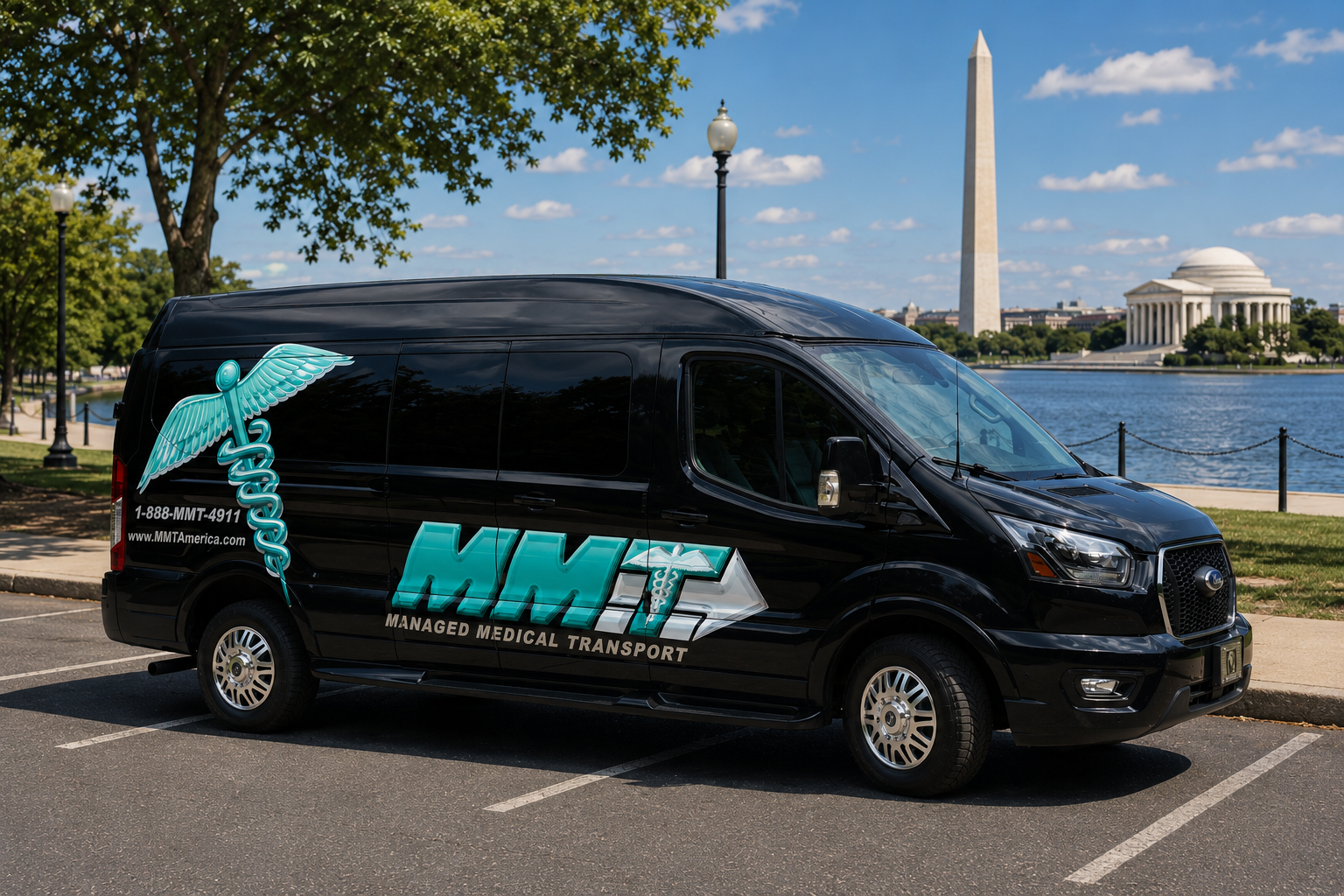
Managed Medical Transport, Inc. provides long-distance, non-emergency ground patient transportation with an emphasis on patient comfort. Staff have hands-on patient-care backgrounds, and transports are arranged based on the patient’s established needs and the confirmed transport plan.
Some families choose this model because it supports straight-through travel on multi-day distances, so the patient is not required to spend nights in hotels. Trips still include routine comfort and travel stops as needed.
The Real-World Impact on Comfort, Cost, and Coordination
Stroke recovery can make travel feel harder than families expect—especially when the patient tires easily, needs help with transfers, or becomes uncomfortable after long periods in one position. Choosing the wrong transport type can lead to a stressful trip, missed discharge windows, or last-minute rebooking.
On the cost side, long-distance transport pricing is typically quote-based because the route, pickup/destination details, patient needs, and staffing requirements vary. If the plan changes—such as the pickup time, destination facility readiness, or assistance needs—you may need a revised quote.
Coordination matters just as much as the vehicle. You’ll usually need to align:
- Discharge timing and paperwork readiness
- Pickup location specifics (unit, room, loading access)
- Destination acceptance and arrival procedures
- What equipment travels with the patient (as applicable)
Common Missteps Families Make (Checklist)
- Waiting to plan until discharge day: Transport availability and coordination can take time—especially for long-distance trips.
- Assuming a seated ride will work: Many post-stroke patients can’t tolerate prolonged sitting or can’t transfer safely without assistance.
- Not confirming the destination is truly ready: If the receiving facility/home setup isn’t prepared, arrival can become a scramble.
- Skipping the “needs” conversation: Oxygen, feeding tubes, incontinence care, and repositioning requests should be discussed up front and confirmed.
- Overpacking the wrong items: Bringing lots of bags but missing essentials (documents, meds list, comfort items) creates avoidable stress.
- Confusing non-emergency transport with on-demand rides: Long-distance medical transport is planned and assessed; it’s not a “medical Uber” model.
A Step-by-Step Plan to Get Your Mother Home
- 1) Start with the discharge/transfer plan.
Tip: Ask the nurse case manager or discharge planner what the “must-haves” are for travel (mobility level, positioning needs, equipment that must accompany her). - 2) Write down the trip’s non-negotiables.
Tip: Include pickup address details, destination address details, and any time windows the facility requires for arrivals. - 3) Clarify mobility and positioning needs.
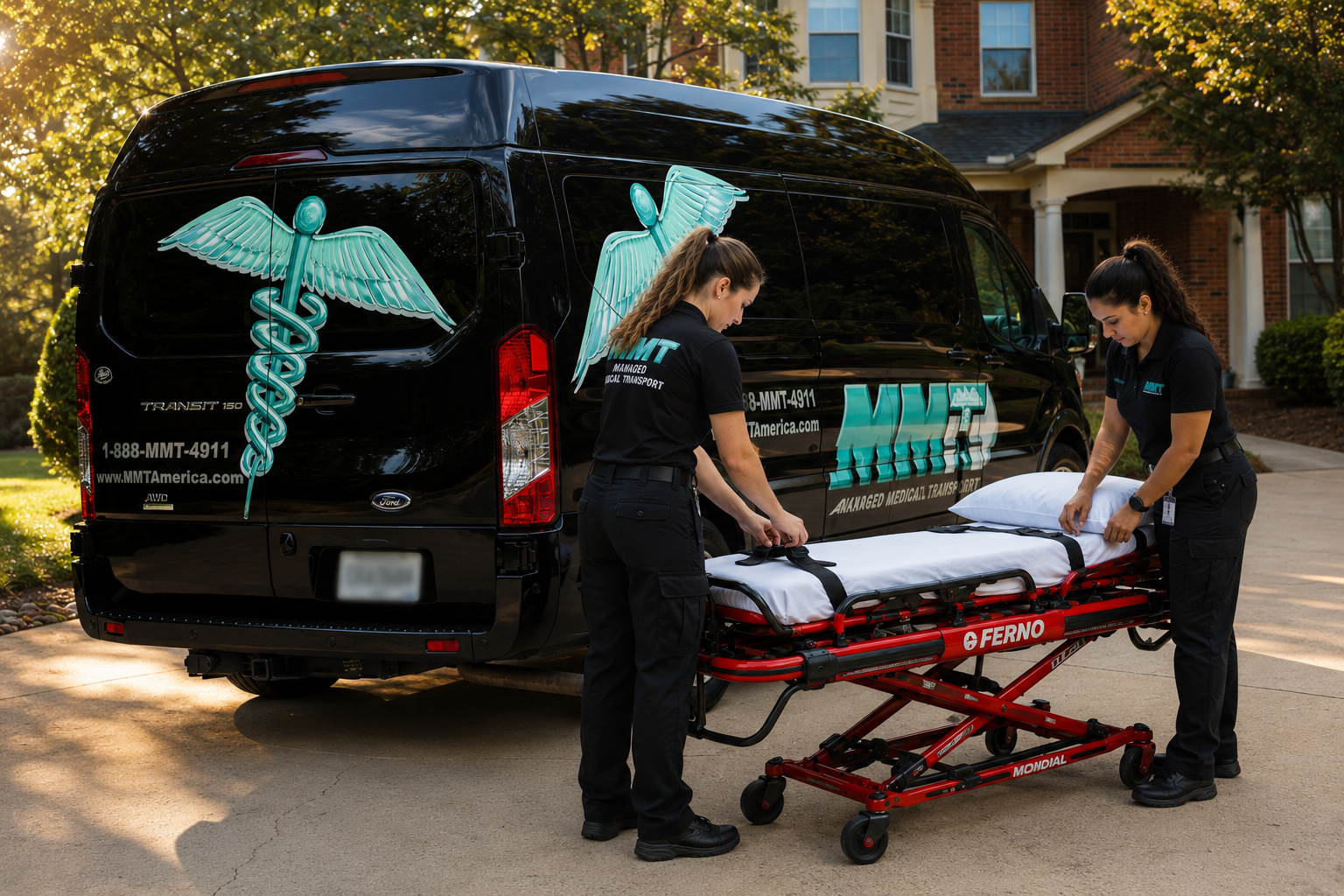
Tip: If she is non-ambulatory, ask about stretcher transport and how transfers are handled at pickup and drop-off. - 4) List established care needs to discuss for suitability.
Tip: Keep it factual: prescribed oxygen use, feeding tube routines, incontinence needs, cognitive impairment, or repositioning requests—without adding new care instructions. - 5) Confirm what assistance is and isn’t part of the trip.
Tip: Managed Medical Transport may assist the patient with their already prescribed medications as part of the confirmed transport arrangements; they do not diagnose, change prescriptions, introduce new medications, or provide continuous clinical monitoring, vitals checks, IV therapy, IV monitoring, suction, or cardiac monitoring. - 6) Request an all-inclusive quote for the agreed plan.
Tip: Make sure the quote reflects the exact pickup/destination cities, the patient’s current needs, and any agreed assistance. If anything changes, ask whether the quote needs updating. - 7) Prepare a “travel packet” and comfort kit.
Tip: Bring IDs/insurance info as needed, discharge paperwork, a current medication list from the facility, and comfort items like a blanket and hearing/vision aids. - 8) Coordinate handoffs at both ends.
Tip: Identify one point person at pickup and one at destination. Ask about family update and vehicle-tracking options available for your transport.
From the Field: What Most People Miss
In practice, we often see that the smoothest long-distance transitions happen when families treat transport like a mini “project plan”: one person owns paperwork, one owns destination readiness, and one owns day-of communication. That simple division prevents last-minute surprises like missing discharge documents or an unprepared arrival location.
When You Should Ask for Professional Transport Support
Consider getting help arranging long-distance, non-emergency ground transport if any of these are true:
- Your mother cannot walk or transfer safely without assistance.
- She cannot tolerate extended sitting or needs a stretcher for comfort.
- The trip is state-to-state or cross-country and you want straight-through travel without required hotel nights.
- There are established needs to coordinate (for example, prescribed oxygen, a feeding tube routine, or incontinence care) and you want them discussed and confirmed ahead of time.
- You need a planned, assessed transport option rather than an on-demand ride.
Frequently Asked Questions
How do I know if my mom’s trip is considered non-emergency?
If she is medically stable for discharge or transfer and the plan is scheduled (not urgent emergency response), it’s typically treated as a non-emergency situation. The discharging clinician or facility care team can clarify readiness for travel.
Can someone ride along with her?
An accompanying family member is generally permitted, subject to seating availability and the arrangements for the specific transport. Ask during scheduling so it can be confirmed for your trip.
What information should I have ready before requesting a quote?
Have the pickup and destination addresses (including facility/unit details), the desired timeframe, your mother’s mobility level, and any established needs you want discussed for suitability (such as prescribed oxygen or feeding tube routines).
Is this the same thing as a medical rideshare?
No. Long-distance patient transportation is typically planned and assessed around the patient’s needs and the travel route. It is not an on-demand rideshare model.
Will the crew provide medical monitoring during the trip?
Managed Medical Transport does not provide diagnosis, continuous clinical monitoring, vitals checks, IV therapy, IV monitoring, suction, or cardiac monitoring. The service is non-emergency ground transportation with an emphasis on patient comfort, with assistance discussed and confirmed case by case.
Moving Forward
Getting your mother home after a stroke is mostly about matching the right transport type to her mobility and comfort needs, then coordinating the pickup and destination details. Start with the discharge plan, confirm what help is needed for the trip, and request a quote based on the exact route and arrangements. If you’re planning a long-distance move, straight-through travel can reduce disruption and simplify the transition.
Book Your Consultation
Schedule a free consultation with our experts.
REQUEST A QUOTE