Is It Non-Emergency? How to Tell If Long-Distance Medical Patient Transport Is Appropriate (and When to Choose Emergency Care)

Is It Non-Emergency? How to Tell If Long-Distance Medical Patient Transport Is Appropriate (and When to Choose Emergency Care)

Ever notice how the phrase “long-distance ambulance” gets tossed around like it’s a real category? I hear it all the time—and honestly, it’s one of the biggest sources of confusion for families trying to do the right thing. Because here’s the truth: non-emergency medical patient transport (even on a stretcher) is a totally different world than 911/EMS emergency care.

And when you’re coordinating a move for someone you love—maybe from a hospital to home, a rehab to a nursing facility, or across state lines—confusion is the last thing you need. So let’s draw a clean, practical boundary between when to use emergency ambulance vs non-emergency transport—without getting clinical, without guessing diagnoses, and without pretending a blog post can replace a doctor’s judgment.

(Stay with me here—this is the part that can save you a ton of stress.)

First: What “non-emergency” really means (in plain English)

When people hear “non-emergency,” they sometimes think it means “not serious.” That’s not it. In my experience, non-emergency usually means:

  • The situation is stable enough to be planned (even if it’s medically complex).
  • The goal is continuity and comfort—keeping someone on their existing prescribed care routine during the trip.
  • You’re not calling for urgent medical intervention to start in the vehicle.

That’s why long-distance medical patient transport is commonly used for things like facility-to-facility transfers, hospital discharge transitions, relocations to be closer to family, and long trips where a standard car ride just isn’t realistic.

If you want the bigger “what is this service and how does it work?” overview, I’d point you to this deeper guide: Understanding Long-Distance Medical Patient Transport. It helps put all the pieces together.

The big dividing line: planning vs. urgent response

Here’s a non-clinical way to think about it:

Non-emergency long-distance medical transport over 300 miles is usually a fit when the trip can be scheduled, the patient has an existing care plan, and the goal is to move safely and comfortably from Point A to Point B.

Emergency care is usually the right call when the situation needs rapid medical response and you can’t wait for planning, coordination, and a scheduled departure.

Sounds obvious… until you’re the family member staring at a calendar, a discharge conversation, and a loved one who “doesn’t look great.” We’ve all been there—trying to make the “right” choice with imperfect information.

Practical decision cues (no medical advice, just real-world clarity)

I’m not going to tell you how to judge symptoms (that’s medical territory). But I can give you planning cues that often separate emergency situations from non-emergency transport situations.

Non-emergency transport is often a fit when you can answer “yes” to these

  • Can the trip be scheduled? (Even if it’s soon—today or tomorrow—there’s still a plan.)
  • Is there a sending location and a receiving location? (Hospital, rehab, nursing facility, hospice setting, residence, etc.)
  • Is the goal transportation—not urgent treatment?
  • Does the patient have an existing prescribed care routine that can be maintained during travel? (Think: medication schedule, oxygen already prescribed, feeding routines, comfort measures.)
  • Is the main challenge logistical? Like distance, mobility limits, inability to sit in a car for hours, dementia-related safety concerns, or needing a stretcher.

This is where non-emergency medical patient transport can be a lifesaver for families—because it turns a scary, exhausting “How are we going to do this?” into a structured plan.

Emergency care is the right lane when it’s not a “trip”—it’s a crisis

If you’re thinking, “We can’t wait,” “Something is actively getting worse,” or “We need immediate help,” that’s the moment to stop debating transport types and contact emergency services. When it comes to when to use emergency ambulance vs non-emergency transport, the simplest cue is: Do you need an urgent response right now?

And just to be crystal clear: Managed Medical Transport, Inc. does not provide 911, EMS, emergency ambulance services, or critical care transport. Non-emergency transport is planned transport.

The “long-distance ambulance” misconception (and why it matters)

Let’s talk about the phrase itself for a second. Many people use “long-distance ambulance” to mean “a vehicle that can take someone on a stretcher for a long trip.” I get it—language evolves.

But that wording can accidentally steer families into the wrong expectations. Emergency ambulances are built for emergency response and treatment. Non-emergency long-distance medical patient transportation is built for comfort, safety, and care continuity over long miles—often hundreds or thousands.

So if you catch yourself Googling “long-distance ambulance,” try swapping it with what you actually mean: scheduled, non-emergency, long-distance medical patient transport over 300 miles. You’ll get clearer answers faster.

The planning questions I’d ask if this were my own family

Okay—coffee-chat moment. If you and I were sitting at the kitchen table trying to figure out the next step for your dad or your spouse, here’s what I’d ask. Not as medical advice—just as sanity-saving planning prompts:

1) “Where are we going—and who’s expecting us?”

Is it hospital-to-home? Facility-to-facility? State-to-state? Cross-border into Canada? Having a clear receiving destination (and a person there who’s ready) changes everything.

2) “What does ‘a good day’ look like for the patient?”

Not clinically—practically. Can they tolerate long periods of travel? Do they get anxious in unfamiliar environments? Do they need frequent repositioning? Are there swallow precautions or diet textures to keep consistent? These details matter on long trips.

3) “What care routines must stay consistent during the drive?”

Think in terms of existing routines: medication timing, hydration, feeding schedules, oxygen already prescribed, incontinence care, comfort measures. The goal in non-emergency transport is typically to maintain what’s already prescribed—not invent something new mid-trip.

4) “What’s our escalation plan if something changes?”

This one is huge—and it’s something people forget because they’re focused on the destination. You’ll want clarity on questions like: If the patient’s condition changes, who do we call? What’s the nearest appropriate facility along the route? Who in the family needs updates? Planning for “what if” doesn’t make you paranoid—it makes you prepared.

If you’re curious about how non-emergency providers think about this kind of readiness, you might also explore Safety Protocols in Long-Distance Medical Transport. It’s a helpful companion read when you’re trying to picture what the trip actually looks like.

What non-emergency long-distance transport is best at (and what it’s not)

Here’s what I love about well-run non-emergency long-distance medical patient transport: it’s built for the reality that life doesn’t stop just because someone can’t ride in a car anymore.

Long trips can be physically and emotionally taxing—especially for patients who are non-ambulatory, bedridden, living with dementia, on hospice, or dependent on routines. A planned transport can reduce the chaos and help everyone breathe again.

But it’s not emergency medicine. It’s not a substitute for a hospital. It’s not a “wait and see” option if you believe you need urgent help. And it’s definitely not the same thing as rideshare (those “medical Uber” comparisons drive me nuts because they set the wrong expectations).

Where Managed Medical Transport, Inc. fits (so you’re not guessing)

Managed Medical Transport, Inc. focuses on long-distance, non-emergency medical patient transports over 300 miles across the United States and Canada. The emphasis is on safety, comfort, and maintaining a patient’s existing prescribed care plan during transport—things like medication schedules, feeding routines, hydration, comfort measures, and prescribed oxygen requirements (without initiating new medical interventions).

All vehicles are owned and operated by Managed Medical Transport, Inc., and staff are direct employees (no third-party subcontracting). One family member can typically ride along, and families can receive updates with real-time tracking during the trip.

And just to repeat the boundary one more time because it matters: Managed Medical Transport, Inc. does not provide emergency/911 response, emergency ambulance services, critical care transport, or air transport.

If you’re still unsure, here’s the most honest answer

If you’re on the fence about whether a situation is non-emergency or urgent, you’re not alone. This is hard. It’s emotional. And it’s often happening under time pressure.

What you can do (typically) is ask the sending facility or clinician: “Is this stable enough for scheduled non-emergency transport, or do you recommend emergency services?” That one question can cut through a lot of uncertainty—without you having to play detective.

Informational note: This article is for general information only and isn’t medical advice or a guarantee of service. For details on service definitions and scope, you can also review the official FAQ at https://mmtamerica.com/faq/.

Read more Is It Non-Emergency? How to Tell If Long-Distance Medical Patient Transport Is Appropriate (and When to Choose Emergency Care)
Forward-Facing Stretcher Transport for Long Trips: What Families Should Know (Comfort, Motion, and Safety)

Forward-Facing Stretcher Transport for Long Trips: What Families Should Know (Comfort, Motion, and Safety)

Ever been carsick and thought, “Okay, I just need to stare at the horizon and breathe”? Now imagine you’re the one coordinating long-distance medical patient transport for someone you love—someone who can’t just “switch seats” or “roll down the window” when the road gets rough.

That’s why I’m such a believer in forward-facing stretcher transport for long trips. It sounds like a small detail (and families often don’t think to ask), but when you’re talking about non-emergency stretcher transport over 300 miles, little comfort details stop being “nice-to-haves” and start becoming the whole experience.

Before we zoom in on the forward-facing part, if you want the bigger picture of what long-distance medical patient transportation actually involves (and what it doesn’t involve), I’d point you to this guide: Understanding Long-Distance Medical Patient Transport. It’s the kind of foundational read that makes the rest of the decisions feel less overwhelming.

Why “forward-facing” even matters (and why families are surprised it’s not standard)

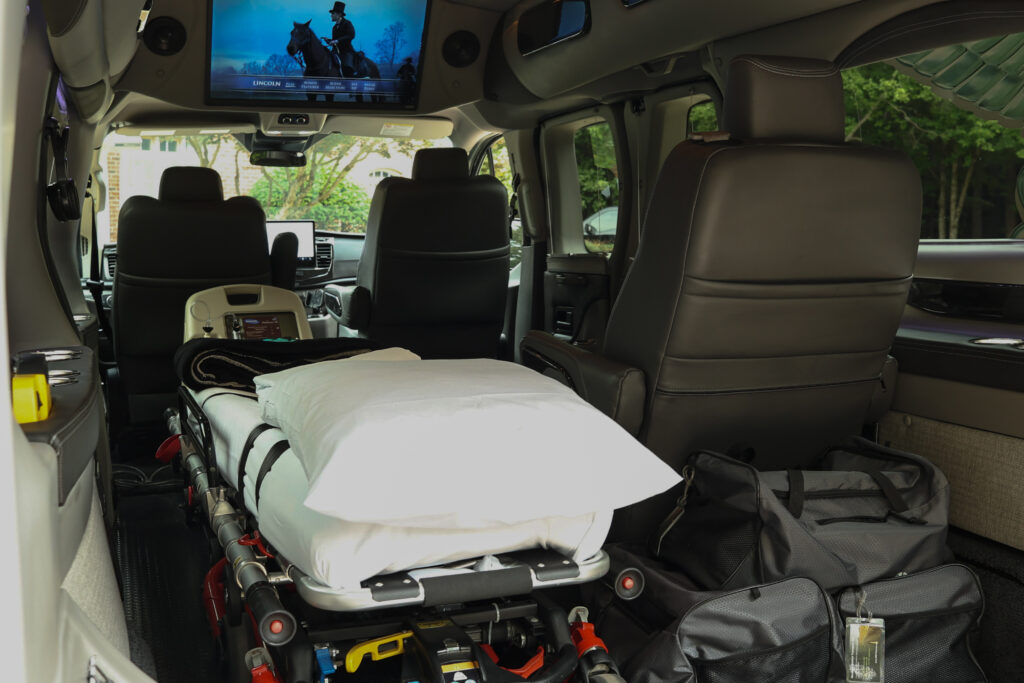
Most of us assume a stretcher is a stretcher is a stretcher. But orientation—literally which direction the patient faces—can change how the ride feels in a big way. When a patient is positioned forward-facing, their body experiences motion more like a typical passenger in a car or SUV.

And here’s the frustrating part: not every non-emergency stretcher setup prioritizes that. Families sometimes learn this after they’ve already booked with someone else, when their loved one spends hours feeling nauseated, disoriented, or just plain miserable. Sound familiar? (If you’ve ever taken a long road trip with a kid in the back seat, you already get it.)

Comfort on a 6–12+ hour ride: it’s not just “softness,” it’s orientation

When you’re coordinating a long trip, you’re usually thinking about big questions: “Is this non-emergency?” “Can they travel lying down?” “How do we do this safely?” All valid. But comfort is the quiet factor that can make the day feel manageable—or endless.

Forward-facing stretcher transport can help the ride feel more predictable. Predictability is calming. It’s easier for many people to rest when their brain isn’t constantly trying to “solve” confusing motion cues.

In my experience, families often notice comfort improvements in a few very human ways:

  • Less motion discomfort on highways, ramps, and winding roads (nobody can promise “zero nausea,” but orientation can help).
  • Less startle and stress because movement feels more intuitive—accelerating forward, slowing down, turning left/right.
  • More natural rest—the kind where shoulders unclench and breathing settles.

Motion sickness and the brain-body mismatch (the part nobody warns you about)

Motion discomfort is one of those things that’s hard to explain until you’ve lived it. Your inner ear senses movement. Your eyes see… something else. If those signals don’t match, your body basically throws up its hands and says, “Nope.”

Forward-facing positioning can reduce that mismatch because it aligns more closely with what most of us are used to when traveling. The patient’s body experiences the ride in a way that’s more consistent with typical forward motion.

Now, quick reality check (stay with me here): every patient is different. Some people are sensitive no matter what. Road conditions matter. Medications can affect nausea. So I’m not saying forward-facing is magic. I’m saying it’s one of those practical, low-drama choices that can stack the odds in your favor for long-distance comfort.

Communication feels easier when the patient isn’t “away” from everyone

This is a big one, and it’s surprisingly emotional for families.

On long trips, the ride isn’t just transportation—it’s hours of being together in a small space while someone is vulnerable. When a patient is positioned forward-facing, communication can feel more natural. You’re not constantly trying to interpret muffled words or guess whether they’re uncomfortable. It’s often easier to check in, reassure them, and keep them oriented to what’s happening.

And if a family member is riding along (which is common in long-distance, non-emergency medical patient transportation), that sense of “we’re traveling together” matters. It’s not clinical. It’s human.

Orientation and anxiety: why “knowing what’s happening” reduces stress

We’ve all been there—someone else is driving, you can’t see where you’re going, and every turn feels bigger than it is. Now add illness, pain, dementia, or general fatigue. That uncertainty can spike anxiety fast.

Forward-facing stretcher transport can help some patients feel more oriented to the ride. Even if they’re resting, their body’s sense of movement matches the direction of travel. For patients with cognitive impairment, that can be especially helpful—less confusion, fewer “Where are we?” moments, and a calmer overall rhythm.

Again, not a promise. Just one of those thoughtful details that can make a long day feel less like a blur.

Safety: comfort and safety aren’t competing priorities

Sometimes families worry that “comfort features” are fluff, and safety is the only thing that matters. I don’t see it that way. Comfort and safety support each other—because a calmer, more settled patient typically tolerates the trip better.

Forward-facing doesn’t replace safety protocols (and it shouldn’t). It’s more like a design choice that can improve the ride experience while the transport team focuses on maintaining the patient’s existing prescribed care plan during a non-emergency trip.

If you want to dig into the broader safety framework families often ask about—without confusing this kind of service with emergency/911 care—this guide is helpful: Safety Protocols in Long-Distance Medical Transport.

Questions I’d ask any provider about stretcher orientation (because you deserve a straight answer)

When you’re comparing options for non-emergency stretcher transport over 300 miles, you don’t need a checklist the size of a textbook. You just need a few clear questions that reveal how the ride will actually feel.

Here are some simple ones I love (because they force clarity):

  • “Is the stretcher forward-facing for the full trip?” (Not “sometimes,” not “if available.”)
  • “If the patient gets motion discomfort, what adjustments can you make?” (You’re listening for practical, calm answers—not bravado.)
  • “Can a family member ride along, and where will they sit relative to the patient?”
  • “How do you keep the patient comfortable for a full-day drive?” (Comfort is a system, not a pillow.)

Where Managed Medical Transport, Inc. fits into this conversation (and why families bring it up)

Managed Medical Transport, Inc. focuses on long-distance medical patient transports over 300 miles across the United States and Canada, and one differentiator families often care about is forward-facing stretcher transport—specifically because it can reduce motion discomfort on long road trips.

They’re also firmly in the non-emergency category: this isn’t 911, it isn’t EMS, and it isn’t critical care. The goal is to transport patients safely and comfortably while maintaining the patient’s existing prescribed care plan during the trip (not creating a new one). Vehicles are owned and operated by Managed Medical Transport, Inc., and staff are direct employees—not subcontractors.

And if you take nothing else from this post, take this: when you’re planning a long trip for someone who can’t advocate for themselves the whole way, you’re not being “picky” by asking about forward-facing positioning. You’re being thoughtful. You’re protecting their comfort. And honestly? That’s love in logistical form.

Informational only. This article is not medical advice and isn’t a guarantee of service. For guidance specific to your situation, you’ll want to talk with the patient’s clinicians and speak directly with the transport provider about eligibility and logistics.

Read more Forward-Facing Stretcher Transport for Long Trips: What Families Should Know (Comfort, Motion, and Safety)
Crossing State Lines in Non-Emergency Long-Distance Medical Patient Transport: What Families Should Prepare

Crossing State Lines in Non-Emergency Long-Distance Medical Patient Transport: What Families Should Prepare

There’s a moment that hits a lot of families right in the gut: you’ve finally lined up the receiving facility (or home setup), the patient is stable enough for a move, and then someone says, “Okay… but we’re crossing state lines.”

And suddenly it’s not just a ride anymore. It’s timing, paperwork, phone calls, and that nagging worry: What am I forgetting? If you’re coordinating non-emergency long-distance medical patient transport, especially cross-state medical transport, the details matter—not in a scary way, but in a “let’s make this smooth and predictable” way.

(Stay with me here—this isn’t a giant generic checklist. This is the stuff that tends to pop up specifically when the trip crosses state lines and the distance is real.)

If you want the bigger-picture overview of how long-distance medical patient transportation works, I’d point you to this guide first: Understanding Long-Distance Medical Patient Transport. It’s the foundation. What we’re doing today is the “crossing borders” layer on top.

First: make sure everyone agrees on the when (not just the “yes”)

One of the most frustrating things I see families run into is thinking the move is approved… when really it’s approved in theory. Then the day of transport arrives and a facility says, “We can’t receive after 5pm,” or “Admissions isn’t here on weekends,” or “We need updated paperwork before arrival.” Sound familiar?

For long-distance stretcher transport over 300 miles, timing isn’t just convenience—it’s logistics. You might want to confirm:

  • Receiving facility intake hours (and whether they accept arrivals after-hours)
  • Weekend/holiday limitations for admissions, pharmacy, or nursing assessment
  • Discharge timing from the sending facility (when the patient can actually be released)
  • Time zone changes (easy to forget, surprisingly disruptive)

My opinion? The easiest transports are the ones where the facilities are aligned on a specific arrival window—not a vague “sometime tomorrow.”

Facility-to-facility coordination: who is the “owner” of the handoff?

Here’s where it gets interesting: when a patient crosses state lines, you often have more people involved, but less clarity about who’s actually driving the process.

Typically, you’ll want to identify one point of contact on each end:

  • Sending facility: the discharge planner, case manager, or charge nurse
  • Receiving facility: admissions coordinator or nurse manager (who can confirm they’re ready)

Then ask a couple of simple-but-powerful questions:

  • “Who will I call if something changes the morning of transport?”
  • “What paperwork must physically travel with the patient?”
  • “Do you need anything faxed/emailed before arrival?”

This isn’t medical advice—just a reality check: the smoother the handoff, the less stressful the trip feels for everyone (including the patient).

The documents families forget until they’re already on the road

Crossing state lines doesn’t usually mean you need “special” documents like a passport would (unless you’re crossing into Canada), but it does mean you’re farther from the original care team—and that’s when having copies becomes priceless.

1) A current medication list (and I mean current)

Not a month-old printout. Not a handwritten guess. Ideally, you have a clean list that includes:

  • Medication name
  • Dose
  • Schedule/times
  • Purpose (helpful for the receiving team)
  • Allergies

If the patient has PRN (“as needed”) meds, you might want to note what typically triggers them (again: informational, not instructions).

2) Copies of prescriptions or orders (when applicable)

In my experience, families feel calmer when they have documentation that supports the existing care plan—especially if the receiving facility asks questions during intake. This is particularly relevant for things like oxygen use or feeding supplies. Requirements vary, so you’ll want to check with the sending and receiving facilities about what they expect in the packet.

3) Insurance cards and photo ID (bring backups)

It sounds basic, but it’s the kind of basic that can derail an admission if it’s missing. I like the “two-layer” approach:

  • Physical cards in a folder
  • Phone photos as a backup

4) Face sheet + recent discharge summary (if available)

Facilities often create a face sheet that includes demographics, diagnoses, contacts, and insurance. A recent discharge summary (or transfer summary) helps the receiving team understand what’s been happening lately.

Not every family can get every document—and that’s okay. The goal is to reduce the “we don’t know” moments once you’re 200 miles away from the original facility.

Planned stops: the part families underestimate (until they don’t)

When you hear long-distance stretcher transport over 300 miles, you probably picture one long continuous drive. But real life includes stops—comfort breaks, repositioning routines, food, hydration, and just plain human pacing.

For cross-state trips, it helps to talk through stops in advance:

  • How often stops are typically needed (varies by patient needs and care plan)
  • What a stop looks like (time, privacy, accessibility)
  • Whether a family member is riding along and what they should pack
  • Any mobility or cognitive concerns that make certain stop environments a bad fit

And here’s a small thing that makes a big difference: pack a “grab bag” that stays within reach—wipes, gloves if you use them, a change of clothing, a light blanket, and anything comforting (a familiar pillow is underrated).

Crossing state lines can change the receiving rules (even if the patient hasn’t changed)

This is where families sometimes get blindsided. The patient is the same person with the same needs… but the receiving facility may have different intake procedures than what you’re used to back home.

You might want to ask the receiving facility:

  • Whether they require a new physician order upon arrival
  • How they handle pharmacy fulfillment on day one
  • What their policy is for personal medications traveling with the patient
  • Whether they need advance notice for special diet accommodations

I’m not giving legal or medical guidance here—just pointing out the pattern: crossing state lines often means new processes, and new processes mean more chances for delays if nobody asks ahead of time.

Comfort and safety aren’t “extras” on long trips—they’re the whole point

On a multi-state drive, comfort becomes practical. When someone is lying down for hours, little details matter—motion sensitivity, bedding, positioning routines, and how calm the environment feels.

If you’re curious about how long-distance transport teams generally think about risk reduction (again, informational—not medical direction), you can also read Safety Protocols in Long-Distance Medical Transport.

And just to clear up a common confusion: a lot of people casually say “long-distance ambulance” when they mean stretcher-based transportation. But non-emergency long-distance medical patient transport is different from emergency ambulance care—it’s planned, scheduled, and focused on maintaining an existing care plan, not initiating new treatment.

So where does Managed Medical Transport, Inc. fit into all this?

Managed Medical Transport, Inc. focuses on long-distance medical patient transports over 300 miles across the United States and Canada—especially when a patient can’t sit upright and needs a stretcher for the trip. The transports are non-emergency (not 911, not EMS), and the goal is care continuity: maintaining the patient’s existing prescribed care plan during the move (med schedules, feeding routines, hydration, oxygen, comfort measures), without starting new interventions.

One thing I genuinely love about this corner of healthcare logistics is how much relief it can bring families when the trip is thoughtfully planned—timing confirmed, facilities aligned, paperwork ready, and stops anticipated instead of improvised.

A simple way to think about cross-state transport prep

If you’re feeling overwhelmed, try this mental model:

Align the clocks. Align the facilities. Pack the proof.

  • Align the clocks: discharge time, intake time, time zones
  • Align the facilities: clear contacts, confirmed acceptance, arrival expectations
  • Pack the proof: meds list, copies of key documents, ID/insurance

And if you’re still in the “what even is long-distance medical transport?” stage, circle back to Understanding Long-Distance Medical Patient Transport. It’ll make the rest of this feel much less intimidating.

Informational note: This article is for general planning and logistics only. Requirements can vary by facility and situation, so you’ll want to confirm details with the sending/receiving care teams and your transport provider.

Read more Crossing State Lines in Non-Emergency Long-Distance Medical Patient Transport: What Families Should Prepare
How to Accommodate Special Diets During Long-Distance Medical Transports

How to Accommodate Special Diets During Long-Distance Medical Transports

Ensuring Nutritional Care on the Road: Accommodating Special Diets During Long-Distance Medical Transports

For individuals with specific dietary needs, traveling can present unique challenges
especially when it comes to long-distance medical transports. At Managed Medical Transport, Inc.,
we understand the importance of maintaining dietary accommodations to ensure the health and comfort
of our passengers. This guide explores practical tips and strategies for family support and planning
when arranging long-distance medical transport for loved ones
with special dietary requirements.

Understanding the Importance of Special Diets in Medical Transport

Special diets medical transport is not just about preference
it’s a critical component of patient care. Whether it’s managing allergies,
swallowing difficulties, diabetes, or any other condition requiring dietary adjustments,
ensuring the right nutrition is available during transport is crucial. These dietary needs
can significantly impact the well-being of patients, making it essential for transport services
to accommodate these requirements effectively.

Planning Ahead: The Key to Successful Dietary Accommodations

Effective accommodation of special diets during long-distance medical transport
starts with thorough planning. Here are steps to ensure dietary needs are met:

  • Communicate specific dietary requirements to the transportation team well in advance.
    This allows the service provider to prepare and ensure the appropriate meals and snacks are available.
  • Provide detailed information about the patient’s dietary restrictions, preferences, and potential
    allergies to ensure meals are both safe and enjoyable.
  • Consider packing non-perishable, diet-specific snacks and meals if the journey is particularly long
    or if the patient has highly specialized nutritional needs.
  • Ensure that the transport team is aware of and capable of managing any potential emergencies
    related to dietary restrictions, such as allergic reactions.

Collaboration with Medical Transport Teams for Dietary Accommodations

At Managed Medical Transport, Inc., our commitment to care continuity includes maintaining
existing prescribed care plans during transport, which encompasses dietary needs. Collaboration
between families and our team is vital. Here’s how we support dietary accommodations:

  • Our medical transport teams are informed of and prepared to manage special diets, including
    pureed diets or those requiring feeding tubes.
  • We maintain open lines of communication with families to ensure any last-minute dietary changes
    are accommodated.
  • Continuous updates and real-time vehicle tracking provide peace of mind to families, knowing their
    loved ones are cared for properly, including their dietary needs.

Safety Protocols in Long-Distance Medical Transport

Accommodating special diets extends beyond the food itself – it’s also about ensuring the safe
and comfortable transport of patients. Our safety protocols ensure every aspect of the patient’s journey is managed with the utmost care,
including dietary accommodations. From handling feeding tubes to managing diabetes care routines,
our staff are equipped to provide the necessary support.

Ensuring a Smooth Journey: Tips for Families

To further ensure a smooth and comfortable journey for your loved one, consider these additional tips:

  • Discuss the transport plan with your loved one’s healthcare provider to ensure it aligns with their
    current health and dietary needs.
  • Prepare a detailed list of foods, beverages, and snacks that meet the dietary requirements and share
    it with the transport team.
  • If your loved one requires medication with meals, provide a detailed schedule and ensure the
    transport team understands the timing and dosage.

Conclusion: Your Partner in Health and Comfort

At Managed Medical Transport, Inc., we pride ourselves on our ability to provide safe, comfortable,
and caring long-distance medical transport for patients with a variety of special dietary needs. By
working closely with families and healthcare providers, we ensure that every aspect of the patient’s
dietary requirements is managed with precision and compassion. For more information on how we can
assist with your long-distance medical transport needs, please visit MMT America.

Read more How to Accommodate Special Diets During Long-Distance Medical Transports
Maintaining Care Continuity for Non-Ambulatory Patients During Long-Distance Transports

Maintaining Care Continuity for Non-Ambulatory Patients During Long-Distance Transports

In the realm of medical patient transport, ensuring the continuity of care for non-ambulatory patients over long distances presents unique challenges and requires meticulous planning. At Managed Medical Transport, Inc., we specialize in providing safe, comfortable, and seamless long-distance non-emergency medical patient transportation across the United States and Canada. This blog post aims to shed light on the critical aspects of maintaining care continuity for non-ambulatory patients during these transports, ensuring their health, safety, and comfort throughout the journey.

Understanding the Complexity of Non-Ambulatory Patient Transport

Non-ambulatory patients, those who are unable to move or walk on their own due to various medical conditions, necessitate specialized transport solutions. Our services cater to a wide range of patient needs, including those with feeding tubes, oxygen requirements, incontinence care, and more. For more detailed information on what constitutes long-distance medical patient transport, visit our page on Understanding Long-Distance Medical Patient Transport.

Key Elements of Care Continuity During Transport

Ensuring the continuity of care for non-ambulatory patients during long-distance transports involves several critical elements:

  • Medication Management: Adhering to the patient’s existing prescribed care plan, including medication schedules, is paramount.
  • Nutritional Support: Feeding routines and dietary requirements are maintained throughout the journey.
  • Comfort Measures: From enhanced bedding with a 4” memory foam overlay to prescribed comfort measures, every aspect is designed to provide the utmost comfort.
  • Communication: Continuous communication with family members and healthcare providers ensures everyone is informed and at ease.

Ensuring Safety and Comfort

Safety and comfort are the cornerstones of Managed Medical Transport, Inc.’s service. Our vehicles are equipped with forward-facing stretchers that reduce motion sickness, and our staff are trained to provide high-quality care. For an in-depth look at our safety protocols, please visit Safety Protocols in Long-Distance Medical Transport.

Why Choose Managed Medical Transport, Inc.?

Choosing the right long-distance medical transport provider is crucial for the well-being of non-ambulatory patients. Managed Medical Transport, Inc. stands out for several reasons:

  • Comprehensive Care: We maintain the patient’s existing care plan, ensuring a seamless transition from start to finish.
  • Experienced Personnel: Our team consists of professionals with medical patient-care backgrounds, ensuring the highest level of care.
  • Family Involvement: We encourage one family member to accompany the patient, providing comfort and reassurance.
  • Transparency and Communication: Continuous updates and real-time vehicle tracking offer peace of mind to families and caregivers.

Conclusion

At Managed Medical Transport, Inc., we understand the importance of maintaining care continuity for non-ambulatory patients during long-distance transports. Our commitment to safety, comfort, and the meticulous adherence to prescribed care plans ensures that patients receive the best possible care while in transit. Whether you are a family member, caregiver, or healthcare provider, we are here to support you every step of the way.

For more information on our services or to arrange a transport, please visit MMT America.

Read more Maintaining Care Continuity for Non-Ambulatory Patients During Long-Distance Transports
Preparing for a Long-Distance Medical Transport: A Checklist for Families

Preparing for a Long-Distance Medical Transport: A Checklist for Families

When a family member requires long-distance medical transport, the preparation can seem daunting. Whether it’s a transition from one healthcare facility to another, a move to a new home across state lines, or any situation necessitating non-emergency medical patient transportation, ensuring a smooth and safe journey is paramount. Managed Medical Transport, Inc. is dedicated to providing families and caregivers the information and support needed for these transitions. This comprehensive checklist is designed to help families prepare for long-distance medical transport, ensuring peace of mind for both the patient and their loved ones.

Understanding the Basics of Long-Distance Medical Transport

Before diving into the checklist, it’s crucial to understand what long-distance medical transport involves. Managed Medical Transport, Inc. specializes in non-emergency medical patient transportation over 300 miles, offering a continuum of care for a wide range of patient needs and conditions. To learn more about what this entails, visit our Understanding Long-Distance Medical Patient Transport page.

Comprehensive Checklist for Family Preparation

1. Verify Patient Eligibility and Transport Needs

  • Consult with the patient’s healthcare provider to confirm that long-distance transport is safe and appropriate for their condition.
  • Review the patient’s current health status, medical needs, and any specific requirements such as oxygen, medication schedules, or mobility assistance.

2. Choose the Right Transport Provider

  • Ensure the transport provider, like Managed Medical Transport, Inc., offers services that match the patient’s needs, including non-ambulatory transport, stretcher transport with enhanced bedding, and care continuity during the journey.
  • Check for the provider’s safety records and protocols. Managed Medical Transport, Inc. prioritizes patient safety and comfort, as detailed on our Safety Protocols in Long-Distance Medical Transport page.

3. Prepare Medical and Personal Information

  • Gather all necessary medical documentation, including recent medical records, a list of current medications, and any advanced directives or power of attorney documents.
  • Prepare a personal bag for the patient, including items for comfort such as clothing, blankets, and personal entertainment.

4. Communicate with Family Members and Caregivers

  • Designate a primary contact person for communication with the transport team.
  • Inform all involved parties of the transport details, including dates, times, and any stops or overnight stays.

5. Plan for Arrival at the Destination

  • Coordinate with the receiving facility to ensure a smooth transition and handover of care.
  • Arrange for any necessary accommodations or adjustments at the receiving home or facility.

Ensuring a Smooth Journey

By following this checklist, families can ensure that all aspects of long-distance medical transport are covered, from verifying patient eligibility to planning for arrival. The key to a smooth transition is thorough preparation and clear communication with all parties involved, including the transport provider, healthcare professionals, and family members.

Conclusion

Long-distance medical transport requires careful planning and consideration to ensure the safety, comfort, and well-being of the patient. Managed Medical Transport, Inc. is here to support families and caregivers every step of the way. By utilizing this checklist and working closely with our team, you can rest assured that your loved one is in good hands. For more information on our services and how we can assist with your long-distance medical transport needs, visit MMT America.

Read more Preparing for a Long-Distance Medical Transport: A Checklist for Families
Enhancing Senior Mobility: The Advantages of Long-Distance Non-Emergency Medical Transportation

Enhancing Senior Mobility: The Advantages of Long-Distance Non-Emergency Medical Transportation

As the global senior population grows, ensuring their mobility and access to healthcare services becomes increasingly critical. Long-distance non-emergency medical transportation (NEMT) plays a pivotal role in this equation, offering a specialized service tailored to meet the unique needs of seniors requiring medical support over extended distances. Managed Medical Transport, Inc., a leader in providing long-distance NEMT, is committed to enhancing senior mobility through safety, comfort, and care continuity.

Understanding the Importance of Senior Mobility

Senior mobility is about more than just the ability to get from point A to point B; it’s about maintaining independence, accessing necessary healthcare services, and ensuring a quality of life. For seniors, especially those with chronic conditions or cognitive impairments, regular access to medical care is vital. However, the distance to specialized care centers or the need to relocate can present significant challenges.

The Role of Long-Distance Non-Emergency Medical Transportation

Long-distance NEMT bridges the gap between the need for specialized medical care and the ability to access it. This service is essential for:

  • Hospital-to-home transitions
  • Facility-to-facility transfers
  • State-to-state or province-to-province relocations
  • Long-distance hospice or end-of-life transport

With a focus on non-ambulatory patient transport, Managed Medical Transport, Inc. ensures that each journey is not just a trip but a continuation of care.

Advantages of Choosing Long-Distance NEMT for Seniors

  • Safety and Comfort: Vehicles are equipped with forward-facing stretchers, enhanced bedding, and are designed to accommodate various medical conditions, ensuring a safe and comfortable journey.
  • Continuity of Care: Managed Medical Transport, Inc. maintains the patient’s existing prescribed care plan during transport, including medication schedules, feeding routines, hydration, and oxygen.
  • Family Involvement: One family member is permitted to ride with the patient, providing emotional support and continuous communication throughout the journey.
  • Professional and Compassionate Staff: All drivers and staff have medical patient-care backgrounds, ensuring that each patient receives the highest level of care and attention.

Safety Protocols in Long-Distance Medical Transport

Why Managed Medical Transport, Inc.?

Choosing Managed Medical Transport, Inc. means prioritizing safety, comfort, and the continuous care of your loved one. Our comprehensive approach to long-distance non-emergency medical transportation ensures that every aspect of the patient’s needs is addressed, from medical requirements to personal comfort. Our vehicles are designed with the patient’s well-being in mind, and our staff’s dedication to care continuity sets us apart in the industry.

Comprehensive Service Offerings

Our service encompasses:

  • Feeding tubes and oxygen requirements
  • Incontinence care
  • Dementia or cognitive impairment support, including Alzheimer’s
  • Hospice, bedridden, or bed-bound patient transport
  • Prescribed diabetic care routines

For more in-depth information, visit our Understanding Long-Distance Medical Patient Transport page.

Conclusion

Long-distance non-emergency medical transportation is more than a service; it’s a lifeline for seniors requiring access to medical care across distances. Managed Medical Transport, Inc. is proud to offer a solution that emphasizes safety, comfort, and care continuity, ensuring that your loved ones are in the best hands. Enhancing senior mobility is at the heart of what we do, allowing them to live fuller, more independent lives.

If you or a loved one requires long-distance non-emergency medical transportation, visit us to learn more about how we can assist.

Read more Enhancing Senior Mobility: The Advantages of Long-Distance Non-Emergency Medical Transportation